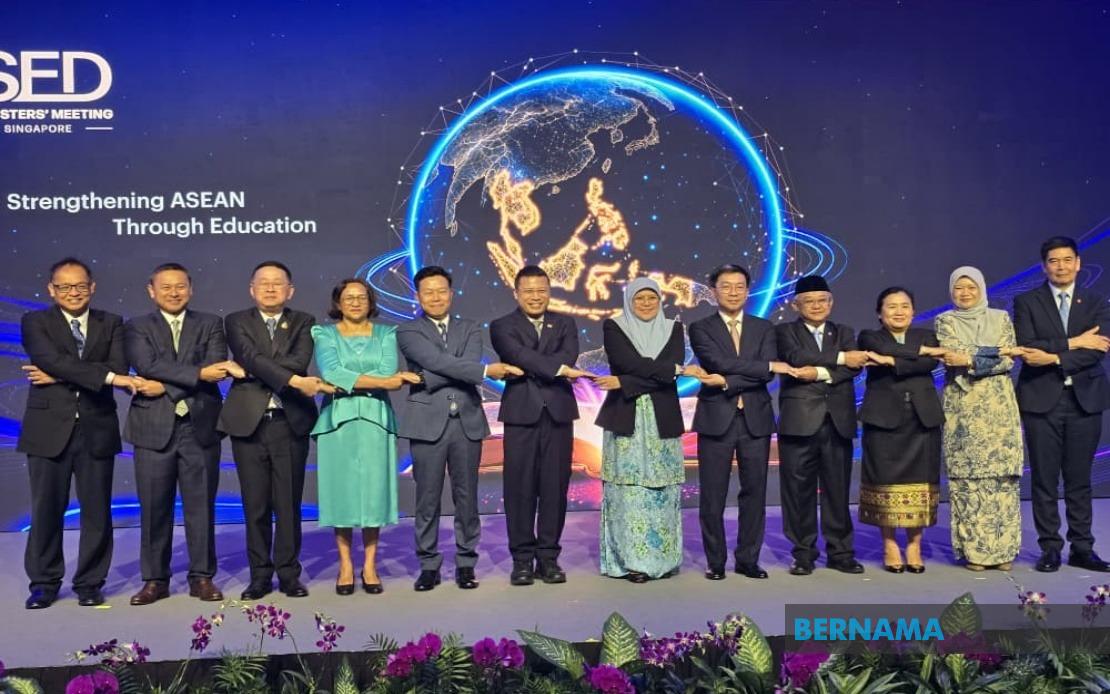
Education ministers from ASEAN member states gathered in Singapore this week to formally adopt a comprehensive five-year blueprint aimed at reshaping how the region approaches learning and student development from 2026 through 2030. The initiative represents a coordinated effort to establish education systems that respond directly to rapid global change whilst maintaining regional identity and cohesion. The framework reflects a recognition among policymakers that education must evolve beyond traditional models to equip young people with capabilities demanded by an increasingly technology-driven world.
At its heart, the Five-Year Work Plan on Education 2026-2030 seeks to develop individuals who are both resilient and well-rounded, capable of contributing meaningfully to economies whilst grounded in shared ASEAN values. The strategy balances the immediate need for a competitive, highly skilled workforce with longer-term aspirations to foster a sense of common ASEAN identity. This dual approach acknowledges that economic competitiveness alone does not address the region's broader social cohesion and cultural preservation concerns, making the inclusion of values-based education a critical component.
Singapore Education Minister Desmond Lee articulated the underlying philosophy during the opening of the 14th ASEAN Education Ministers Meeting, emphasising that education systems must become more agile and responsive to global developments. He highlighted three strategic priorities that will shape regional educational initiatives over the next five years: the integration of artificial intelligence into teaching and learning environments, strengthening STEM education programmes, and promoting holistic development that extends beyond academic achievement. These pillars reflect consensus among ASEAN leaders that traditional curricula alone cannot address the skills gaps emerging across the region.
The artificial intelligence component addresses perhaps the most pressing concern facing educational planners in Southeast Asia. Rather than viewing AI as a threat to employment, ASEAN education ministers are positioning it as a tool for enhancing pedagogy and personalising student learning experiences. By examining how AI can be responsibly integrated into classrooms, the region aims to ensure that students develop technological literacy from an early age whilst teachers gain access to tools that can improve instructional effectiveness across diverse learning contexts.
STEM education has long featured in national development strategies across Southeast Asia, yet implementation remains inconsistent and often underfunded. The five-year plan provides an opportunity to establish common benchmarks and share best practices, allowing member states to learn from one another's successes and challenges. For Malaysia specifically, which has invested considerably in STEM initiatives through its national education blueprint, this regional framework offers a platform to compare outcomes and coordinate efforts with neighbouring countries facing similar resource constraints.
The holistic development pillar recognises that education extends far beyond academic subject mastery. Student well-being, including mental health support, physical development, and socio-emotional learning, has become increasingly critical following disruptions caused by the pandemic. By emphasising holistic approaches, ASEAN education systems seek to produce graduates who understand themselves, can navigate complex social environments, and possess resilience to adapt to future uncertainties.
Equitable access to quality education remains a cornerstone principle of the plan, addressing persistent regional disparities in educational outcomes. Many ASEAN nations continue to grapple with rural-urban educational gaps, gender disparities, and challenges serving marginalised communities. The five-year framework commits member states to examining mechanisms that can extend quality learning opportunities across geographic boundaries and socioeconomic strata, recognising that inclusive education strengthens overall regional development.
Singapore's role as chair of the ASEAN Education Sector for 2026-2027 provides concrete institutional backing for plan implementation. The Singapore Centre for Character and Citizenship Education will establish a regional research network dedicated to advancing values education across member states. This initiative moves beyond broad commitments by creating actual mechanisms for knowledge exchange and collaborative research on how different ASEAN societies approach teaching values within national curricula. The network will enable educators to study how countries with diverse cultural and religious backgrounds successfully integrate values education in ways that respect local contexts.
Malaysian Education Minister Fadhlina Sidek's participation in the ministerial meeting signals Malaysia's continued engagement with regional education cooperation frameworks. As a nation balancing multicultural education with national aspirations, Malaysia's experience with values-based learning systems could contribute meaningfully to broader ASEAN discussions. The Malaysian perspective on integrating civic values, moral education, and academic excellence may offer insights valuable to other member states navigating similar challenges.
The deputy secretary-general of ASEAN's Socio-Cultural Community participation underscores how education policy now sits at the intersection of economic development, cultural preservation, and regional diplomacy. Education cooperation has become a mechanism through which ASEAN member states strengthen institutional bonds and demonstrate commitment to collective prosperity. By coordinating education strategies, member states signal to their populations and international partners that ASEAN functions as a coherent regional bloc capable of addressing shared challenges.
Implementation of the five-year plan will require sustained political commitment and adequate resource allocation within individual member states. Success depends not merely on establishing regional frameworks but on translating them into actionable policies supported by teacher training, infrastructure investment, and curriculum revision at national levels. The true test will arrive when individual education ministries must allocate budgets and political capital to implementing AI integration, strengthening STEM programmes, and establishing holistic development initiatives amidst competing priorities.
Looking forward, the plan positions ASEAN education as fundamentally forward-looking, embracing technological change whilst grounding students in values essential for functioning in diverse, complex societies. The framework acknowledges that education represents perhaps the most powerful long-term investment a region can make in its competitiveness and social stability. By committing to this five-year roadmap, ASEAN education ministers have recognised that regional education challenges require regional solutions, and that stronger institutional cooperation on learning systems ultimately strengthens ASEAN itself.

