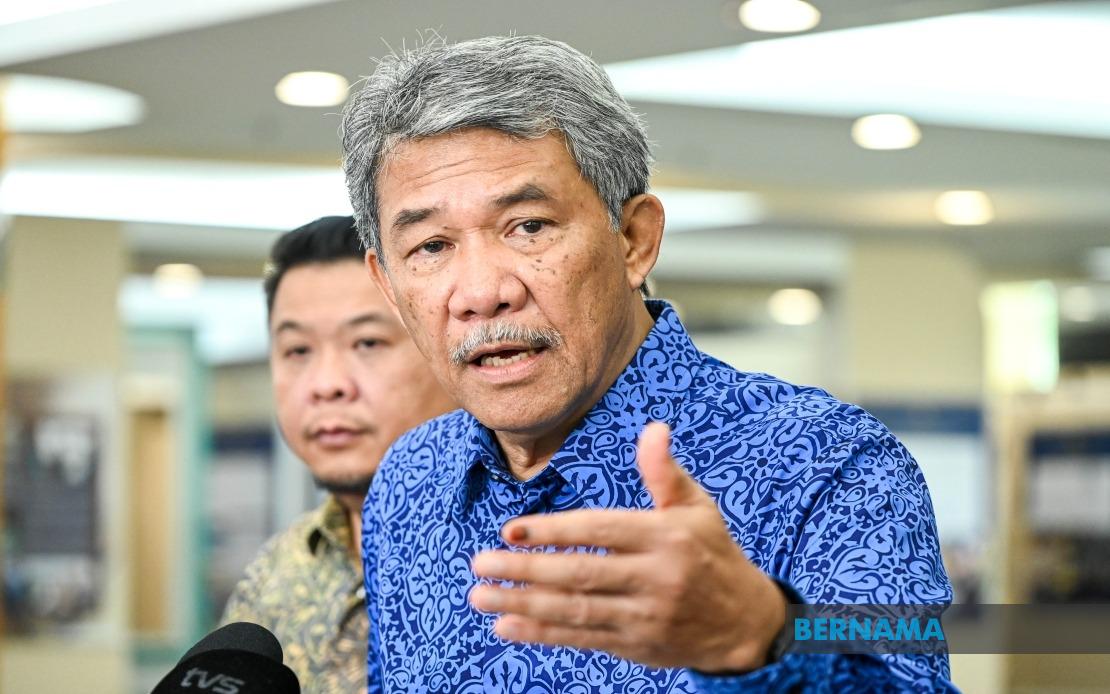
ASEAN is at a critical juncture in its economic development, with regional leaders increasingly recognizing that the bloc's future prosperity depends far less on geopolitical posturing and far more on deepening trade ties among its ten member states. Foreign Minister Datuk Seri Mohamad Hasan articulated this strategic pivot during remarks at the 59th ASEAN Day celebration in Putrajaya on Monday, emphasizing that internal commerce currently captures less than 25 per cent of total trade flows within the association—a figure that reveals significant untapped potential.
The implications of this underperformance are substantial, particularly given ASEAN's projected trajectory toward becoming the world's fourth-largest economic bloc within the decade. Such rankings typically reflect the aggregate GDP of member nations and their capacity to influence global commerce. Yet the concentration of external trade relationships, rather than robust internal purchasing and supply chains, means ASEAN's member economies remain somewhat fragmented and vulnerable to external shocks. When regional trade is weak relative to overall commerce, it suggests that members depend disproportionately on markets outside Southeast Asia for growth, a structural vulnerability that undermines collective resilience and bargaining power.
Modern economic integration requires more than aspirational statements. ASEAN has already established foundational mechanisms designed to facilitate the movement of goods across borders, including tariff reduction frameworks and customs harmonization protocols. Mohamad's reference to the free movement of goods framework indicates these mechanisms exist but may not be operating with sufficient dynamism or effectiveness. The question for policymakers across Malaysia, Indonesia, Thailand, Vietnam, the Philippines, Singapore, Brunei, Laos, Cambodia, and Myanmar is whether current institutional arrangements adequately reduce friction, uncertainty, and transaction costs for cross-border merchants and manufacturers. Bureaucratic impediments, inconsistent regulatory standards, and infrastructure gaps often explain why traders prefer engaging established Western or Chinese supply chains rather than building regional networks.
Malaysia's recent stewardship of the ASEAN chair provided an opportunity to advance the economic agenda through concrete proposals and resolutions that were subsequently enshrined in the Kuala Lumpur Declaration. This continuity of purpose is important; sustained momentum requires that successor chairs, including the Philippines in its current rotation, maintain focus on these initiatives rather than allowing attention to drift toward episodic crises or peripheral concerns. The challenge lies in translating high-level commitments into actionable policy changes at the member-state level, where implementation often falters due to competing domestic priorities or protective attitudes toward domestic industries.
The designation of Malaysia as the Permanent Shepherd and Permanent Auditor of the ASEAN Community 2045 vision suggests the country will play an extended custodial role in monitoring progress toward long-term objectives. This responsibility carries weight because Southeast Asia's transformation into a major economic power hinges on whether intra-ASEAN trade can be substantially elevated from its current trajectory. If trade volumes among members continue to stagnate relative to total commerce, the region risks remaining a collection of bilateral relationships rather than becoming a genuinely integrated single market. For Malaysian policymakers, this role demands vigilance in tracking whether member states are genuinely removing barriers or merely paying lip service to integration principles.
The distinction between 25 per cent and a higher proportion of internal trade carries quantifiable consequences. When member states trade more intensively with each other, they develop deeper knowledge of each other's supply chains, manufacturing capabilities, and consumer preferences. Companies operating across the region build regional networks rather than pursuing opportunistic one-off transactions. Workers and capital circulate more freely to where they generate highest returns, raising overall productivity. Shared infrastructure investments become more economically justified. These dynamics create self-reinforcing cycles that compound competitive advantage over time. Conversely, when regional trade remains shallow, economies develop in relative isolation, missing opportunities for specialization and efficiency gains.
The present moment favors deepening ASEAN integration, particularly as global supply chains diversify away from heavy concentration in single countries. Multinational manufacturers seeking alternatives to exclusive dependence on China or India increasingly view Southeast Asia as an attractive production hub. Yet their willingness to establish regional networks depends on perceiving ASEAN as a coherent market rather than ten separate jurisdictions. Companies will invest heavily in intra-regional distribution, shared services, and specialized component manufacturing only if tariff and non-tariff barriers are truly low and transparent. The quality of ASEAN's commercial environment—encompassing legal certainty, port efficiency, digital infrastructure, and regulatory predictability—thus becomes decisive in determining whether the bloc captures this investment wave.
Malaysian stakeholders have particular interest in accelerating this transformation. The country benefits disproportionately from regional integration due to its geographic position, relatively developed financial and logistics infrastructure, and manufacturing base spanning electronics, petrochemicals, and palm oil processing. Deeper intra-ASEAN trade would afford Malaysian enterprises greater access to markets across the region, while simultaneously encouraging neighboring economies to upgrade their integration with Malaysia's supply chains. Services sectors including banking, insurance, and professional services would expand as companies operating across multiple ASEAN jurisdictions demand regional service providers. Yet these benefits materialize only if Malaysia and its partners genuinely commit to reducing barriers and building institutional capacity.
The economic philosophy undergirding Mohamad's remarks reflects recognition that ASEAN's original focus on political non-interference and consensus-building, while valuable for maintaining stability, has reached diminishing returns as a growth model. Economic integration imposes different requirements. It demands that member states tolerate some loss of policy autonomy in exchange for the gains from specialization and scale. Harmonizing product standards, recognizing professional qualifications, coordinating investment rules, and gradually deepening capital market integration all require member states to cede certain prerogatives to regional arrangements. The transition from political to economic primacy as the organizing principle for ASEAN thus represents a genuine philosophical shift whose implications extend far beyond trade statistics.
The road toward substantially increasing the share of intra-ASEAN trade will not be smooth. Vietnam's competitive manufacturing advantages create tensions with other members seeking to preserve protected industries. Indonesia's sheer size and resource wealth tempt it toward self-sufficiency rather than regional interdependence. Trade imbalances generate political friction, particularly when smaller nations perceive they absorb disproportionate adjustment costs. Intellectual property disputes, regulatory capture by incumbent firms seeking protection from competition, and macroeconomic policy divergences all pose obstacles. Yet the prize justifies sustained effort. A genuinely integrated ASEAN economic bloc with internal trade exceeding 40 or 50 per cent would create an economy of scale that enhances competitiveness against external rivals, provides members with genuine alternatives to dependence on any single power, and distributes growth benefits more equitably across the region. Whether ASEAN members prove willing to undertake the difficult political work required to achieve this vision will largely determine the region's trajectory over the coming decade.

