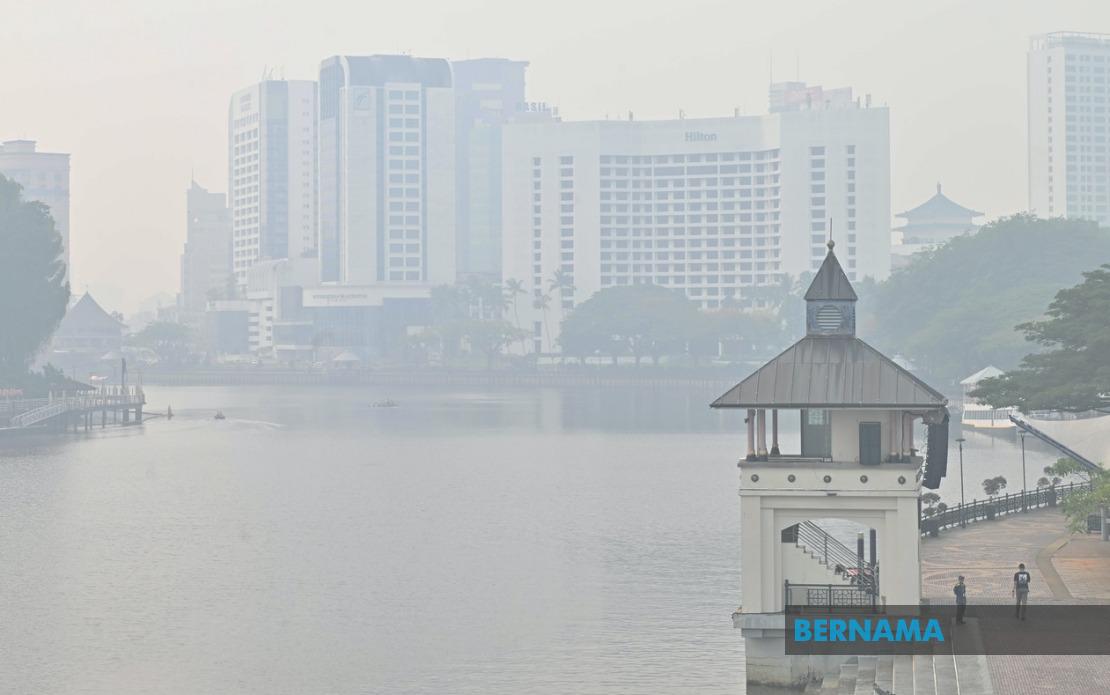
Tan Sri Lee Lam Thye has issued a pointed call for ASEAN to fundamentally reassess its approach to transboundary haze, arguing that two decades of the existing regional agreement have failed to arrest the recurring pollution cycles that plague Southeast Asia. The social activist contends that ASEAN leaders must urgently conduct a high-level review of the ASEAN Agreement on Transboundary Haze Pollution, which was signed in Kuala Lumpur on June 10, 2002 and entered force the following year, and adopt a substantially more robust, time-bound and legally enforceable regional action plan.
Lee's intervention represents a significant challenge to the status quo, framing the persistent haze problem not as a seasonal weather occurrence but as a complex governance, environmental and public health crisis that demands institutional reform. He argues forcefully that ASEAN must abandon its reactive posture and transition toward genuine prevention, coupled with enhanced regional preparedness mechanisms. The recurring nature of transboundary haze events—where smoke from forest and land fires in one country drifts across borders affecting millions in neighbouring nations—has become a defining environmental and health challenge for the region, particularly for Malaysia, Singapore and Indonesia.
Central to Lee's critique is the observation that despite more than twenty years of regional cooperation under the existing agreement, Southeast Asia continues to experience repeated cycles of severe air pollution and cross-border smoke. He emphasises that treating haze as an annual ASEAN ritual obscures the deeper systemic failures in regional coordination and enforcement. The problem, he argues, transcends meteorological factors and instead reflects fundamental weaknesses in how ASEAN countries govern their environmental resources, manage accountability, and implement concrete commitments to prevent fire-related pollution sources.
While acknowledging that the ASEAN Specialised Meteorological Centre has warned of strengthening El Niño conditions, below-normal rainfall patterns and prevailing winds that could increase hotspot activity and transboundary haze risk in southern ASEAN during the coming season, Lee cautions against attributing the crisis solely to natural climate phenomena. El Niño, he notes, represents a cyclical natural occurrence that ASEAN countries have experienced repeatedly. The persistent severity of haze events stems rather from the intersection of these climatic patterns with human-caused forest clearing and open burning practices, which transform dry conditions into regional catastrophes.
Lee proposes a comprehensive suite of reforms to strengthen regional haze governance. First among these is a thorough review of how the existing agreement is implemented, coupled with the establishment of clear, measurable and time-specific targets for fire prevention, hotspot reduction and elimination of recurring transboundary pollution sources. These targets should carry concrete deadlines and be subject to regular monitoring and public reporting to ensure accountability.
Equally important is the enforcement dimension. Lee calls for significantly strengthened accountability mechanisms targeting companies and individuals responsible for open burning and illegal land clearing operations. This must include improved investigation capabilities, mechanisms for sharing evidence across borders, and explicit enforcement procedures when fires demonstrably cause cross-border environmental damage and health impacts. Currently, many perpetrators of large-scale burning escape meaningful consequences, creating a moral hazard that perpetuates the problem.
Lee proposes establishing a permanent institutional mechanism for regional haze response, moving beyond ad-hoc coordination toward standing structures. This mechanism would feature real-time satellite monitoring systems providing comprehensive coverage across ASEAN, rapid information-sharing protocols for hotspot detection, joint firefighting and suppression capabilities that can be mobilised across borders, and clearly delineated responsibilities for each country during serious haze episodes. Such infrastructure would enable faster response times and more coordinated action when fires threaten to create transboundary pollution.
Preventive measures form another pillar of Lee's recommendations. ASEAN countries should establish joint early-warning systems activated ahead of anticipated dry seasons, when fire risk peaks. Enhanced cooperation on peatland and forest management—areas particularly vulnerable to fire and prone to generating thick smoke—would reduce ignition sources. Crucially, Lee emphasises the need for greater transparency in how ASEAN nations share information regarding hotspots, fire origins and enforcement actions taken, which would create public pressure and reduce opportunities for concealment.
Lee argues that Malaysia and other significantly affected nations must be willing to raise this issue at the highest levels of ASEAN deliberation, framing it not as interference in sovereign affairs but as a legitimate concern about protecting the health and welfare of all Southeast Asians. The haze crisis inevitably transcends national borders—residents of Malaysia and Singapore suffer serious respiratory and health consequences from fires ignited in neighbouring countries—making it inescapably a matter of regional collective interest rather than domestic concern alone.
The substance of Lee's intervention arrives at a critical moment for regional environmental governance. Climate change is intensifying drought patterns across Southeast Asia, making fire seasons longer and more severe. Growing land-use pressures from agriculture, palm oil production and development expansion increase incentives for clearing via burning. Without institutional reform that shifts ASEAN's haze response from seasonal firefighting to systematic prevention and enforcement, the problem will likely worsen in coming decades, imposing escalating health, economic and environmental costs across the region.

