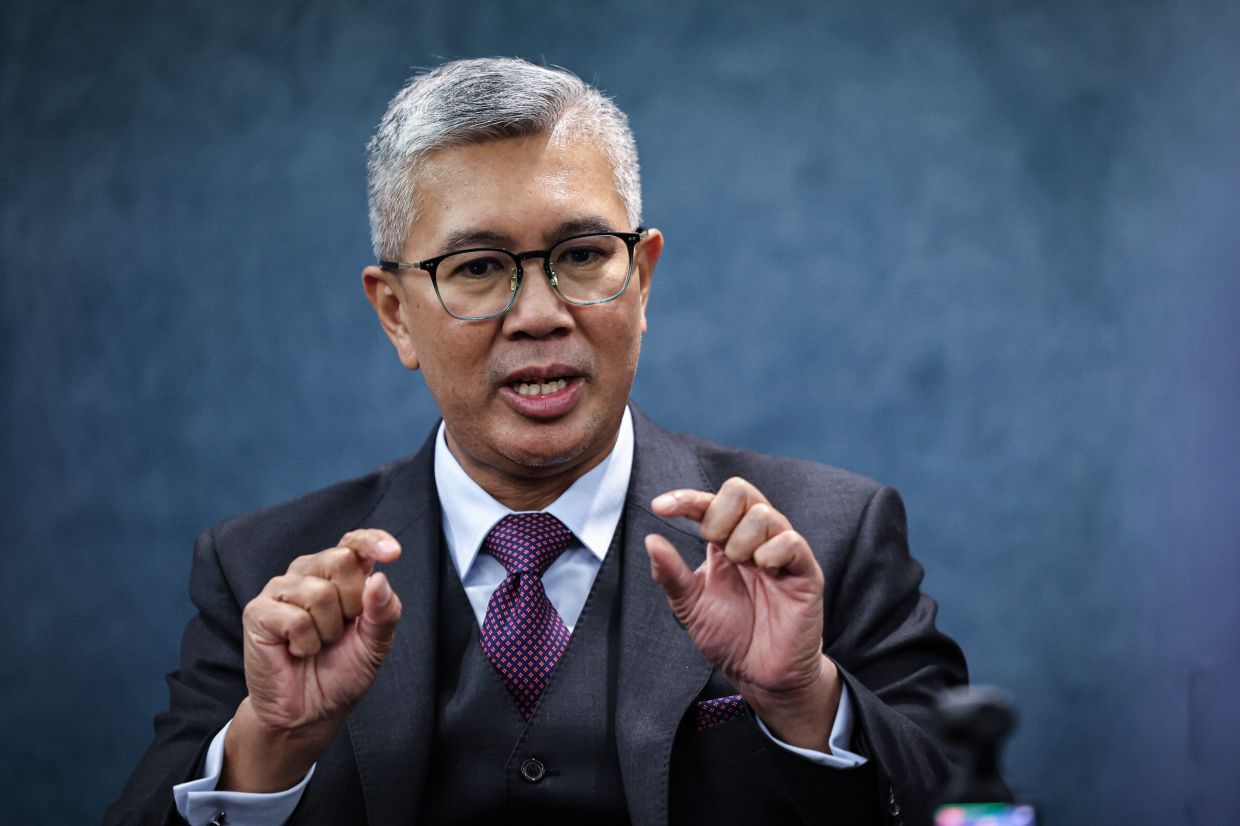
At the 7th International Sustainable Energy Summit in Kuala Lumpur, Malaysian Investment Development Authority chairman Tengku Datuk Seri Zafrul Abdul Aziz delivered a pointed message to ASEAN policymakers: the region's energy challenge is fundamentally one of capital coordination, not ambition. Speaking at the gathering titled "Bridging the Investment Gap in Regional Energy Shifts," Tengku Zafrul articulated a vision of Southeast Asia moving forward on energy security through intensified multilateral cooperation, underscoring the urgent need for ASEAN economies to pool resources and align regulatory frameworks to unlock the massive investment capital required for the bloc's energy transition.
The scale of ASEAN's energy financing requirement is staggering. The region needs approximately US$200 billion annually through 2030—a figure that dwarfs the individual capacity of most member states to finance independently. This calculation underscores why Tengku Zafrul emphasised that while ASEAN nations have demonstrated serious commitment to net-zero goals, the pathway from ambition to execution remains fraught with systemic obstacles. Nearly every ASEAN economy has publicly committed to decarbonisation targets, yet the translation of these pledges into concrete, bankable projects continues to languish due to institutional and structural barriers that require regional solutions.
The bottlenecks plaguing ASEAN's energy transition are well-identified but stubbornly persistent. Projects languish in development pipelines, taking years longer than necessary to achieve the financial viability required for institutional investment. Regulatory frameworks remain patchwork across borders, creating inconsistency and investor uncertainty. Cross-border financing mechanisms are underdeveloped, leaving capital trapped within national silos when it could flow freely to optimal projects throughout the region. Risk-sharing instruments that could make energy infrastructure investments more attractive to institutional investors remain inadequate. These constraints collectively represent what Tengku Zafrul characterised as a coordination crisis—one that renders even substantial sovereign wealth and pension funds reluctant to commit capital at the scale required.
Tengku Zafrul proposed three interconnected regional mechanisms to address this impasse. The first centres on the ASEAN Power Grid, an integration project targeted for completion by 2045 that would fundamentally reshape how the region generates, distributes and consumes electricity. An integrated grid would enable ASEAN's diverse renewable resources to reinforce one another seamlessly. Laos's abundant hydropower could supplement Vietnam's wind generation during low-wind periods. Indonesia's geothermal capacity could provide baseload stability. Malaysia's expanding solar infrastructure could contribute during peak daylight hours. Such geographic and technological complementarity exists nowhere else in the world to such a degree, yet remains unharnessed due to lack of integrated transmission infrastructure and coordinated grid management protocols.
The second initiative—an ASEAN Green Investment Facility—would aggregate sovereign, pension and private capital into a single vehicle designed to de-risk strategic energy projects across member states. The philosophical underpinning is elegant: no single national treasury should bear the full risk burden of regional energy infrastructure. By pooling capital across multiple economies and diversifying investment across projects in different countries, such a facility would reduce perceived risk for institutional investors while distributing exposure across the bloc. This approach has proven effective in other regions and represents a proven mechanism for mobilising the capital needed for energy transition at scale.
The third pillar addresses ASEAN's vulnerability to external shocks—a vulnerability starkly illustrated by recent energy supply disruptions. Tengku Zafrul called for shared emergency protocols that would enable coordinated response when crises strike. Joint fuel reserves managed at the regional level would provide buffer capacity. Coordinated crisis communication protocols would prevent information asymmetries from exacerbating panic. Regional supply-chain monitoring systems would provide early warning of disruptions before they cascade into systemic failures. Collectively, these measures would transform ASEAN from a collection of isolated economies vulnerable to external shocks into a resilient bloc capable of weathering disruptions through mutual support.
Malaysia itself is positioning as a regional leader on energy transition through multiple domestic initiatives. The New Industrial Master Plan 2030 frames energy as central to industrial competitiveness. The National Energy Transition Roadmap provides the technical blueprint for decarbonisation. The Green Investment Strategy creates domestic financial mechanisms to mobilise capital. Yet Tengku Zafrul's message transcended Malaysia's bilateral capacity, emphasising that true leadership in this context means mobilising others rather than acting unilaterally. The energy challenge facing ASEAN is irreducibly regional in character—no single nation can solve it alone, and no nation can insulate itself from regional energy insecurity.
The implications for Southeast Asia are profound. Energy security directly underpins economic stability, industrial competitiveness and social stability. A fragmented, uncoordinated approach to energy transition leaves the region vulnerable to prolonged cost inflation, investment shortfalls and periodic supply shocks. Conversely, a unified regional approach could accelerate capital deployment, reduce financing costs through risk pooling, and create stable frameworks that attract the enormous institutional capital necessary for energy transformation. The difference between coordination and fragmentation could amount to years in achieving transition goals and trillions of dollars in financing costs.
Tengku Zafrul's framing captures a critical insight: ASEAN's energy future will be determined not by technological capability—the region possesses world-leading expertise in renewable generation—but by institutional coordination capacity. The region can generate sufficient renewable energy to meet demand several times over. The constraint is not supply potential but capital mobilisation, regulatory alignment, and cross-border cooperation mechanisms. These are fundamentally political choices requiring sustained commitment from national governments to subordinate parochial interests to collective security.
The urgency Tengku Zafrul emphasised reflects real temporal constraints. Every year of delay in accelerating energy transition extends fossil fuel dependence and increases the ultimate cost of transition. For a region vulnerable to climate impacts and dependent on energy imports, accelerated transition is not merely an environmental imperative but an economic and security necessity. The choice before ASEAN is whether member states will act with the coordinated urgency this challenge demands or whether they will allow the transition to unfold at fractured pace, leaving the region exposed to mounting costs and geopolitical vulnerability.

