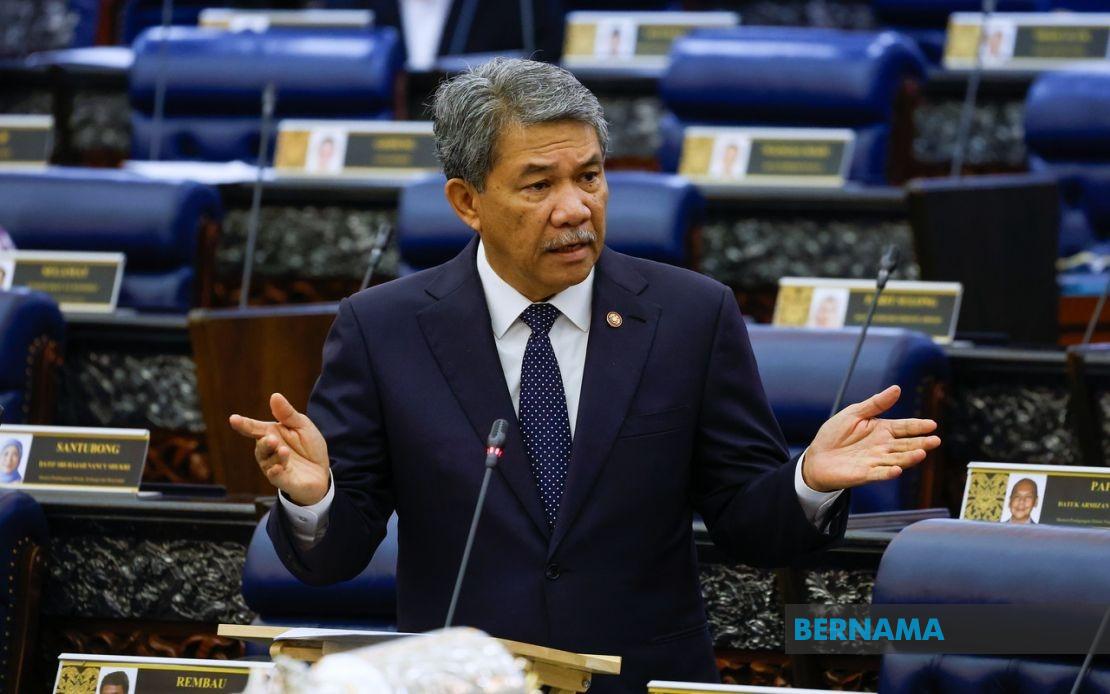
Malaysia's Foreign Minister Datuk Seri Mohamad Hasan has signalled that ASEAN is moving beyond its existing framework to find fresh strategies for resolving Myanmar's entrenched political crisis, acknowledging that the region's established peace mechanism has stalled despite initial promise. Speaking in Parliament on June 25, Mohamad detailed discussions from the 48th ASEAN Summit held in Cebu on May 8, where regional leaders recognised that the Five-Point Consensus, while remaining the cornerstone of diplomatic efforts, required complementary approaches to achieve meaningful progress. The admission represents a significant shift in tone from ASEAN's traditional public messaging on Myanmar, where member states have typically projected unity around the consensus framework even as implementation faltered.
The Five-Point Consensus, adopted in April 2021 following the Myanmar military coup, outlined principles for dialogue, humanitarian assistance, and the appointment of an ASEAN special envoy. However, two years into its existence, the framework has struggled to deliver tangible outcomes as Myanmar's junta consolidated power and armed resistance intensified. Mohamad's remarks suggest that ASEAN acknowledges this stalemate and is quietly recalibrating its approach, even as public commitment to the original framework remains firm. This delicate balancing act reflects the bloc's broader diplomatic challenge: maintaining its principle of non-interference while responding to widespread criticism that its consensus-based diplomacy has proven ineffective in addressing Myanmar's humanitarian catastrophe and political paralysis.
Under the revised strategy agreed in Cebu, ASEAN foreign ministers have been tasked with conducting informal bilateral engagements with Myanmar's leadership to better understand current realities on the ground and chart potential pathways forward. Mohamad emphasised that any substantive modifications to the Five-Point Consensus would require approval from ASEAN heads of state, preserving the bloc's hierarchical decision-making structure while granting operational flexibility to foreign ministers. This distinction between maintaining the framework's symbolic authority and allowing space for tactical adjustment suggests that ASEAN leadership recognises the need to move beyond rhetoric without appearing to abandon its foundational commitment to the consensus mechanism. The informal engagement model may also serve a practical purpose, allowing foreign ministers to explore options with Myanmar's junta without the formality that might provoke domestic political backlash in ASEAN capitals.
Malaysia's specific contributions to this evolving strategy include proposing an extension of Myanmar's current six-month ceasefire, which was set to expire at the end of July. The proposal for a second phase represents an attempt to build momentum from existing ceasefires into a more structured peace process, moving beyond temporary cessations of hostilities toward lasting political settlement. Simultaneously, Mohamad indicated that Malaysia has pressed Myanmar's government to provide a detailed roadmap detailing how dialogue with diverse stakeholders—including ethnic armed groups, the shadow National Unity Government, and the People's Defence Force—would proceed. This emphasis on inclusive negotiations represents an implicit acknowledgement that Myanmar's crisis cannot be resolved through junta-only discussions, yet it also highlights the formidable challenge of bringing fractious opposition elements into a negotiation framework that the junta has repeatedly rejected.
Mohamad's articulation of ASEAN's strategic concern about Myanmar remaining marginalised reveals how regional geopolitics shape the bloc's Myanmar policy. The Foreign Minister explicitly warned against creating a power vacuum in Myanmar that external actors with competing interests could exploit, directly referencing concerns about China, India, and other major powers establishing influence amid ASEAN's perceived diplomatic weakness. This rationale underscores ASEAN's oft-unstated anxiety: that continued failure to manage the Myanmar crisis could lead to its replacement by other regional or global actors, fundamentally altering the region's strategic balance. For Malaysia and other ASEAN members, the fear of external interference provides a powerful incentive to intensify engagement, even if such engagement remains constrained by the junta's limited receptiveness and ASEAN's procedural limitations.
Malaysia's professed willingness to engage with the full spectrum of Myanmar's political actors—the military junta, the National Unity Government, the People's Defence Force, and ethnic armed organisations—positions it as a potential bridge builder, though the practical limits of this approach remain evident. The sheer fragmentation of Myanmar's opposition movements, coupled with the junta's intransigence, creates asymmetrical negotiating dynamics that favour the incumbent military administration. By maintaining channels to all parties, Malaysia can claim to be supporting ASEAN-led peace efforts while simultaneously avoiding endorsement of any single faction, preserving its diplomatic flexibility. However, this multi-track engagement strategy has shown limited success in translating into concrete political progress, raising questions about whether tactical adjustments to ASEAN diplomacy can overcome structural obstacles rooted in Myanmar's internal power struggle.
The practical mechanics of ASEAN's revised approach remain nebulous, with Mohamad offering limited specifics about how foreign ministers' informal engagements would translate into pressure or incentives for Myanmar's leadership. ASEAN's lack of enforcement mechanisms means it must rely on persuasion and the possibility of diplomatic isolation to influence Myanmar, yet the junta has already demonstrated that it is willing to tolerate regional censure. The appointment of a special envoy under the original Five-Point Consensus yielded minimal progress, and there is limited evidence that intensified ministerial engagement will yield fundamentally different results. Nevertheless, the public acknowledgement that ASEAN is exploring new approaches serves an important signalling function to member states' domestic constituencies and to Myanmar's opposition movements, demonstrating that the bloc has not abandoned its diplomatic efforts despite the challenging conditions.
For Malaysia specifically, leadership on Myanmar policy offers opportunities to strengthen its standing within ASEAN and to position itself as a constructive force in regional peace efforts. The proposals for ceasefire extension and comprehensive roadmap development align with Malaysia's broader diplomatic interests in maintaining regional stability and preventing the emergence of state collapse scenarios that could generate refugee flows or security spillover effects. Malaysia's experience with religious extremism and internal diversity may inform its emphasis on inclusive dialogue as a conflict resolution mechanism, reflecting a belief that excluding major stakeholder groups perpetuates grievance and instability. However, these Malaysian initiatives also carry risks; if they are perceived as overly sympathetic to Myanmar's junta or insufficiently attentive to documented human rights violations, they could invite criticism from civil society and opposition quarters in Malaysia and across ASEAN.
The broader context for ASEAN's evolving Myanmar strategy includes mounting international pressure on the bloc to demonstrate tangible commitment to its stated humanitarian values and democratic principles. Western countries, Japan, South Korea, and civil society organisations have all criticised ASEAN's perceived accommodation of the Myanmar junta and its human rights record. By publicly indicating that it is developing new approaches, ASEAN attempts to signal responsiveness to these critiques while maintaining its preference for dialogue over confrontation. The distinction between the Five-Point Consensus framework and new complementary strategies may also provide rhetorical cover for policy adjustments that could be framed as evolution rather than reversal. This diplomatic manoeuvring reflects ASEAN's continuing struggle to balance its cherished principle of non-interference with growing international expectations for more active engagement on governance and human rights issues within member states.
Looking forward, the success of ASEAN's revised approach will likely depend on whether Myanmar's military leadership demonstrates any willingness to move beyond its current political trajectory toward meaningful dialogue. The ceasefire extension proposal and demands for comprehensive roadmaps represent incremental escalation of ASEAN pressure, yet they fall short of the transformative interventions that would be required to resolve Myanmar's underlying political crisis. The junta's consolidation of control over the past two years, coupled with its strategic alignment with external actors including China, has strengthened its negotiating position relative to the fragmented opposition. Unless ASEAN can coordinate sustained pressure with international partners and offer incentives sufficiently attractive to overcome the junta's current calculations, the revised diplomatic approaches risk becoming another layer of rhetoric obscuring the fundamental stalemate in Myanmar's political trajectory. For Malaysia and fellow ASEAN members, persisting with engagement while managing expectations represents the pragmatic course, even as the prospect of breakthrough progress remains uncertain.

