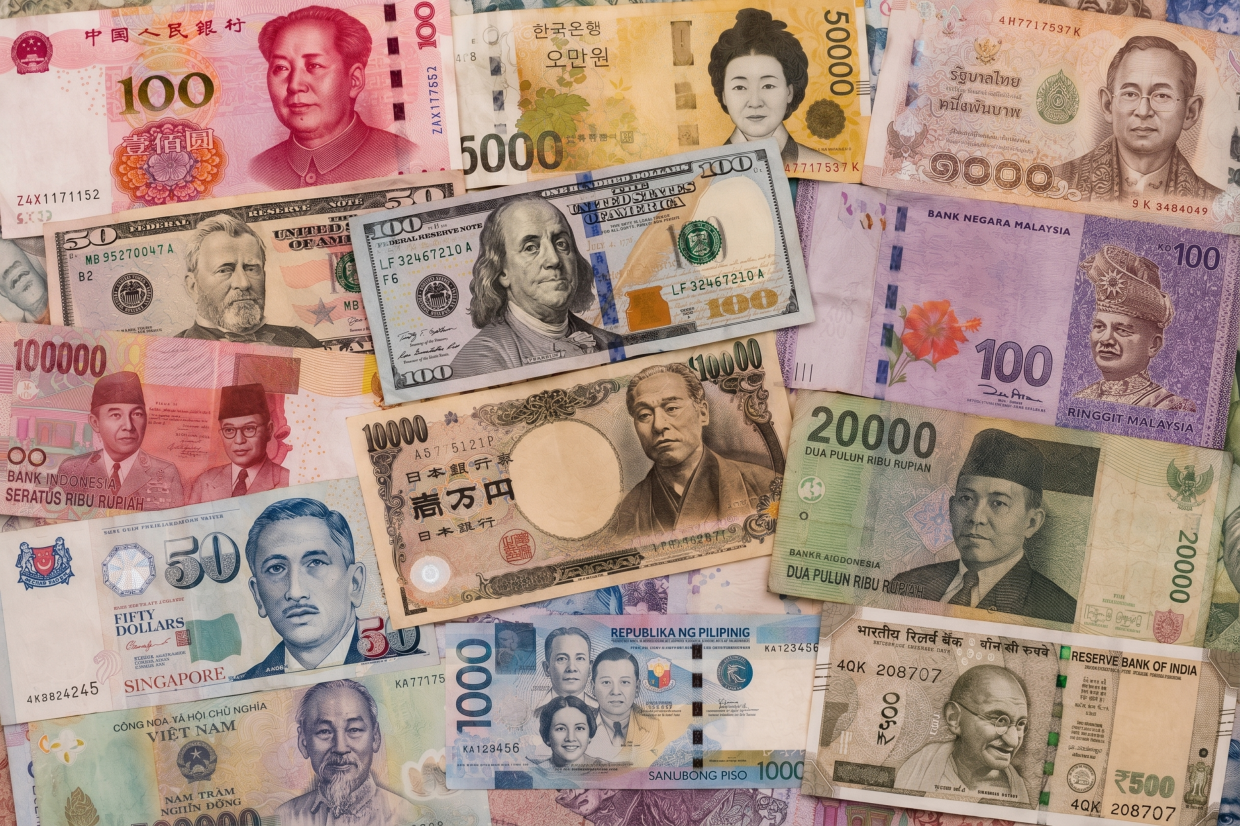
Geopolitical tensions in the Middle East sent shockwaves through Asian financial markets on Monday, battering regional currencies and equity benchmarks as investors sought refuge in the U.S. dollar and reassessed their exposure to inflation-sensitive assets. The flare-up in Gulf conflict pushed oil prices up by four percent, reigniting inflation worries that had begun to ease in recent months and prompting fresh calculations about the likelihood of additional interest rate increases from central banks across the globe. This combination of factors created a particularly challenging environment for emerging market economies already grappling with currency stability and growth challenges.
The surge in crude prices and attendant economic concerns pushed the U.S. dollar index to fresh highs against a basket of major currencies, reflecting the traditional investor flight to safety during periods of geopolitical uncertainty. The greenback's strength immediately put pressure on regional currencies, which weakened considerably as the dollar became the preferred holding amid heightened risk aversion. This dynamic has significant implications for Southeast Asian exporters and companies with dollar-denominated debt, as a stronger U.S. currency makes repayment obligations more burdensome and erodes the competitiveness of regional goods in international markets.
In Indonesia, the rupiah suffered particularly acute depreciation pressure, sliding to 18,140 per U.S. dollar and marking its weakest level in more than a month. The South Korean won fared similarly poorly, tumbling to 1,507.9 against the greenback as regional currency weakness became a broad-based phenomenon. This widespread depreciation underscores how quickly sentiment can shift across emerging Asia when external shocks materialize, and how closely these economies remain tethered to global oil price dynamics and U.S. monetary policy expectations. For policymakers in the region, such episodes highlight the vulnerability of their currencies to forces largely beyond their control.
The equity market fallout in South Korea proved particularly dramatic, with the KOSPI benchmark equity index plummeting 7.96 percent to register a ten-week low and triggering circuit breakers designed to halt trading during excessive volatility. The decline was led by a severe 13 percent collapse in SK Hynix, the world's dominant producer of artificial intelligence memory chips, as investors hastily trimmed positions following the company's successful but frothy U.S. market debut on Friday. The sharp reversal in the semiconductor sector reflects a broader reassessment of valuations that had become stretched on the back of insatiable demand for high-bandwidth memory chips from major artificial intelligence hyperscalers.
Sector-wide concerns about the sustainability of record profit margins have weighed on chipmaking stocks more broadly in recent weeks, as investors question whether the torrid pace of artificial intelligence investment can be maintained indefinitely. Additionally, evidence of more disciplined capital spending by major technology companies has raised questions about whether the supply chain will face temporary oversupply conditions. Complicating matters further, highly leveraged single-stock exchange-traded funds have amplified volatility in the semiconductor space, with forced liquidations exacerbating downward price movements and creating feedback loops that can overwhelm fundamental considerations. These dynamics have proven particularly destabilizing for the Korean market, which has a heavy concentration of memory chipmakers.
Despite the sharp Monday decline, South Korea's benchmark index has demonstrated impressive resilience over the longer term, still posting a substantial 63 percent gain for the year even after falling approximately 25 percent from its record close on June 22. This performance underscores the outsized contribution of semiconductor and technology stocks to the market's overall returns, as well as the sector's continued importance as a driver of Korean economic growth and export competitiveness. Nevertheless, the volatility witnessed in recent sessions has raised questions about the market's sustainability and whether valuations in key sectors have become disconnected from fundamental realities.
In Malaysia, the political landscape added another layer of complexity to market dynamics, as the ringgit weakened to 4.0780 per U.S. dollar even as the domestic equity market rebounded to a three-week high. The contradiction reflected investor uncertainty following Prime Minister Anwar Ibrahim's coalition's defeat in a crucial Johor state election on Saturday, an outcome that has sparked speculation about potential fractures within the federal ruling alliance and the possibility of an early general election. Goldman Sachs analysts warned that any deterioration in political cohesion could erode the policy-stability premium that has supported the ringgit, though they noted that the central bank's recent measures to encourage foreign exchange inflows should provide some cushion against excessive currency depreciation.
The Goldman Sachs assessment captures a critical dynamic affecting Malaysia's economic outlook: while macroeconomic fundamentals remain sound and supportive of stability, political uncertainty introduces a risk factor that investors must price into their allocations and decisions. An early election would disrupt government policy implementation and delay critical reform initiatives, potentially undermining confidence in economic management at a delicate moment when inflation concerns are returning and external headwinds are intensifying. The fact that Malaysian equities rallied despite currency weakness suggests that some investors view domestic assets as attractive on a relative basis, perhaps betting that political uncertainties will be resolved in a manner that preserves policy continuity.
Regional sentiment extended beyond Malaysia and South Korea with decidedly mixed results across the broader Asian landscape. Philippine equities edged modestly higher, while Indonesia's benchmark index gained 0.5 percent despite broader currency weakness affecting the archipelago. Taiwan's market inched lower, tracking the weakness evident in global semiconductor stocks and reflecting the island's significant semiconductor manufacturing footprint. Singapore's benchmark index declined as much as 0.7 percent, snapping an impressive streak of seven consecutive record closes and suggesting that even Asia's most stable financial hub could not remain immune to broader risk-off sentiment.
The confluence of geopolitical tension, inflation concerns, and equity volatility sets the stage for a consequential week ahead in Asian financial markets and policymaking. Investors will closely monitor Singapore's advance second-quarter economic growth data to gauge the underlying momentum in one of the region's key financial hubs, while the U.S. inflation print will provide critical guidance about whether recent commodity price moves represent a transitory spike or a more durable shift in price pressures. The Bank of Korea's interest rate decision carries particular significance given currency weakness and equity volatility, with markets speculating about whether the central bank will hold steady or signal hawkish intent to support the won. Malaysia's inflation print and advance economic output data will help clarify whether the political turbulence is affecting consumer confidence and business investment, factors that could influence the central bank's policy stance in coming months.
The current market environment illustrates how quickly sentiment can shift when external shocks collide with underlying vulnerabilities in sentiment and positioning. For Malaysia and other regional economies, the episode underscores the importance of maintaining policy credibility, managing debt levels carefully, and ensuring that political institutions inspire sufficient confidence to weather periods of external turbulence. The coming week's data releases and policy announcements will provide crucial signals about whether recent volatility represents a genuine economic inflection point or a temporary disruption that policymakers can manage through measured responses and clear communication.

