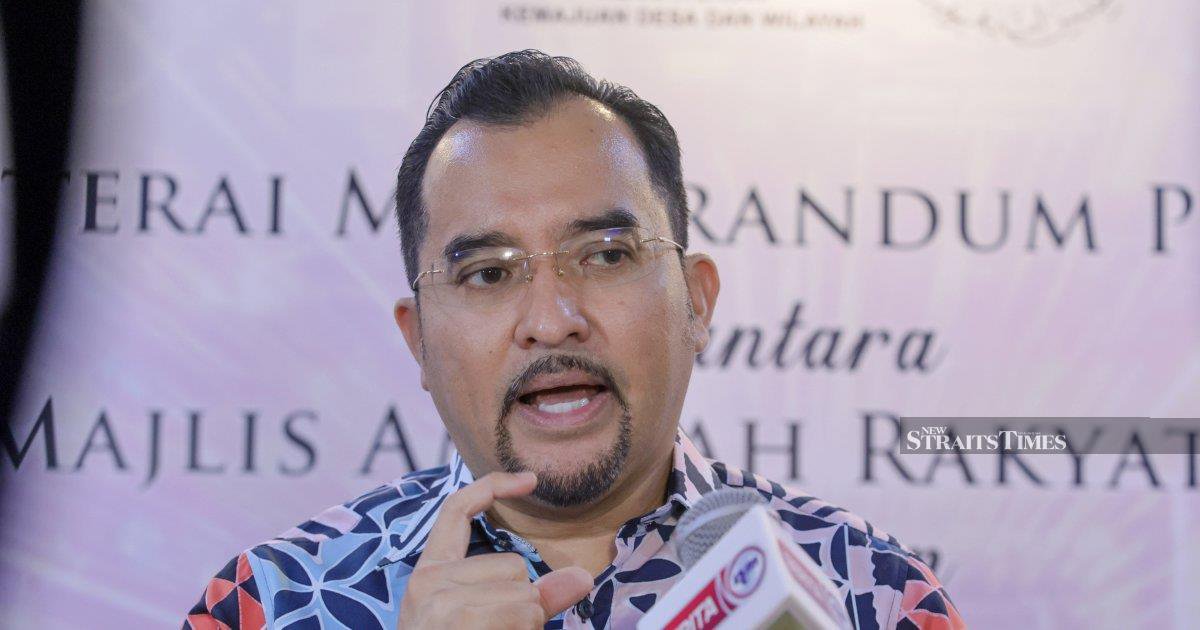
Umno secretary-general Datuk Dr Asyraf Wajdi Dusuki has forcefully rejected assertions that he played any part in Tabung Haji transactions, emphasizing that he possessed neither the jurisdiction nor the involvement necessary to influence such dealings during his time serving as deputy minister in the Prime Minister's Department.
The denial comes amid ongoing scrutiny of Tabung Haji's financial operations and the investment decisions that have drawn public attention in recent months. The pilgrimage fund, which manages billions of ringgit in savings belonging to Malaysian Muslims preparing for their hajj journey, has faced increased scrutiny regarding its investment portfolio and the wisdom of certain high-profile transactions. The Al-Rawda deal in question appears to be among the investments that have come under particular examination by both analysts and observers concerned about the fund's governance and fiduciary responsibilities.
During his period as deputy minister, Asyraf's responsibilities were limited to specific areas within the Prime Minister's Department, and he has clarified that direct oversight of Tabung Haji's commercial transactions fell outside his purview. The organizational structure of government means that different agencies maintain separate authority chains, and ministerial involvement in state enterprises is typically constrained by clearly defined boundaries. His assertion suggests that any decisions regarding Tabung Haji investments would have required different institutional approvals and departmental oversight than what his position would have enabled.
The timing of this denial is significant given the heightened public interest in how Tabung Haji deploys the retirement savings of millions of Malaysian Muslims. The fund operates with the expectation that it will preserve and prudently grow the capital entrusted to it, making investment decisions a matter of considerable importance to its contributors. When major transactions come under scrutiny, questions naturally arise about who approved them and through what decision-making processes they were authorized.
Tabung Haji's investment strategy has historically attempted to balance capital preservation with returns generation, though the fund has faced criticism in recent years for what some observers characterize as overly ambitious or non-core investments. The Al-Rawda transaction, whatever its specifics, represents exactly the type of decision that stakeholders want to understand clearly in terms of who made it, why it was made, and what oversight mechanisms were applied. When such questions arise, officials with any proximity to the decision often feel compelled to establish clear separation between themselves and the transaction.
Asyraf's position as Umno secretary-general adds another dimension to his statement, as party officials are naturally sensitive to allegations that could affect the party's standing, particularly regarding issues of financial propriety and good governance. Umno, having faced its own financial and governance challenges in recent years, is keen to ensure that current party leadership is not implicated in controversial decisions. His clear denial serves the dual purpose of addressing the specific allegation while also protecting his standing within the party and the organization itself.
For Malaysian readers and investors with money in Tabung Haji, clarity about governance and decision-making authority is essential. The fund holds responsibility for managing savings that ordinary Malaysians have set aside, often over many years, specifically for the spiritual and physically demanding journey of hajj. This makes accountability and transparent governance not merely administrative concerns but matters touching the interests of millions of individuals and families. When investments become controversial, understanding the decision chain and the authority of officials involved becomes a pressing matter of public interest.
The broader context of government accountability in Malaysia has evolved significantly over recent years, with increased public demand for transparency and clear attribution of responsibility for major decisions. Citizens and observers are more inclined now to ask detailed questions about who made what decision and why, expecting officials to provide comprehensive answers rather than vague reassurances. Asyraf's detailed denial appears to reflect this expectation that officials should explicitly clarify their role or lack thereof in significant transactions.
Moving forward, the focus may shift to understanding exactly which officials and organizational entities did approve the Al-Rawda deal and through what processes. Tabung Haji's board of directors, investment committee, and senior management would typically be the entities responsible for such decisions, and their rationale and governance procedures may face closer examination. The distinction Asyraf has drawn between his position and decision-making authority serves to redirect attention toward the actual responsible parties.
For potential investors and observers monitoring Malaysian corporate governance more broadly, this situation illustrates the importance of maintaining clear organizational hierarchies and documented decision trails for significant transactions. It also underscores how officials in various capacities can become associated with controversial decisions, even when lacking direct involvement, simply through proximity or overlapping tenure. Asyraf's statement effectively establishes temporal and jurisdictional distance between himself and the transaction in question, attempting to forestall broader questions about his potential influence.

