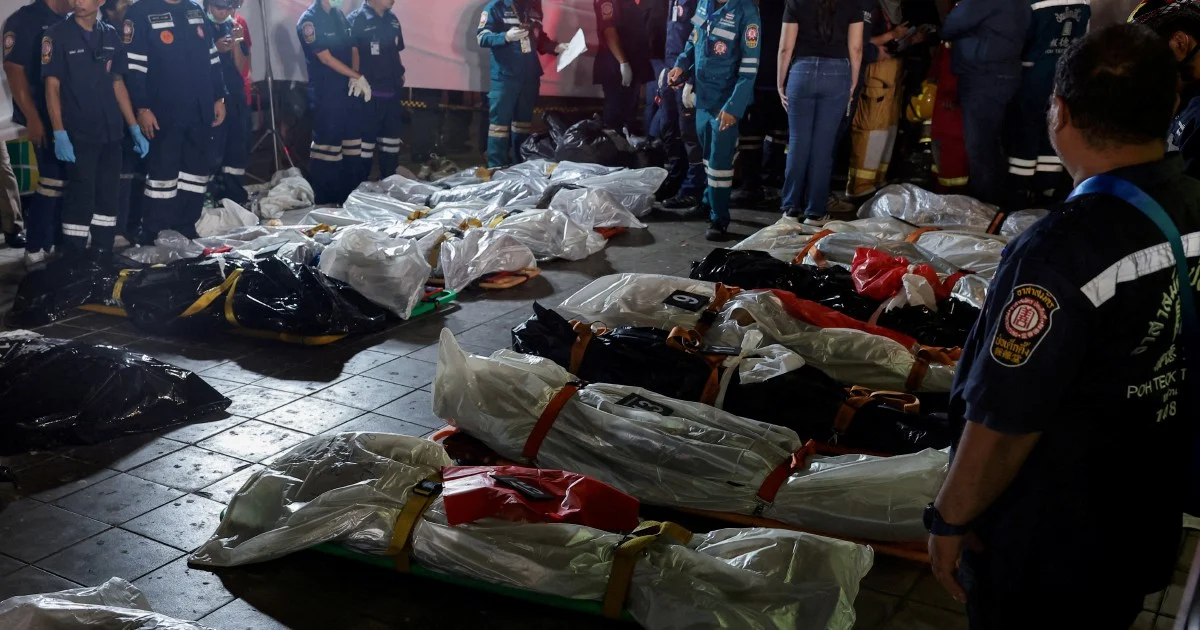
A devastating fire swept through a bar in central Bangkok late Sunday night, claiming at least 27 lives in what represents one of the Thai capital's deadliest entertainment venue incidents in recent memory. Prime Minister Anutin Charnvirakul confirmed the death toll to local media outlets, with emergency responders still investigating the circumstances surrounding the blaze.
The tragedy underscores persistent safety concerns facing Thailand's sprawling nightlife industry, which attracts hundreds of thousands of domestic and international visitors to Bangkok annually. Entertainment venues in the city operate across a diverse ecosystem of establishments, from small karaoke bars and cocktail lounges to large-scale nightclubs hosting thousands of patrons each evening. The incident will likely reignite debates about building code enforcement and fire safety protocols in the kingdom's hospitality sector.
Thailand has experienced several catastrophic nightclub and bar fires over the past two decades. A 2012 arson attack on a Bangkok nightclub killed at least 60 people, ranking among Asia's deadliest peacetime disasters. More recently, a 2021 fire at a converted apartment complex in Chiang Mai claimed 18 lives. These recurring tragedies suggest systemic vulnerabilities in fire prevention measures and emergency response procedures across the country.
Emergency services mobilised rapidly following distress calls, with firefighters battling intense flames and smoke to locate and evacuate trapped patrons. The intensity and speed of the fire's spread likely contributed to the high casualty count, pointing to possible issues with occupancy levels, blocked exits, or inadequate fire suppression systems. Rescue teams continued searching through the damaged premises Monday morning to account for all patrons and identify victims.
The incident carries significant implications for Southeast Asia's tourism-dependent economies, including Malaysia. Bangkok remains one of the region's premier nightlife destinations, attracting substantial tourist revenue that supports thousands of service industry workers. A major disaster of this scale can influence both visitor confidence and regulatory approaches across the region, as neighbouring countries assess their own safety standards against Thai precedents.
Thai authorities will face mounting pressure to conduct thorough investigations into the bar's operational permits, safety certifications, and occupancy limits. Preliminary questions surround whether emergency exits were properly maintained and accessible, whether fire extinguishers and sprinkler systems functioned adequately, and whether staff received adequate evacuation training. Building inspectors will likely audit similar establishments across Bangkok in the coming weeks.
For Malaysian hospitality operators, entertainment venue managers, and local authorities, this incident serves as a sobering reminder of the consequences when safety corners are cut. Malaysia's own regulations governing nightclubs, bars, and similar entertainment spaces exist largely to prevent exactly these scenarios. The proximity of Thailand's tourism infrastructure to Malaysian markets means that safety lapses in one country can affect travel patterns and investment decisions across the region.
The international business community will also monitor Thailand's regulatory response closely. A credible and visible clampdown on non-compliant venues could reassure overseas operators and investors that the government takes safety seriously. Conversely, inadequate responses might prompt international hotel chains, entertainment operators, and insurance companies to reassess their exposure to Thailand's hospitality sector.
Venue operators throughout Thailand and across Southeast Asia face renewed scrutiny regarding their safety protocols. Insurance requirements, liability frameworks, and licensing conditions may tighten significantly in Bangkok in coming months. For the regional hospitality industry, the pressure to demonstrate robust fire safety, emergency response, and occupancy management systems will intensify substantially.
Prime Minister Anutin Charnvirakul's public acknowledgment of the casualty figure signals government awareness of the incident's seriousness. The statement suggests that a formal investigation and policy response will likely follow swiftly, though the ultimate thoroughness and effectiveness of such measures remains uncertain. Thai authorities will need to balance accountability with avoiding perceptions of blame-shifting or inadequate oversight.
For Malaysian readers and businesses with stakes in Thailand's tourism economy, the coming weeks will prove crucial. Attention should focus on whether Bangkok authorities implement meaningful structural reforms to venue safety standards, or whether this tragedy becomes another sobering footnote in a pattern of preventable deaths across Asia's hospitality sector.

