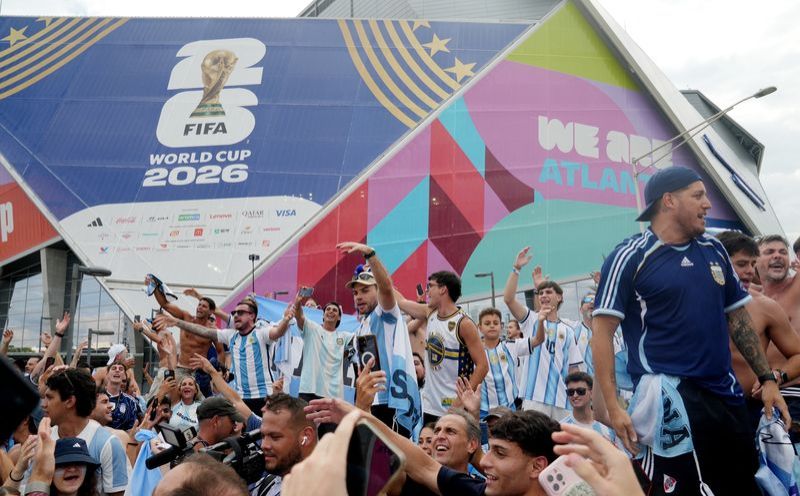
Atlanta's World Cup journey concluded with indelible moments etched across the summer tournament, from Cape Verde's inaugural appearance to Argentina's dramatic comeback victories that propelled them toward the final. The sprawling Georgia city, long celebrated as the epicentre of hip-hop culture, momentarily shifted its cultural rhythm to accommodate the pulsing energy of international football supporters. For nearly a month, the streets and stadiums transformed into a tapestry of global colours, songs, and chants, with visitors and residents alike experiencing an unexpected reimagining of their urban landscape.
The path to hosting these eight matches began modestly in July 2017, when Dan Corso, president of Atlanta's host committee, received an initial inquiry from organisers seeking to expand the tournament's footprint across the United States. Corso's account reveals a pragmatic decision-making process: rapid deliberations within the committee swiftly led to Atlanta's commitment to pursue hosting rights. The city's existing infrastructure and demonstrated passion for soccer provided significant advantages during the selection phase.
Atlanta's credentials as a football destination had strengthened considerably in the years preceding the World Cup. The establishment of Major League Soccer franchise Atlanta United in 2017 marked a watershed moment, introducing top-tier professional soccer to a market that had previously lacked such representation. The club's immediate success—including a cup victory in 2018—signalled genuine community interest beyond curiosity. Perhaps more tellingly, Atlanta United consistently achieved the highest attendance figures across the entire MLS, a statistic that carried substantial weight during FIFA's venue evaluation process.
The city's soccer infrastructure received further validation through philanthropic commitments from club ownership. Arthur Blank, who controls both Atlanta United and the National Football League's Falcons, allocated $50 million toward establishing the U.S. Soccer National Training Center on the city's periphery. This investment demonstrated not merely financial capacity but institutional commitment to developing grassroots talent and professional-level facilities. Corso acknowledged this layering of factors: the club's competitive success, its unmatched attendance records, and the convergence of elite soccer infrastructure all combined to present Atlanta as a credible candidate.
Atlanta's experience hosting major international sporting events provided additional reassurance to FIFA selectors. The city had previously organised the 1996 Olympic Games, positioning it among America's most experienced hosts of global sporting occasions. The upcoming Super Bowl in 2028 would mark the fourth instance of Atlanta staging American football's championship, underscoring the city's operational capacity and venue sophistication. This track record suggested that logistical challenges and crowd management would be handled with competence. The last significant international soccer event in Atlanta, however, stretched back three decades, making the World Cup matches a momentous return to the spotlight.
The tournament itself proved remarkably successful in attracting audiences. More than 544,000 fans attended eight matches, including three knockout round contests, with the semi-final between Argentina and England particularly capturing international attention through its dramatic conclusion. Simultaneously, the Fan Fest ancillary programme drew in excess of 500,000 additional visitors across its 19-day operation, indicating that World Cup enthusiasm extended well beyond stadium gates into the broader community experience. This attendance success underscored genuine regional interest rather than obligatory patronage.
Community mobilisation underpinned the tournament's smooth execution. Over 2,000 Atlantans and Georgians volunteered their time, transforming the event from an imported spectacle into a shared civic endeavour. Corso emphasised the personal significance these matches held for residents, suggesting that hosting the World Cup provided transformative memories and deepened understanding of international football culture. For many participants, particularly those with limited prior exposure to soccer, the tournament represented an accessible entry point into global sporting consciousness.
Beyond immediate entertainment value, the World Cup catalysed lasting infrastructural improvements with long-term developmental implications. Working alongside the Metropolitan Atlanta Rapid Transit Authority (MARTA) and the nonprofit Soccer in the Streets programme, the host committee commissioned a new mini-pitch designed to provide free football access to children across the region. This initiative addresses equity in youth sports participation, extending soccer's reach beyond traditionally privileged demographics. Such infrastructure investments demonstrate how major sporting events can leave tangible community benefits extending years beyond the tournament's conclusion.
Atlanta's ambitions extend considerably further into the coming decade. The city will welcome a new Women's National Soccer League franchise in 2028, coinciding with the Super Bowl's return to the city. This expansion directly reflects the World Cup's role in elevating soccer's profile and demonstrating viable commercial potential within the Atlanta market. The professional women's club will build upon existing grassroots momentum and emerging fan interest catalysed by the World Cup matches.
Moreover, Atlanta has positioned itself as a candidate for hosting the 2031 Women's World Cup, a tournament that would cement its status as a premier soccer destination alongside other traditional American sporting capitals. This aspiration appears grounded in realistic assessment rather than speculative optimism, given the successful execution of this summer's matches and the city's comprehensive sporting infrastructure. Success in 2031 would represent the culmination of a multi-year transformation from a city where soccer occupied marginal cultural space to one where the sport occupies a central position in the urban identity.
For Southeast Asian readers and observers, Atlanta's trajectory offers instructive lessons regarding sports infrastructure development and event-driven economic stimulus. Cities throughout Malaysia, Indonesia, Thailand, and the Philippines may recognise parallels with their own aspirations to host major international sporting tournaments. Atlanta's experience demonstrates that hosting major events requires not merely sufficient venues but sustained commitment to grassroots development, professional league establishment, and long-term facility investment. The convergence of these elements, rather than any single factor, proved decisive in FIFA's selection process and subsequent tournament success.

