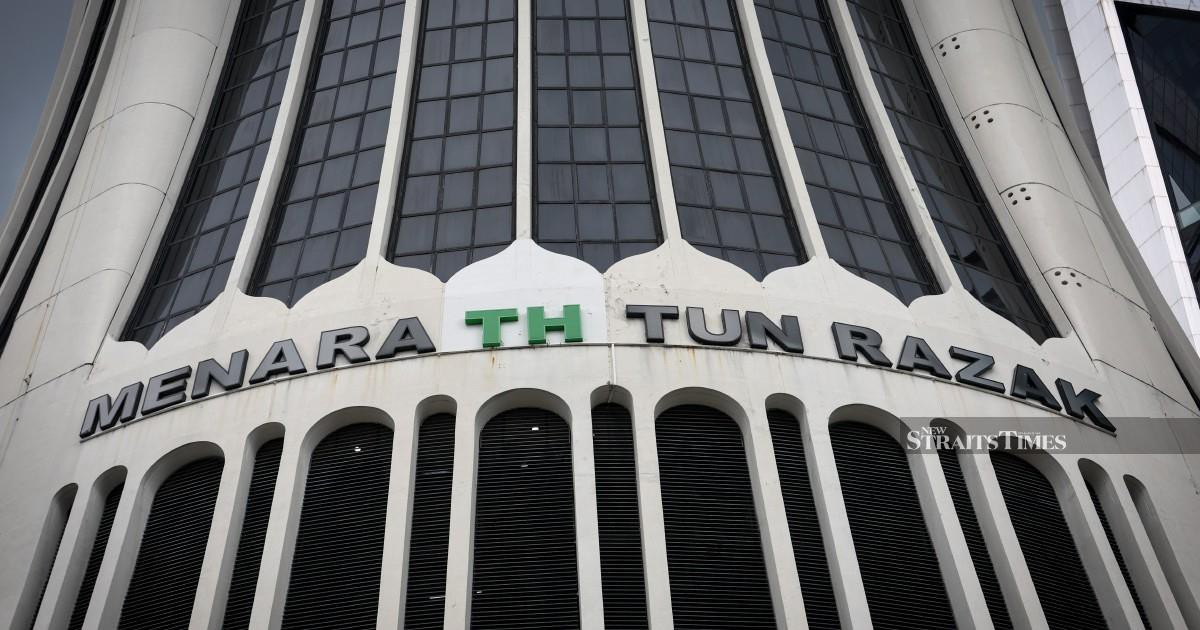
The integrity of Malaysia's financial oversight machinery faces fresh scrutiny after civil society organisation Cagamas for Change (C4) escalated concerns over a substantial discrepancy in how two major government bodies have documented the state of Lembaga Tabung Haji (TH). The RM4.8 billion gap separating the findings of the Royal Commission of Inquiry report from those submitted by the National Audit Department has triggered calls for a fundamental reassessment of how the audit institution conducts its work and exercises its mandate.
This divergence represents far more than a mere accounting inconsistency. The two institutions examined the same pilgrim fund's financial health yet arrived at markedly different conclusions, a situation that undermines public confidence in governmental checks and balances. For Malaysian citizens who entrust their savings to TH—a scheme administered with religious sanctity and promised security—such discrepancies carry profound implications. The presence of conflicting official narratives about the fund's true financial position demands transparent explanation and accountability.
The National Audit Department, traditionally positioned as an independent guardian of public resources, operates under a constitutional mandate to scrutinise government spending and validate financial reporting. That its assessment diverges so substantially from an RCI investigation suggests either methodological differences, interpretive variations, or potentially more troubling gaps in institutional rigour. C4's intervention indicates that civil society observers have registered these inconsistencies as systemic rather than technical matters.
Tabung Haji itself remains a sensitive institution within Malaysia's socioeconomic landscape. As a savings scheme serving predominantly Muslim contributors preparing for pilgrimage to Mecca, it carries both financial and spiritual significance. Previous controversies surrounding TH's management and investment decisions have already eroded public trust. The current audit discrepancy compounds existing anxieties among the nearly three million account holders nationwide who depend on TH to safeguard their hajj funds and generate returns.
The timing of C4's formal call for departmental review reflects broader concerns about institutional accountability in Malaysia's post-1MDB era. Governance watchers have noted that several major financial scandals might have been detected earlier had audit and oversight mechanisms functioned with greater independence and rigour. The Tabung Haji situation now provides another test case for whether such institutions have genuinely reformed their practices or whether structural vulnerabilities persist.
A comprehensive audit department review would necessarily examine multiple dimensions: the methodologies employed to assess fund solvency, the criteria used to determine financial standing, the adequacy of investigative resources, and whether institutional independence extends to challenging official narratives when evidence warrants scrutiny. Such an examination could also assess whether the department operates with sufficient authority to demand comprehensive documentation from fund managers and whether it possesses technical expertise matching the complexity of contemporary financial instruments.
For regional observers, the Malaysian situation carries particular resonance. Several Southeast Asian nations operate pilgrimage savings schemes and hajj finance mechanisms; institutional failures in Malaysia's version attract attention from counterpart bodies across Brunei, Singapore, and Indonesia. A credible overhaul of audit procedures could establish regional best practices, while institutional drift might invite emulation of weaker oversight models elsewhere.
The RM4.8 billion figure itself warrants contextualisation. This represents a substantial sum relative to TH's operational scale and reserves base. Whether such a discrepancy arose from definitional differences, accounting period variations, treatment of contingent liabilities, or valuation methodologies carries different implications for reform priorities. Transparency about precisely where the two assessments diverge would facilitate public understanding and guide remedial actions.
C4's intervention also reflects the role Malaysian civil society organisations have assumed in pressing for institutional accountability when formal oversight mechanisms appear insufficient. Anti-graft watchdogs cannot compel change independently, but their public advocacy creates political pressure for authorities to demonstrate responsiveness. The credibility of such calls depends significantly on whether they prove prescient—whether subsequent investigation validates concerns or reveals them as overstated.
The National Audit Department's response to these criticisms will prove consequential. A defensive posture that dismisses concerns risks confirming doubts about institutional rigour. Conversely, a willingness to engage substantively with critique and acknowledge potential refinements could demonstrate adaptive governance. Senior audit leadership faces pressure to explain the discrepancy transparently and articulate what systemic improvements might prevent similar divergences.
For Tabung Haji account holders, resolution of this dispute carries practical significance. Accurate financial assessment determines whether the fund can sustain benefits, maintain investment portfolios, and navigate challenging market conditions. Ambiguity about true financial status compounds anxiety among contributors already concerned by previous controversies and volatile investment performance.
The broader institutional question transcends Tabung Haji specifically. Malaysia's governance architecture depends on multiple institutions functioning interdependently—audit, investigation, prosecution, and judiciary. When audit findings diverge significantly from other authoritative assessments, it signals potential systemic dysfunction requiring investigation and correction. C4's call for departmental review therefore represents not merely criticism of a single institution but concern about whether integrated oversight systems function as designed.

