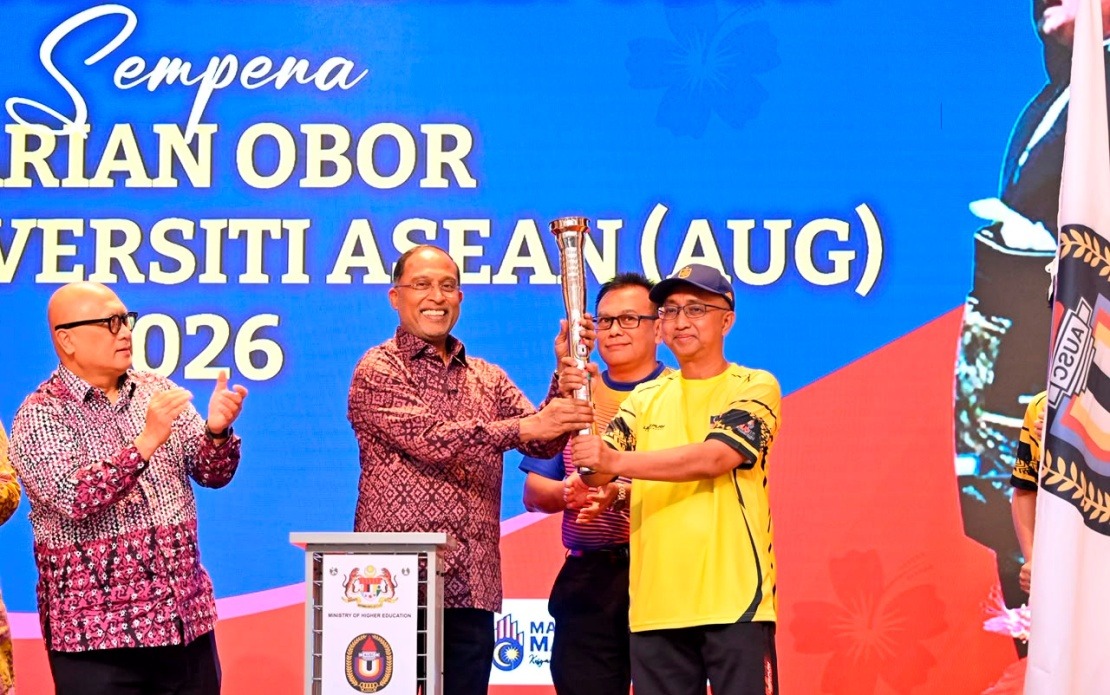
Malaysia has formally ignited its preparations for hosting the 2026 ASEAN University Games with a symbolic torch relay that commenced at the Ministry of Higher Education headquarters in Putrajaya. The ceremonial handover, presided over by Higher Education Minister Datuk Seri Dr Zambry Abd Kadir, marks an official pivot toward one of the region's most significant university-level sporting competitions. The torch was passed to Prof Dr Mohammad Ismail, who chairs the Malaysian contingent as Deputy Vice-Chancellor of Student and Alumni Affairs at Universiti Malaysia Kelantan, during the ministry's monthly assembly gathering.
The torch relay carries profound symbolic weight for Malaysian sports leadership as the nation prepares to showcase its capabilities on a regional platform. Dr Zambry emphasised during the handover ceremony that Malaysian athletes carry not merely personal competitive ambitions but the responsibility of representing national pride and sporting excellence across Southeast Asia. His remarks underscored the government's determination to position the upcoming games as a showcase of Malaysian competence and commitment to athletic development within ASEAN. The minister's rhetoric framed the torch as representing victory and national honour, connecting institutional ambition with grassroots sporting participation.
Four accomplished national athletes participated in the initial torch procession, representing diverse sporting disciplines and Malaysian educational institutions. Long jumper Andre Anura Anuar and shot putter Nani Sahirah Maryata, both competing for Universiti Putra Malaysia, demonstrated the strength of Malaysia's track and field contingent. Karate athlete Thevendran Kaliana Sundram, competing for Universiti Pertahanan Nasional Malaysia, alongside taekwondo athlete Lee Hui Yee from Sultan Salahuddin Abdul Aziz Shah Polytechnic, highlighted Malaysia's competitive prowess across combat sports disciplines. Their participation reflected deliberate selection of athletes from different institutional backgrounds and sporting specialties.
The torch's journey will extend beyond the initial Putrajaya ceremony, traversing Malaysia's premier higher education institutions and cultural establishments. The relay began at the Ministry of Higher Education grounds and proceeded through the Ministry of Tourism, Arts and Culture before returning to the starting point. Subsequent phases will involve five major universities: Universiti Kebangsaan Malaysia, Universiti Putra Malaysia, Universiti Pertahanan Nasional Malaysia, Universiti Malaya, and Universiti Teknologi MARA. This strategic routing ensures the Games receive visibility across Malaysia's most influential academic institutions, building anticipation and institutional pride ahead of the December competition.
The ASEAN University Games 2026, scheduled for December 10 to 19, represents a substantial undertaking for Malaysian sports infrastructure and planning. The Games will assemble approximately 4,669 participants, comprising 2,849 competing athletes and official delegation members from all eleven ASEAN nations. Beyond the athlete contingent, organisers have allocated 700 positions for referees and competition officials, ensuring proper adjudication across all sporting disciplines. Additionally, nearly 920 volunteers will provide logistical and administrative support, reflecting the extensive human resources required to orchestrate a multi-nation, multi-sport championship.
Nineteen different sporting disciplines will feature across multiple Malaysian venues during the two-week competition window. Shah Alam, Kuala Lumpur, Serdang, and Bangi have been designated as primary competition locations, distributing events across the Klang Valley region's sporting facilities. This geographic spread allows for utilisation of existing infrastructure while avoiding overburdening any single venue. The dispersed arrangement also provides different ASEAN delegations with varied experiences of Malaysian metropolitan and suburban environments, potentially strengthening people-to-people connections beyond formal competition schedules.
The official theme of ASEAN University Games 2026—"HOLISTIC.EXCELLENCE"—encapsulates Malaysia's philosophical approach to the event, emphasising comprehensive athletic development alongside academic and personal achievement. This thematic framework suggests Malaysian organisers view the Games not merely as a sporting competition but as a vehicle for advancing holistic student development within the ASEAN region. The emphasis on excellence across multiple dimensions aligns with contemporary university leadership philosophy that values athletic accomplishment integrated with academic rigour and character development.
Hosting a major regional sporting event carries significant implications for Malaysia's positioning within ASEAN and broader Southeast Asian geopolitics. Successful organisation of the Games would enhance Malaysia's reputation as a capable sporting nation and competent event organiser, potentially strengthening its soft power influence across the region. The competition provides Malaysian universities with opportunities to demonstrate institutional quality and athletic development programmes to regional peers, potentially attracting international student recruitment and research collaboration. The Games also generate media attention that showcases Malaysian urban infrastructure, hospitality services, and organisational capabilities to a regional audience.
From a domestic perspective, the Games offer Malaysian universities motivation to enhance athletic training programmes and sports facility development. Competition on an international ASEAN stage incentivises Malaysian institutions to invest in coaching expertise, athlete support systems, and competitive infrastructure. The pressure to perform well against established regional rivals from Thailand, Vietnam, and the Philippines may catalyse improvement in Malaysian university sports administration and resource allocation. For Malaysian athletes, competing against premier ASEAN university sports programmes provides invaluable experience and exposure to international training standards.
The torch relay initiative demonstrates Malaysia's commitment to building sustained momentum leading to the December competition. Rather than treating the Games as a distant future event, the relay transforms the competition into an immediate, visible, tangible undertaking with symbolic and psychological significance for participating institutions. Each university stop along the relay route provides opportunities for institutional ceremonies, athlete recruitment efforts, and community engagement activities. The torch becomes a physical manifestation of Malaysia's determination to succeed on the regional sporting stage.

