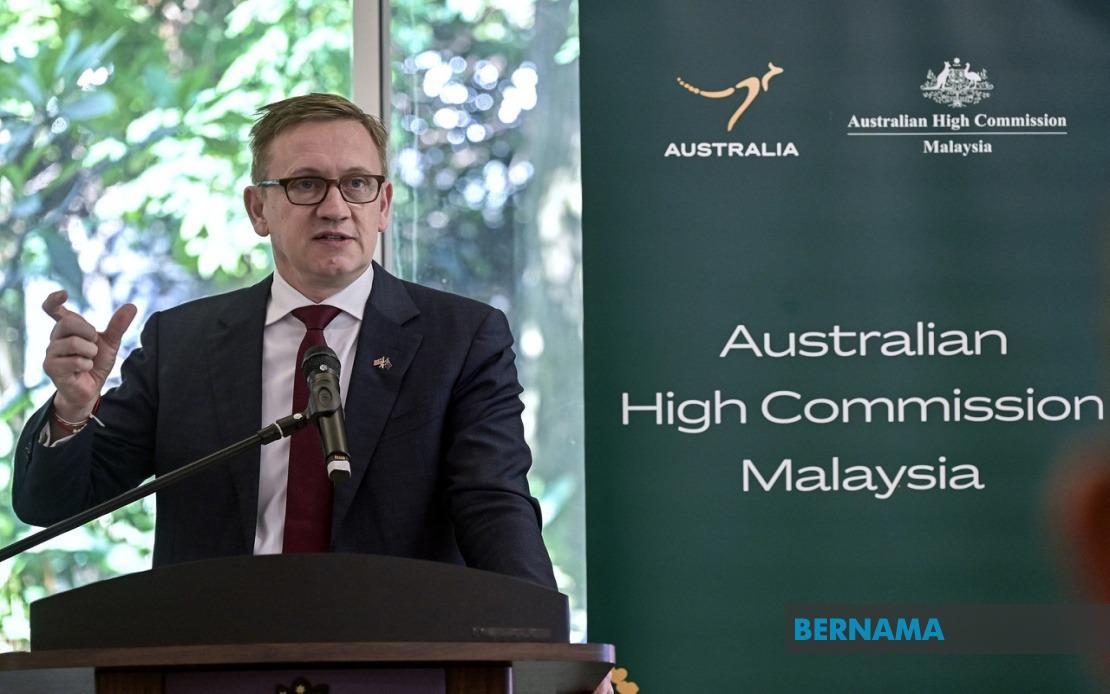
Australia has formally launched the Australia Awards-Malaysia Semester Programme, a targeted scholarship scheme designed to expand educational opportunities for Malaysian undergraduates and postgraduates seeking international study experiences. The initiative, unveiled by Australia's Assistant Minister for International Education Julian Hill at a ceremony in Kuala Lumpur, marks a strategic pivot in how Canberra approaches educational exchange with one of Southeast Asia's most important partners.
The scholarship programme represents more than a simple financial mechanism. Hill framed it as an intentional investment in bilateral relations, arguing that educational mobility serves as a foundation for deeper economic cooperation and enduring diplomatic connections. He emphasised that over half a million Malaysians have historically pursued studies in Australia, many of whom have returned home to become informal ambassadors for the country. The government's reasoning is straightforward: by enabling more students to experience Australian campuses firsthand, Canberra hopes these individuals will maintain lifelong connections that benefit both nations across multiple sectors.
For Malaysian students, the programme offers comprehensive financial support covering the full spectrum of overseas study costs. Successful applicants receive funding for international airfares, accommodation, living expenses, visa fees, travel insurance and related costs while undertaking up to two semesters at participating Australian institutions. This breadth of coverage removes significant financial barriers that often prevent talented but economically disadvantaged students from accessing premium international education, thereby democratising access to Australian university experiences across Malaysia's socioeconomic spectrum.
The pilot phase commenced in July with an inaugural cohort of 16 Malaysian students, who departed earlier in the year to begin their studies. This measured approach allows the Australian government to evaluate programme effectiveness, gather data on student outcomes, and refine mechanisms before potential expansion. Hill confirmed that the government has committed funding for an initial four-year period aligned with Australia's budget cycle, signalling serious investment without making permanent commitments that could prove politically difficult if circumstances change.
Three Australian university branch campuses in Malaysia currently participate as partner institutions: Curtin University Malaysia, Monash University Malaysia, and the University of Wollongong Malaysia. Additionally, Swinburne University of Technology Sarawak Campus has been invited to join the pilot, though all four Malaysian-based branch campuses may eventually participate. This institutional diversity is strategically important, as it prevents any single university from dominating the programme and encourages healthy competition for student applicants, potentially driving quality improvements across providers.
Hill articulated a reciprocal vision that extends beyond Malaysian access to Australian campuses. He explicitly stated that Australia views educational exchange as a two-way street and expressed hope that more Australian students would increasingly choose to study at the country's Malaysian branch campuses through complementary initiatives such as the New Colombo Plan and semester exchange schemes. This framing acknowledges Malaysian educational capacity and positions Australia's universities in Malaysia not merely as offshore delivery centres but as genuine academic hubs capable of attracting international students, including Australians themselves.
Beyond direct student mobility, Hill highlighted the research and innovation potential embedded within Australia's Malaysian university presence. He characterised these institutions as centres of knowledge generation rather than simple teaching facilities, capable of conducting research that addresses shared challenges between the nations. Medical science, clean energy, mining and agriculture emerged as priority domains where Australian and Malaysian academics might collaborate on problems relevant to both countries, reflecting broader regional concerns about sustainability, resource management and public health.
The programme sits within Australia's strategic pivot toward Southeast Asia and represents a deliberate effort to strengthen people-to-people engagement while maintaining economic competitiveness. By funding educational exchange, Canberra invests in future business leaders, policymakers and professionals who will remember their Australian experiences when making decisions about trade partnerships, investment destinations and diplomatic alignments. This long-term perspective explains why Hill emphasised value-for-money in deploying Australian taxpayer funds—the programme justifies itself not merely through immediate educational outcomes but through anticipated decades of relationship-building and mutual benefit.
For Malaysian policymakers and education stakeholders, the programme offers valuable lessons about positioning Malaysia's own educational sector regionally. That Australia actively promotes its universities in Malaysia while simultaneously creating incentives for Malaysian students to study in Australia reflects confidence in both directions of educational flow. MARA, represented at the launch by Chairman Dr Asyraf Wajdi Dusuki, will likely consider how Malaysia might similarly leverage its educational institutions to attract regional students while supporting Malaysians pursuing studies abroad.
The Australian High Commission's involvement reflects diplomatic prioritisation of educational ties beyond traditional government-to-government relations. High Commissioner Danielle Heinecke's presence alongside Hill and university representatives demonstrated institutional commitment to the programme's success. This multi-level institutional support—combining diplomatic resources, ministerial attention and university participation—suggests that Canberra views Malaysia as a priority market for educational engagement within Southeast Asia, particularly as competition intensifies among developed nations seeking to attract talented Asian students.
Looking forward, Hill explicitly expressed hope that the pilot programme would eventually transition into a permanent fixture of Australia-Malaysia relations, though the government has not yet committed to funding beyond the initial four-year commitment. This hedged language reflects budgetary realities and political pressures, but it also leaves room for expansion if early cohorts demonstrate strong outcomes. The 16 pioneer students carry particular responsibility—their experiences and outcomes will substantially influence whether Australian policymakers eventually transform this pilot into a sustained, large-scale initiative.
The programme's timing carries significance given broader regional educational competition and geopolitical dynamics. As Southeast Asian governments increasingly view education as both a development tool and soft power instrument, Australia's initiative demonstrates recognition that sustained regional engagement requires continuous investment in human connections. For Malaysian students, particularly those from middle-income backgrounds who might not otherwise access premium international education, the Australia Awards-Malaysia Semester Programme represents a tangible opportunity to enhance qualifications, build international networks and gain competitive advantages in increasingly globalised professional markets.

