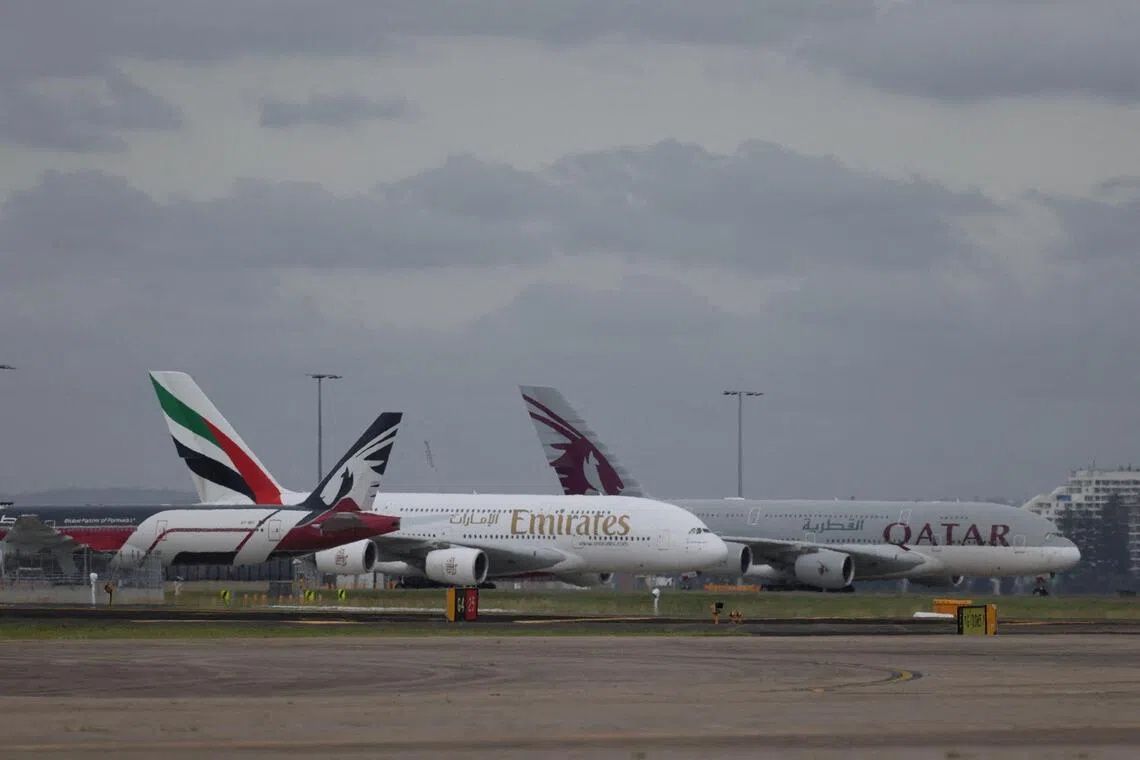
Australia's aviation regulator has launched a formal inquiry into three alarming near-miss incidents that occurred at Sydney Airport in recent weeks, reigniting concerns about runway safety protocols and the capacity of the nation's busiest aviation hub. The incidents, which unfolded between late July and mid-August, have prompted the Transport Safety Bureau to examine potential systemic failures in air traffic management, with the country's Transport Safety Bureau Chief Commissioner Angus Mitchell pledging a comprehensive review of procedures and personnel.
The most recent occurrence happened on August 9 when a Virgin Australia Boeing 737 that had been authorised for takeoff by air traffic control suddenly encountered a Qantas aircraft crossing the runway directly ahead. The Virgin Australia flight crew managed to halt their aircraft approximately one kilometre away from the Qantas plane, which had itself received clearance to taxi across the runway—suggesting a fundamental breakdown in traffic sequencing at the point when both aircraft were cleared simultaneously for conflicting movements. This incident occurred during what authorities characterised as a training or supervisory scenario, adding complexity to the operational picture.
Compounding the gravity of the situation, an earlier incident the same day involved a Jetstar pilot who was forced to make an emergency braking manoeuvre to avoid striking a Qatar Airways jet. The proximity of two serious runway incursions within hours at a single airport significantly elevated the severity assessment of the safety situation. These twin incidents occurred just two weeks after Qantas planes narrowly averted a collision on July 27 following takeoff clearances, establishing a troubling pattern within a compressed timeframe.
The clustering of these near-misses has prompted authorities to examine whether Sydney Airport's operations are straining beyond their safe capacity during peak expansion periods. Mitchell highlighted that the aviation sector is currently in a critical phase of growth, with aggressive recruitment and qualification programmes for air traffic controllers being rolled out to meet surging international travel demand. This hiring and training cycle, while necessary for accommodating increased flights, appears to have created vulnerabilities in operational consistency that these incidents have exposed.
A particularly disturbing aspect of the August 9 incident involves questions about the timeliness of official reporting. The delay in notifying relevant parties about the near-miss has prompted separate scrutiny into communication protocols between operational staff, supervisory personnel, and regulators. Such reporting delays can obscure the severity of systemic issues and prevent timely interventions that might prevent future accidents. Mitchell acknowledged that a training exercise was underway when the incident occurred, but this context does not diminish the fundamental question of how clearances became contradictory regardless of operational circumstances.
The investigation will examine multiple factors including tower staffing levels during each incident, the workload experienced by air traffic controllers, the quality of controller-to-controller coordination, and the adequacy of procedural safeguards designed to prevent simultaneous conflicting clearances. Mitchell indicated that investigators will analyse "all the evidence, how busy the airport was, what was the manning in the tower at the time," suggesting that understaffing during peak periods may have played a contributory role. The willingness of authorities to publicly name staffing as a line of investigation reflects the seriousness with which they view capacity constraints.
For Malaysian readers, the Sydney situation carries particular resonance given Malaysia's position as a major regional aviation hub. Kuala Lumpur International Airport and other Malaysian facilities handle comparable traffic volumes and face similar pressures from rapid growth in Southeast Asian travel. The incidents at Sydney underscore how even mature, well-resourced aviation systems can experience dangerous lapses when operational expansion outpaces the development of trained personnel and institutional resilience. The protocols and safety culture at major regional airports merit similar scrutiny to identify vulnerabilities before incidents occur.
Prime Minister Anthony Albanese has publicly demanded a thorough investigation, signalling government-level concern about runway safety at Australia's largest airport by passenger volume. This political engagement suggests the incidents are perceived as potentially catastrophic in their implications—a runway collision involving large commercial aircraft could result in thousands of fatalities. The investigation's findings will likely reverberate across international aviation regulatory bodies and inform safety protocols globally, particularly regarding how airports manage the delicate balance between commercial growth and operational safety during periods of rapid expansion.
Mitchell's statement that "three incidents occurred that shouldn't have occurred" carries implicit acknowledgment that these were preventable failures rather than unavoidable accidents resulting from factors beyond human control. This framing positions the investigation toward identifying actionable lessons about training, supervision, procedural robustness, and resource allocation. The Transport Safety Bureau's commitment to examining "organisational or systemic issues" indicates the investigation will likely produce recommendations extending beyond the specific incidents to address structural vulnerabilities in how Sydney Airport manages growth and maintains safety margins during periods of heightened controller training and acquisition.
The investigation outcomes will inform not only Sydney Airport's operations but also how other major regional aviation hubs, including those in Southeast Asia, prepare for and manage similar growth phases. The incidents serve as a cautionary reminder that aviation safety remains contingent not merely on individual competence but on institutional systems, adequate staffing, clear procedures, and supervisory oversight—all of which require continuous calibration as airports adapt to changing demand patterns and operational complexity.

