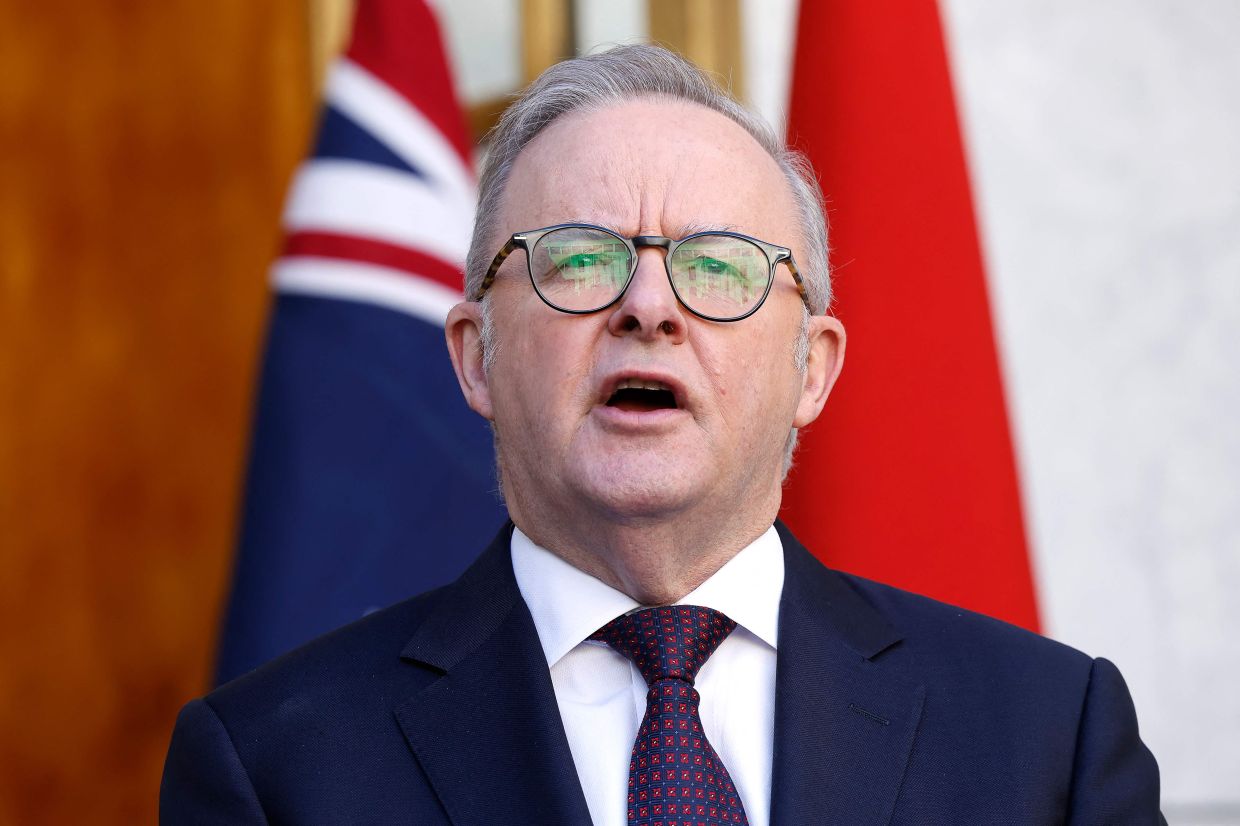
Anthony Albanese's leadership faced renewed scrutiny on Tuesday when the Australian Prime Minister declined to express regret over ill-judged remarks directed at his Japanese counterpart, following fresh controversy stemming from a podcast appearance earlier in the year. The developing diplomatic incident underscores how casual comments made in informal settings can snowball into significant political challenges, particularly when bilateral relationships with key regional partners are involved.
The controversy centres on a recording from Albanese's conversation with Nikki Osborne at his official residence during an interview for the Bush Deep podcast. When discussing a gift that Japanese Prime Minister Sanae Takaichi had presented during her May visit to Australia, Albanese characterised the item—a premium Japanese royal melon—as "strange" and engaged in crude banter about its nature. His remarks drew sharp criticism from opposition benches, who characterised the comments as disrespectful to the visiting Japanese leader and reflective of poor judgment.
The cultural context here matters considerably for understanding the gaffe's significance. In Japan, high-grade melons represent genuine luxury goods commanding premium prices that can exceed AUS$270, equivalent to approximately US$190, according to explanations provided by Japan's former ambassador to Australia. Takaichi's choice of gift therefore reflected a gesture of respect and appreciation—a ceremonial offering embedded in Japanese diplomatic protocol. When viewed through this lens, Albanese's treatment of the present as a subject for ribald humour appears particularly tone-deaf and potentially offensive to Japanese sensibilities around gift-giving and formal courtesy.
When host Osborne enquired whether Takaichi had smuggled the fruit through Australian customs—a query that seemed to misunderstand the nature of official diplomatic channels—Albanese responded with further crude comments, saying he had "got a couple of melons." The host then made an inappropriate comparison to entertainer Pamela Anderson. Rather than deflecting or redirecting the conversation toward more serious matters, Albanese's responses suggested tacit endorsement of the increasingly disrespectful tone. The entire exchange reflected poorly on both the Prime Minister's professionalism and his respect for his Japanese counterpart.
This latest controversy compounds existing reputational damage from the same podcast appearance. Weeks earlier, Albanese had already faced considerable backlash and felt compelled to apologise after audio surfaced of him making inappropriate sexual comments about Australian singer Kylie Minogue during the same interview. That he had apparently not learned from that initial misstep—allowing himself to be drawn into further crude banter merely days or weeks later—raised questions about his judgment and self-discipline in media interactions.
When confronted directly in parliament on Tuesday about his remarks, Albanese adopted a combative stance rather than acknowledging the legitimate concerns raised. Asked explicitly whether he would apologise for what opposition figures characterised as disrespectful behaviour, the Prime Minister flatly rejected the premise of the question, insisting: "I reject the assertion in the question." This defensive posture, rather than demonstrating strength or principle, instead conveyed unwillingness to acknowledge how his words might have caused harm to the diplomatic relationship or injured the feelings of the Japanese leader.
Albanese attempted to reframe the issue by emphasising his personal regard for his Japanese counterpart, stating that "Prime Minister Takaichi is a friend of Australia and a friend of mine." However, such declarations ring hollow when juxtaposed against the documented evidence of disrespectful remarks. True friendship and diplomatic respect require consistency between public statements and private behaviour, particularly in formal settings where recordings may be made. The assertion that he values the relationship cannot simply erase evidence to the contrary.
Foreign Minister Penny Wong moved to contain the damage by suggesting Albanese's comments had been misinterpreted by the opposition. "The prime minister has been clear that he did not mean for those comments to be interpreted in the way they have been by those opposite," she said, attributing the controversy to partisan misunderstanding. Yet this explanation itself proves problematic: if the Prime Minister's intentions were innocent, the blame lies not with political opponents identifying the offensive nature of the remarks, but rather with the clarity and appropriateness of the comments themselves. The fact that reasonable people interpreted the banter as disrespectful suggests the fault lies with the speaker, not the listener.
For Malaysia and broader Southeast Asia, this incident carries relevant lessons about diplomatic protocol and bilateral relationships. Japan remains a crucial regional partner for Australia in security, trade, and intelligence arrangements, and maintaining strong personal relationships between leaders is essential for effective cooperation. When leaders engage in behaviour that, however unintentionally, disrespects their counterparts, it sends troubling signals about commitment to those partnerships. In a region where subtle communication and respect for hierarchy hold significant cultural weight, such breaches of decorum can have outsized consequences.
The episode also reflects broader challenges facing contemporary political leaders navigating an environment where informal media appearances can generate serious consequences. Podcasts and streaming platforms occupy an ambiguous space between entertainment and journalism, often encouraging looser speech than traditional news interviews. Yet leaders must recognise that when they participate in such forums, particularly when discussing other nations or their representatives, standards of diplomatic conduct remain applicable. Albanese's initial apparent comfort with crude banter suggests insufficient appreciation for this reality.
The Japanese government has not publicly commented extensively on the controversy, maintaining diplomatic composure. This restraint may reflect confidence in the broader Australia-Japan relationship or a desire to avoid escalating a domestic Australian political controversy. However, the incident illustrates how readily bilateral relationships can be tested by seemingly minor lapses in judgment from senior political figures. Whether Albanese's refusal to apologise will have lasting diplomatic consequences remains to be seen, but the affair demonstrates the enduring importance of maintaining professional decorum in all public contexts.

