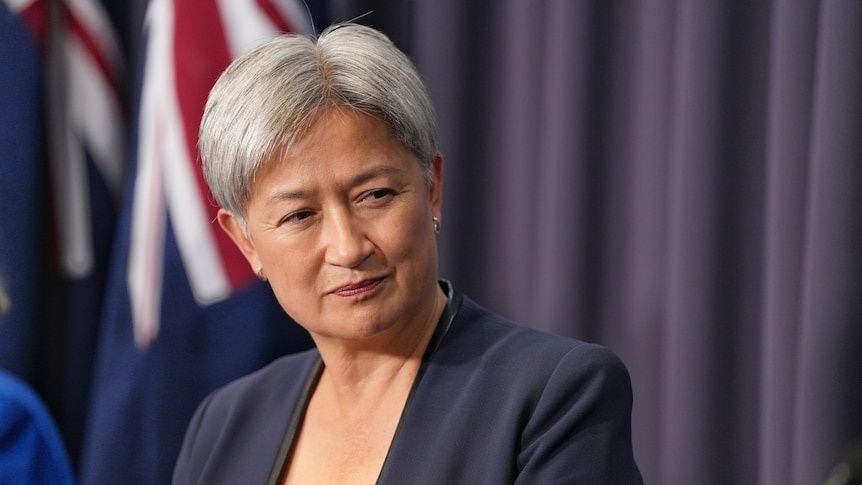
In a pointed riposte to Australia's surging far-right movement, Foreign Minister Penny Wong will use a major speech on Friday to argue that multiculturalism represents not merely an immigration policy but the fundamental identity upon which modern Australia has been built. The Malaysian-born Wong, who holds the distinction of being Australia's first Asian-Australian federal minister, will emphasise before the Lowy Institute in Sydney that embracing diversity has been central to the nation's success, not an aberration from some imagined monocultural past. Her intervention signals growing concern within the Labor government about the political momentum of Pauline Hanson's One Nation party, which polling suggests has become Australia's most popular political force and could wield decisive influence in the 2028 election.
Wong's speech represents a calculated challenge to One Nation's nationalist messaging, which has explicitly invoked the "White Australia" policy that governed immigration restrictions through much of the twentieth century. The party's recent references to this historical framework, combined with its calls for a cultural "monoculture", have triggered substantial public backlash, yet One Nation's electoral support continues to climb. Census data demonstrating that half of all Australians were either born overseas or have at least one parent born abroad provides empirical grounding for Wong's argument that multiculturalism is not a recent invention but rather the continuous lived experience of modern Australian society.
The political landscape Wong addresses reflects broader regional anxieties affecting Southeast Asia and the Indo-Pacific. Australia's debate about immigration, national identity, and economic management mirrors tensions visible across the region, where rapid demographic change, economic pressures, and geopolitical competition have fuelled support for nationalist and nativist political movements. For Malaysia and other ASEAN nations, Australia's struggle to maintain consensus around multicultural governance carries particular significance, given the regional stakes in maintaining stable, inclusive democracies in the face of external pressures and internal polarisation.
Wong's central thesis challenges what she characterises as the "melancholic fantasy" of monoculturalism, positioning it not as a neutral policy preference but as a vision that would actively diminish Australia's capacity to navigate an increasingly complex strategic environment. She argues that abandoning multiculturalism would compromise Australia's international security architecture and trade relationships, essentially contending that cultural openness and economic prosperity are inseparable. This framing attempts to reposition the debate from cultural authenticity—where One Nation claims traditional advantage—to strategic competence, a terrain where the Labor government believes it commands greater credibility.
The timing of Wong's intervention coincides with the Albanese government's preparation of revised immigration policies, reflecting an effort to acknowledge public concerns about housing affordability and economic strain without capitulating to One Nation's exclusionary framing. Prime Minister Anthony Albanese has explicitly recognised that "legitimate concerns" about economic pressures have contributed to far-right electoral gains, implicitly suggesting that the government's response should address material anxieties rather than compete over cultural nationalism. This approach mirrors strategies deployed elsewhere in Western democracies where centre-left parties have attempted to reclaim economic competence narratives while defending pluralistic values.
One Nation's parallels with international far-right movements—including comparisons to France's Marine Le Pen and former US President Donald Trump—underline the transnational dimensions of contemporary populist nationalism. Hanson's party combines restrictive immigration stances with scepticism toward international institutions and overseas aid commitments, reflecting a broader retreat from multilateral engagement that has gained traction across developed democracies. For Australia's regional partners in Southeast Asia, such positions carry direct implications, affecting both aid relationships and Australia's commitment to regional security architectures like AUKUS and broader Indo-Pacific cooperation frameworks.
The strategic vulnerability Wong identifies—that monoculturalism would constrain Australia's choices amid intensifying great-power competition—articulates a sophisticated argument about diversity as strategic asset rather than moral imperative. She contends that controlling access to advanced materials, technologies, and military capabilities represents the defining challenge confronting middle powers, and that Australia's capacity to maintain independent choices depends on sustaining multiple international partnerships and domestic sources of innovation. This analysis suggests that the far-right's inward turn would paradoxically weaken the national sovereignty it claims to protect.
Wong's own biography carries significance in this debate that extends beyond symbolic representation. As a Malaysian-born official now articulating Australia's foreign policy interests, she embodies the integration of diverse backgrounds into the nation's institutional structures. Her prominence within the Labor government demonstrates that meritocratic advancement and multicultural governance have been compatible with sustained electoral support, at least until recent years. The question Wong's speech implicitly poses is whether Australians will endorse the narrative that such integration represents decline from some imagined golden age, or accept it as evidence of national strength and adaptability.
The One Nation surge reflects genuine economic anxieties and social dislocations that deserve serious policy responses, but Wong's argument frames the far-right's prescriptions as likely to exacerbate rather than alleviate Australia's underlying vulnerabilities. Immigration levels are already declining from recent peaks, suggesting that the government recognises public concerns without requiring the transformative cultural nationalism One Nation advocates. This positioning attempts to triangulate between acknowledging legitimate grievances and rejecting the divisive framing through which One Nation seeks to channel them, a difficult political manoeuvre that will likely determine whether Labor can arrest the far-right's momentum before 2028.

