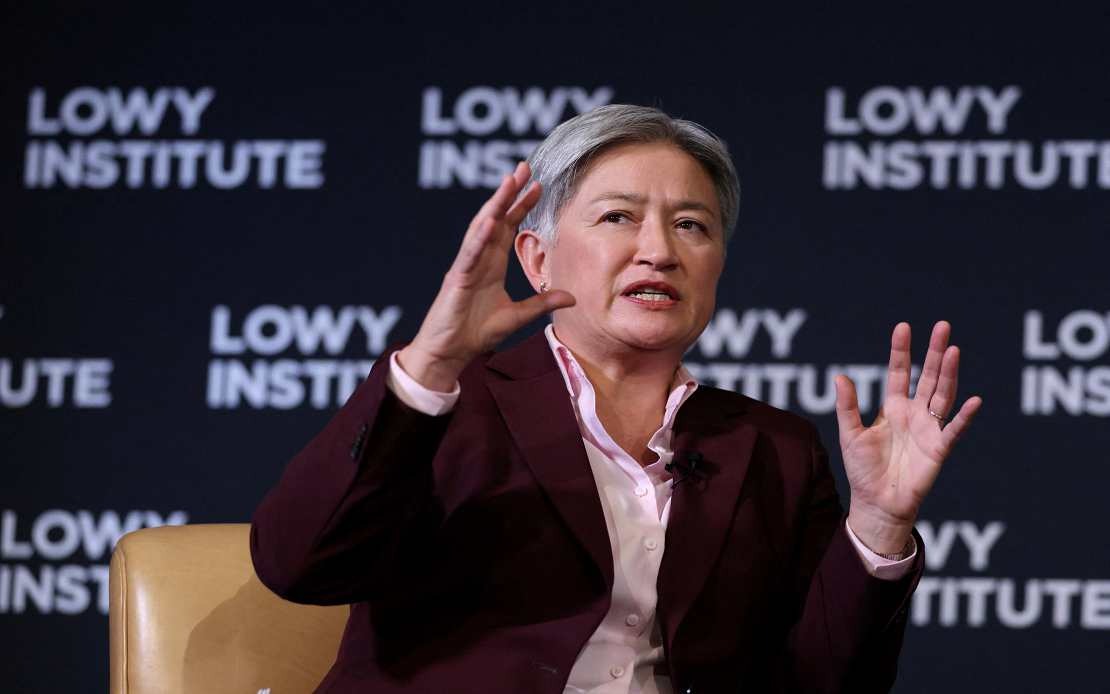
Australia's top diplomat has mounted a forceful defence of multiculturalism, arguing that retreating into a monocultural framework would fundamentally damage the nation's economic and strategic interests. Speaking at the Lowy Institute in Sydney on Friday, Foreign Affairs Minister Penny Wong directly challenged the growing political momentum behind calls to reshape Australia into a monocultural state, framing such proposals as both economically illiterate and geopolitically dangerous.
Wong's remarks represent an unusually blunt intervention in domestic politics by a senior foreign policy official, reflecting the gravity with which the government views the challenge posed by Senator Pauline Hanson's One Nation party. Her keynote lecture served as a platform to articulate why diversity, far from being a liability, constitutes a critical asset for a nation increasingly dependent on global trade, international partnerships, and innovation-driven growth. The timing of her intervention underscores mounting anxiety within Australia's political establishment about the trajectory of voter sentiment heading into the 2028 general election.
The Foreign Minister characterised the monocultural vision as a "melancholic fantasy" that would lock Australia into a self-imposed isolation with profound consequences. According to Wong, the abandonment of multiculturalism amounts to a systematic dismantling of the nation's competitive advantages, forcing it to retreat from the world stage and forfeit the collaborative opportunities that sustain its prosperity. This framing shifts the debate beyond cultural or social arguments, positioning the issue squarely within an economic and strategic framework that appeals to business interests and security-conscious voters.
Hanson's One Nation party has emerged as a formidable political force, capitalising on anxieties about immigration and rapid demographic change. The party's platform explicitly targets the open immigration policies maintained by successive governments, promising to impose strict caps on migration inflows while simultaneously withdrawing Australia from multilateral institutions and slashing foreign aid commitments. This nationalist agenda resonates with a segment of the electorate increasingly sceptical about the benefits of globalisation and concerned about the pace of social change.
Recent polling data reveals the scale of One Nation's electoral breakthrough. A July YouGov Australia survey found that 26 per cent of respondents indicated an intention to vote for the party at the next election, a staggering increase from the 6.4 per cent support it received at the 2025 election. This represents a quadrupling of voter support in less than two years, signalling a substantial shift in Australia's political landscape. The same polling shows deteriorating support for the governing Labor Party, which has slipped from 34.5 per cent to 28 per cent, while the conservative Coalition has fallen even more sharply from 31.8 per cent to just 20 per cent.
The erosion of support for both major parties reflects broader voter dissatisfaction and a willingness to consider alternatives previously viewed as fringe movements. One Nation's surge cannot be dismissed as statistical noise or polling volatility; rather, it represents a genuine realignment in voter preferences that directly challenges Australia's postwar political consensus around immigration and multiculturalism. For Malaysia and other Southeast Asian nations with significant diaspora populations in Australia, this shift carries troubling implications, potentially affecting the treatment and integration prospects of Asian migrants and skilled workers.
Community attitudes toward immigration have hardened considerably over recent years. The Lowy Institute's 2026 annual poll, released in June, established that 55 per cent of Australians believe the total number of incoming migrants exceeds acceptable levels. This represents a steady upward trajectory in anti-immigration sentiment, rising from 53 per cent in 2025 and 48 per cent in 2024. The consistency of this trend suggests the shift reflects genuine structural concerns rather than temporary fluctuations responding to isolated incidents or political messaging.
For Southeast Asian readers, the Australian political developments warrant close attention given the region's deep economic entanglement with Australia and the substantial Asian populations already residing there. Australian immigration policy directly affects the mobility of Malaysian and other regional professionals seeking opportunities in mining, finance, technology, and education sectors where Southeast Asian talent has historically found ready employment. A fundamental reorientation toward restrictionist immigration policies could close pathways that have enabled regional brain circulation and professional advancement.
Wong's intervention represents the government's attempt to mobilise intellectual and strategic arguments against the monocultural narrative before it solidifies further in public consciousness. By framing immigration restriction and cultural nationalism as economically self-defeating rather than merely morally objectionable, she seeks to appeal to pragmatic voters concerned about living standards and economic performance. The Foreign Minister's argument essentially asserts that Australia's future prosperity depends on remaining embedded within global networks of trade, investment, and talent mobility that multiculturalism facilitates.
The political trajectory evident in these polling numbers suggests that Australia's consensus on multiculturalism, long treated as settled matter by policymakers, has become genuinely contested terrain. Parties that once marginalised anti-immigration rhetoric now confront a significant electoral bloc willing to reward politicians who voice scepticism about current migration levels and multicultural policies. This represents a watershed moment for Australian identity politics, with profound implications extending well beyond Australia's borders into the broader Indo-Pacific region.
The 2028 election will constitute a critical test of whether rising anti-immigration sentiment can be contained within existing political frameworks or whether it will precipitate a fundamental restructuring of Australian politics around restrictionist principles. Wong's forceful articulation of the pro-multiculturalism position indicates that the government intends to contest this ground vigorously rather than accommodate populist sentiment. Nevertheless, the yawning gap between Labor's current support levels and One Nation's trajectory suggests that rhetorical defences of multiculturalism alone may prove insufficient to arrest the party's momentum.

