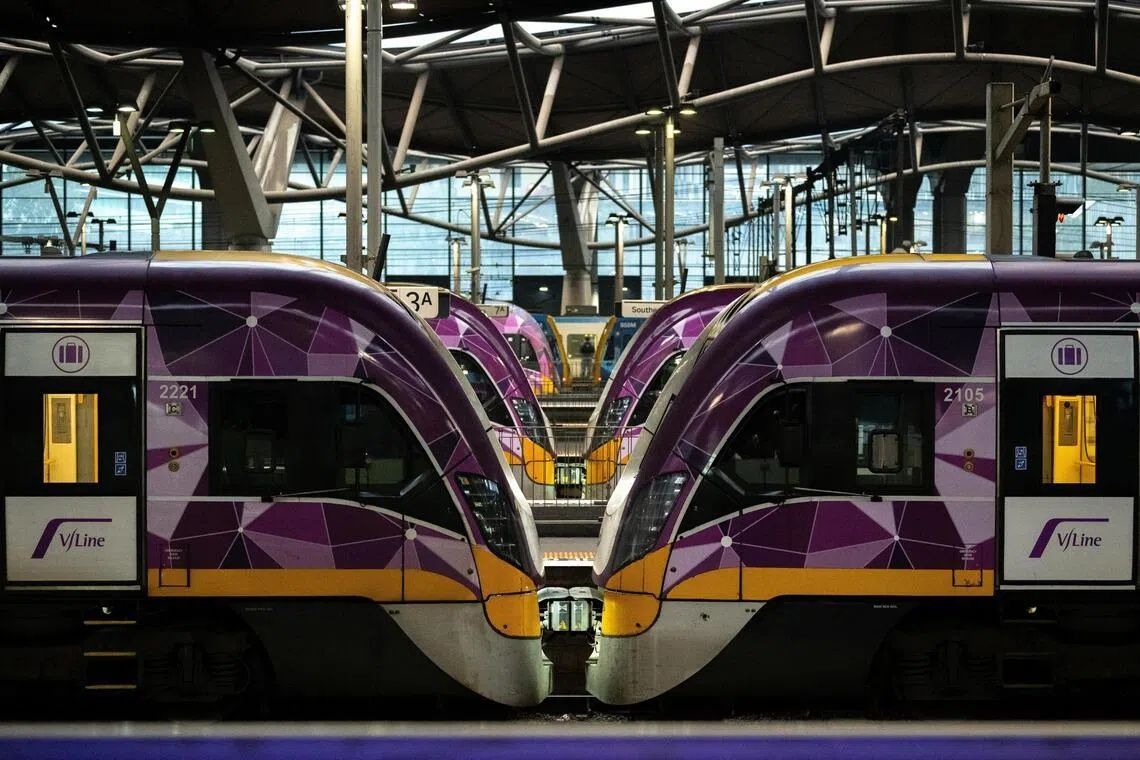
Australia's railway operators are gradually restoring normal services following the conclusion of a nationwide telecommunications crisis triggered by Telstra Group Ltd., with the country's dominant carrier working to resolve cascading technical problems that extended far beyond mobile network disruptions. The Australian Rail Track Corporation, which manages freight and passenger train operations spanning five states, commenced a phased revival of services on Thursday after halting trains the previous day when Telstra's 4G infrastructure collapsed, severing the critical communication links that allow train drivers to receive operational instructions and safety directives.
The initial outage stemmed from a software malfunction affecting the timing nodes that synchronise Telstra's entire network architecture—a single point of failure that demonstrated the fragility underlying modern telecommunications infrastructure. However, what transformed a serious technical incident into a genuine public safety emergency was the discovery of additional complications overnight. Communications Minister Anika Wells disclosed that a secondary issue had emerged after the primary software problem appeared resolved, causing certain incoming calls to route directly to voicemail and, most alarmingly, preventing some emergency calls to the nation's Triple Zero service from connecting properly.
Telstra Chief Financial Officer Michael Ackland provided the most concerning revelation when he confirmed the company had conducted 639 welfare checks following failed emergency calls, indicating that nearly 640 people attempting to reach emergency services during the outage were unable to do so. This statistic underscores a fundamental vulnerability in Australia's emergency response infrastructure: the complete dependence on a single commercial telecommunications provider. Ackland indicated that engineers had implemented corrective measures and expected to prevent recurrence of the secondary issue, though his language suggested the investigation into the primary cause remained incomplete.
The rail sector's response illustrated the interconnected nature of modern transportation networks with telecommunications systems. The Australian Rail Track Corporation prioritised restoring metropolitan and regional services in New South Wales first, followed by regional services in Victoria via the V/Line operator and interstate passenger connections. This sequential approach reflected the delicate coordination required when rebooting systems dependent on communication infrastructure that was itself in recovery mode. Operators needed assurance that Telstra's network had stabilised before attempting to restart complex train operations involving multiple safety systems.
Telstra's position as a provider of roughly 25 million retail mobile services amplifies the economic and social consequences of such outages. The telecommunications industry ombudsman, Cynthia Gebert, articulated the broader anxiety gripping Australian consumers and businesses, describing the disruption as causing lost income, travel delays, and undermining confidence in essential infrastructure. Her public comments reflected growing frustration that preventable technical failures continued to compromise basic services Australians now regard as fundamental requirements rather than conveniences. The incident reinforced a troubling pattern in which citizens found themselves vulnerable to sudden disconnection from economic activity and emergency response systems through no fault of their own.
Telstra Chief Executive Vicki Brady's decision to curtail a family holiday abroad and return to work on Friday suggested the company recognised the reputational damage accompanying such failures. However, this response, while operationally sensible, cannot address the systemic questions raised by the outage. The telecommunications industry faces mounting scrutiny regarding its structural resilience and the adequacy of backup systems designed to prevent single points of failure from cascading across entire national networks. The incident occurred just weeks after Vodafone Australia reported connectivity issues affecting some mobile customers, suggesting an industry-wide vulnerability rather than isolated lapses.
The situation parallels previous telecommunications catastrophes in the region. Singapore Telecommunications Ltd.-owned Optus, which operates one of Southeast Asia's largest networks, faced widespread condemnation following an outage in September 2025 that prevented emergency calls and allegedly contributed to fatalities. That disaster followed a subsequent major incident less than two years earlier that disrupted services for millions of customers, including emergency callers. The recurring nature of such failures across multiple operators and jurisdictions suggests the problems transcend individual company management and point toward systemic architectural deficiencies in how modern telecommunications networks are engineered and protected against failure modes.
For Malaysian and Southeast Asian readers, the Australian situation carries immediate relevance given the regional connectivity between telecommunications operators and the shared reliance on 4G and emerging 5G infrastructure. Malaysia's own telecommunications sector, served by providers including Maxis, Celcom, Digi, and U Mobile, faces similar infrastructure complexities and potential vulnerabilities should comparable single points of failure exist. The Australian experience demonstrates that even wealthy, technologically advanced nations with robust regulatory frameworks cannot guarantee immunity from catastrophic telecommunications failures that cascade into emergency services, transportation networks, and economic activity.
The broader implication concerns the regulatory approach required to manage critical infrastructure in an era of digital dependency. Australia's situation suggests that commercial telecommunications companies, while generally efficient operators, require significantly stronger mandates around infrastructure redundancy, emergency services prioritisation, and rapid recovery protocols. The fact that Telstra shares recovered most of their losses, rising one percent on the trading day following the crisis, suggests financial markets view such incidents as temporary disruptions rather than triggers for fundamental reassessment of business models and network architecture.
Regional regulators monitoring the Australian situation must grapple with difficult questions about how to balance innovation and commercial efficiency against the need for network resilience and emergency services protection. The stakes extend beyond telecommunications: when rail networks, emergency services, and economic transactions depend on a single provider's network architecture, infrastructure failures become public policy crises. As Southeast Asia continues integrating telecommunications into critical infrastructure systems, decision-makers in countries like Malaysia must insist upon infrastructure design principles that prioritise resilience and redundancy, even at the cost of commercial efficiency, recognising that the cost of failure far exceeds the investment required for robust backup systems.

