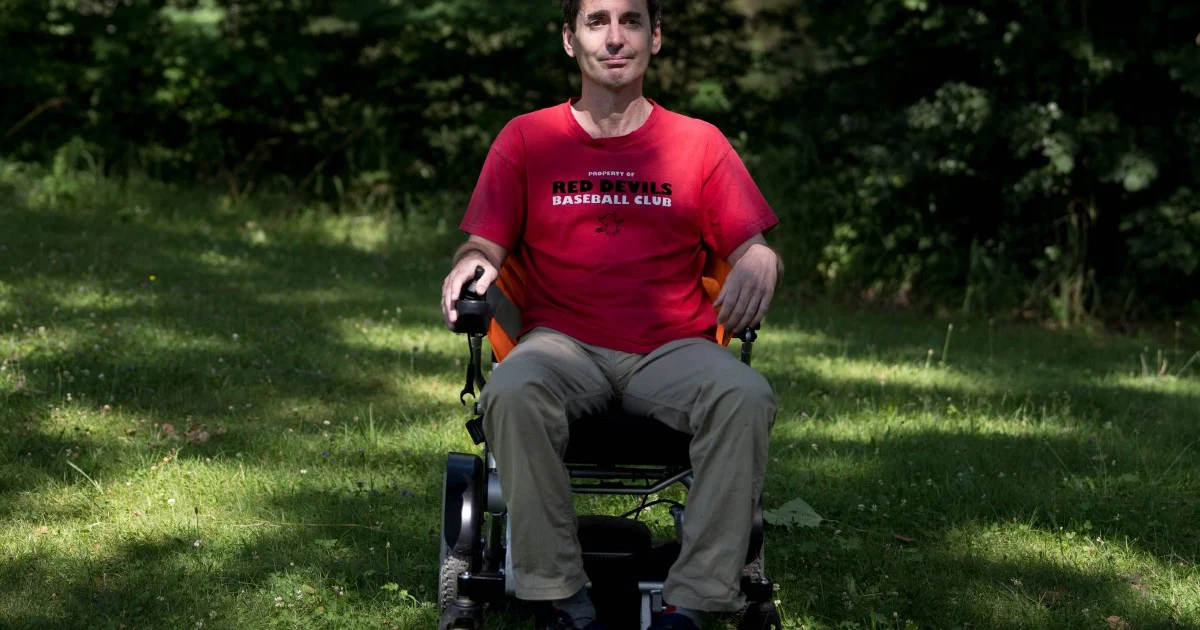
Mex Muellner, an Austrian living with significant mobility limitations, is pursuing legal action against his country through Europe's highest human rights venue, contending that Austria's insufficient measures to address climate change have exposed vulnerable populations—particularly those with disabilities—to escalating physical danger. The case represents a broadening trend of climate litigation that moves beyond traditional environmental arguments to centre on fundamental rights protections, a shift that carries particular weight across Europe and carries implications for how governments throughout the region regard their obligations to citizens facing heightened climate risks.
Muellner's circumstances exemplify a dimension of the climate crisis often overlooked in mainstream policy discussions. As temperatures soar during summer heatwaves, individuals confined to wheelchairs face unique hazards that able-bodied people may navigate more readily. The immobility imposed by his condition means Muellner cannot easily seek shade, access cooling facilities, or relocate to safer environments when dangerous heat strikes. During recent sweltering periods across Central Europe, he found himself trapped in deteriorating conditions—unable to regulate his body temperature effectively and facing genuine health risks that government climate inaction has left unaddressed.
The legal pathway Muellner has chosen—appealing to Europe's Court of Human Rights—reflects growing recognition that climate change intersects fundamentally with established human rights frameworks. Rather than framing his complaint purely as an environmental concern, the case anchors itself in the right to life, the right to private and family life, and protections against discrimination. This reframing matters considerably: it transforms climate policy from a matter of political preference into a question of governmental accountability under international human rights law. For Malaysia and other Southeast Asian nations watching European legal developments, this precedent could eventually influence how regional courts evaluate climate-related complaints.
Austria, despite its reputation as an environmentally conscious European nation with substantial renewable energy adoption, finds itself defending its climate governance record under intense scrutiny. The Austrian government has implemented various climate initiatives, yet Muellner's case challenges whether these measures are sufficiently ambitious or whether they adequately protect those most vulnerable to heat-related harms. The threshold question before the court will likely examine whether Austria's climate strategy meets the minimum standards required by the European Convention on Human Rights—a legal standard that could reshape climate obligations across all Council of Europe member states.
The timing of such litigation coincides with Europe's recognition that heatwaves are becoming more intense, more frequent, and more deadly. Summer 2023 saw record temperatures across the continent, with Austria experiencing dangerous conditions that strained healthcare systems and threatened lives. For people with disabilities, elderly individuals, and those living in poverty, these periods represent acute health crises. Muellner's case forces policymakers and judges to confront an uncomfortable reality: those least responsible for carbon emissions often bear disproportionate harm from climatic disruption, creating a justice dimension that purely technical climate discussions often obscure.
From a disability rights perspective, the case illuminates how climate change perpetuates and deepens existing inequalities. Persons with disabilities already navigate accessibility barriers in conventional life; climate extremes amplify these challenges dramatically. A heatwave becomes not merely uncomfortable but potentially life-threatening when cooling centres lack wheelchair access, when transportation networks malfunction during extreme weather, or when essential medications degrade in excessive heat. Muellner's legal strategy essentially argues that governments cannot claim climate neutrality while simultaneously permitting conditions that render certain citizens increasingly vulnerable.
The European Court of Human Rights has previously signalled openness to climate-related complaints, though it has not yet issued definitive rulings on the scope of state obligations. The court's approach to environmental cases has evolved substantially over recent decades, gradually recognising that environmental degradation can constitute a violation of protected rights. Muellner's case tests whether this trajectory extends to climate change specifically and whether it encompasses disability-centred harms. A favourable ruling could obligate Austria and other nations to elevate climate ambition to levels meeting human rights standards—potentially requiring faster emissions reductions and greater investment in climate adaptation for vulnerable populations.
The implications for Southeast Asia warrant consideration, even though the case concerns a European legal framework. Several ASEAN member states have committed to net-zero targets and have ratified international human rights conventions. Should the European precedent establish that governments bear human rights obligations regarding climate action, similar arguments could eventually surface in Malaysian, Indonesian, or Thai courts. The region's disability communities, already marginalised in many development discussions, might invoke comparable legal reasoning to demand climate justice protections. Additionally, ASEAN countries hosting vulnerable populations—including those with disabilities, indigenous communities, and the urban poor—could face pressure from international human rights bodies to strengthen climate governance in ways that explicitly protect these groups.
Muellner's personal narrative carries particular power precisely because it refuses abstraction. His experience of immobility during dangerous heat is simultaneously utterly concrete and legally significant. This case demonstrates how climate change operates not primarily as a statistical or economic problem but as a lived reality that government action or inaction directly shapes. For disability advocates throughout Europe and beyond, the lawsuit represents an opportunity to embed disability rights concerns within climate justice frameworks, ensuring that climate solutions address accessibility and that climate governance explicitly considers those most harmed by inaction.
The legal outcome remains uncertain, yet the case itself has already succeeded in articulating a crucial connection: climate change is not separable from human rights, and governments cannot discharge their obligations to protect vulnerable citizens whilst permitting climate deterioration to continue unchecked. Whether the European Court of Human Rights embraces this reasoning will determine not only Austria's obligations but potentially reshape how democracies across Europe and beyond understand their duties toward those they govern in an era of mounting environmental crisis.

