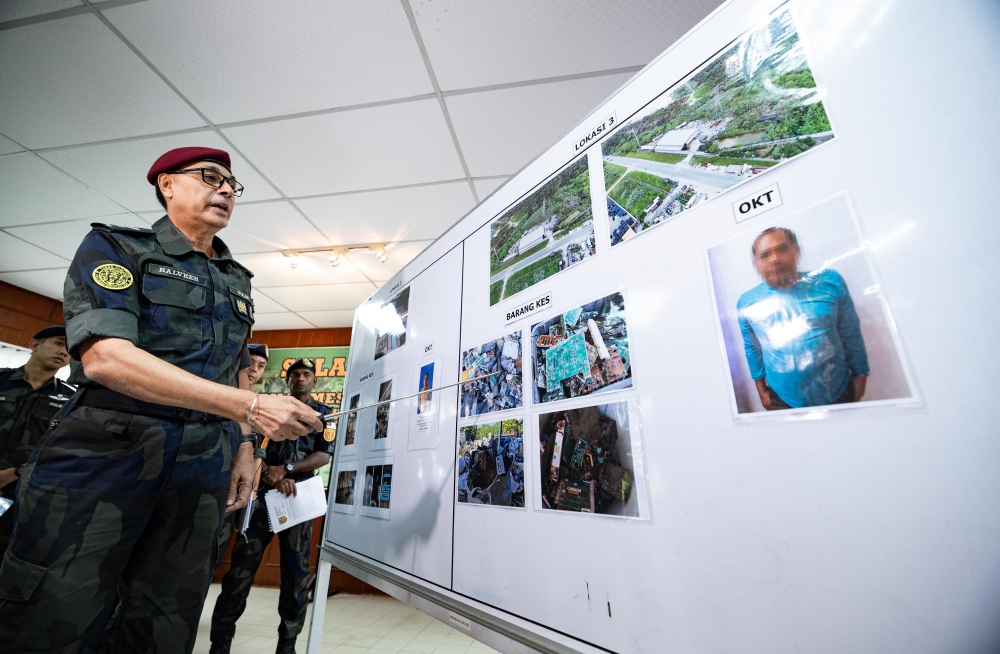
In a major crackdown on environmental crime, the General Operations Force Northern Brigade has conducted coordinated enforcement operations across Ipoh that resulted in the seizure of 120,220 kilogrammes of illegal electronic waste with an estimated market value of RM9.39 million. The operation, which led to the arrest of 14 individuals, represents a significant blow to what authorities characterise as an organised smuggling and waste trafficking network operating in the region.
The raids, carried out across multiple sites in Ipoh, targeted locations suspected of harbouring illicitly imported electronic waste destined for illegal processing or re-export. The sheer volume of material recovered—equivalent to approximately 120 tonnes—underscores the scale of the contraband operation and raises concerns about how extensively such networks may be operating across Malaysia's northern states. The suspects arrested face investigations under relevant environmental protection and waste management legislation, with authorities indicating that the inquiry remains ongoing.
Electronic waste trafficking has emerged as a persistent challenge for Malaysian enforcement agencies, driven by the substantial profit margins available to criminal syndicates willing to circumvent stringent environmental regulations. Unlike developed nations that have implemented comprehensive e-waste management systems, many developing economies lack the infrastructure and resources to process discarded electronics safely, making them attractive destinations for unscrupulous exporters seeking to offload hazardous materials. The illegal market flourishes because legitimate e-waste recycling remains expensive and heavily regulated, incentivising criminal alternatives.
The hazards associated with uncontrolled e-waste handling extend far beyond simple regulatory violations. Electronic devices contain toxic substances including lead, mercury, cadmium, and persistent organic pollutants that leach into soil and groundwater when disposed of improperly. Workers processing e-waste without adequate protective equipment face serious health risks, whilst surrounding communities experience environmental contamination that can persist for decades. Southeast Asian nations have increasingly become repositories for global e-waste, a phenomenon termed the "garbage imperialism" by environmental advocates concerned about wealthy nations externalising their waste management problems.
Malaysia's position as a regional manufacturing and electronics hub makes it simultaneously vulnerable to becoming a dumping ground for imported e-waste. The country's established electronics industry, combined with porous borders and complex supply chains, creates opportunities for smugglers to disguise prohibited waste shipments as legitimate recycled materials or spare parts. Enforcement agencies have struggled to keep pace with the sophistication of trafficking operations, which exploit gaps in documentation, inspection protocols, and cross-border coordination between Malaysian authorities and international partners.
The RM9.39 million valuation assigned to the seized materials reflects not merely the weight of recovered items but the environmental remediation costs and lost economic value from legitimate recycling channels. Licensed e-waste processors operating within Malaysia's regulatory framework struggle to compete with illegal operations that avoid compliance costs, creating a perverse market dynamic where lawful businesses face pressure to either compromise standards or exit the sector. This deterioration of legitimate industry capacity ultimately compromises Malaysia's ability to manage its own domestic e-waste responsibly.
The GOF Northern Brigade's success in this operation depends significantly on intelligence-gathering and inter-agency coordination. Effective enforcement requires cooperation between customs authorities monitoring border crossings, environmental agencies overseeing waste management facilities, local councils managing industrial zones, and police investigating criminal conspiracy. The fourteen arrests suggest the operation targeted multiple nodes within the trafficking network rather than merely peripheral operators, potentially disrupting distribution and processing capabilities. However, dismantling such networks requires sustained pressure and follow-through prosecution to genuinely deter future criminal activity.
For Malaysian businesses and consumers, the implications of unchecked e-waste trafficking extend to corporate responsibility and supply chain integrity. As electronics manufacturers face mounting global pressure to ensure their products' end-of-life handling meets environmental standards, illegal dumping undermines industry credibility and exposes legitimate companies to reputational risk. Electronics retailers and importers face potential liability if their products enter illegal recycling streams, making enforcement against trafficking networks a matter of market integrity.
International dimension adds another layer of complexity to this enforcement challenge. E-waste trafficking frequently involves coordination across multiple countries, with materials transiting through regional hubs before reaching final destinations. Malaysia's role in regional trade networks means it can serve as either a gateway for contraband or a victim of external dumping. Strengthening enforcement capacity and bilateral cooperation with neighbouring countries—particularly Singapore, Thailand, and Indonesia—becomes essential for disrupting trafficking routes at source rather than merely intercepting shipments after they have entered Malaysian territory.
The immediate priority facing authorities involves securing convictions against the arrested suspects and recovering any remaining materials from the identified networks. Longer-term solutions require investment in domestic e-waste recycling capacity, stricter port-of-entry inspections, enhanced penalties for trafficking offences, and public awareness campaigns highlighting environmental dangers. Malaysia's commitment to sustainable development and circular economy principles depends partly on preventing its territory from becoming a repository for the world's hazardous discards, a challenge that extends well beyond any single enforcement operation.

