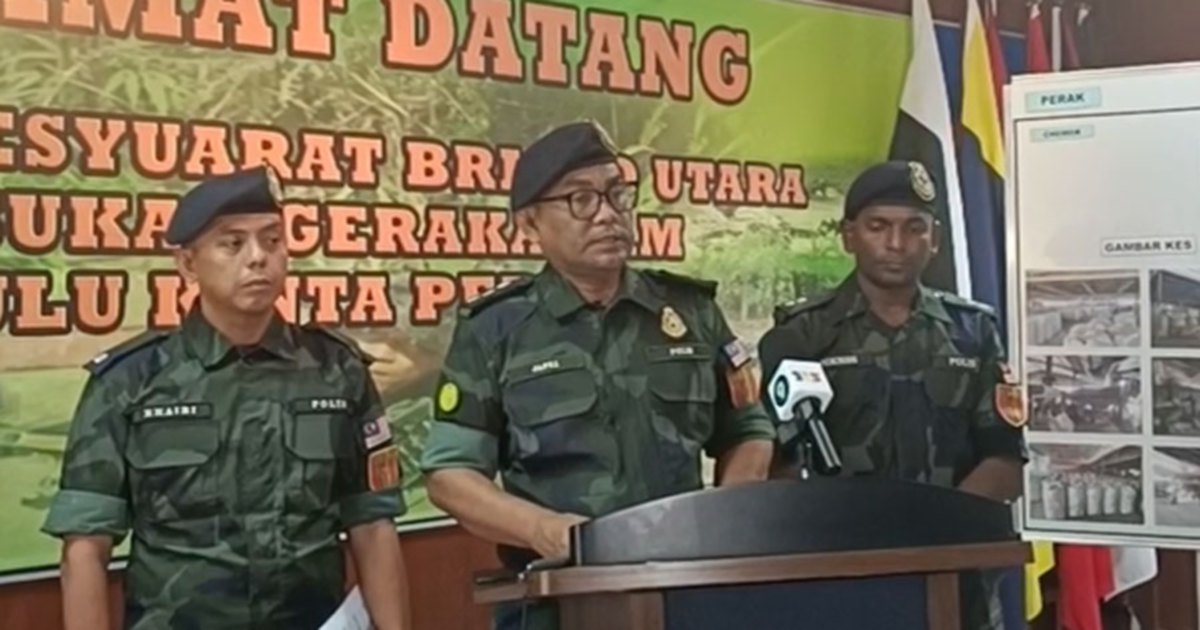
A coordinated enforcement campaign by the General Operations Force (GOF) Northern Brigade has struck a decisive blow against organised illegal mining in two of Malaysia's most resource-rich states. The operation resulted in the detention of 30 individuals and the seizure of minerals and processing machinery worth an estimated RM31.7 million, representing one of the more substantial busts in recent years targeting the clandestine extraction sector.
The crackdown, which centred on Perak and Kedah, demonstrates the escalating scale of unlicensed mining operations in the northern corridor. These two states, sitting atop significant mineral deposits, have long been flashpoints for illegal extraction activities that circumvent environmental regulations and deprive the government of legitimate mining revenues. The magnitude of the seizure—both in terms of asset value and the number of individuals implicated—suggests that enforcement authorities have successfully targeted a network rather than isolated operations, signalling a more coordinated approach to combating the problem.
Illegal mining has emerged as a persistent challenge for Malaysian authorities seeking to balance development with environmental stewardship. Beyond the direct loss of government mining royalties, unlicensed extraction operations frequently operate without adhering to environmental safeguards, leaving degraded landscapes and contaminated waterways in their wake. Communities in mining areas, particularly in rural Perak and Kedah, have repeatedly raised concerns about the ecological fallout, including sedimentation in rivers, deforestation, and the disruption of agricultural land. The GOF operation addresses not merely an economic crime but an environmental and social concern that extends beyond the immediate perpetrators.
The variety of equipment recovered in the operation indicates a sophisticated operational structure. Processing machinery suggests that the network was not confined to simple extraction but involved refining activities to increase product value before sale. The diversity of materials seized indicates multiple mining sites, implying that the 30 detained individuals were part of a larger organisational hierarchy with distinct roles in the supply chain. Such networks typically involve financiers, site operators, transport coordinators, and end-buyers—many of whom remain unidentified even after major busts.
Perak, historically a mining powerhouse with centuries of tin extraction heritage, remains economically dependent on mineral wealth. However, the transition from regulated state mining to uncontrolled private operations has created a vacuum increasingly filled by illegal operators. Kedah, too, possesses significant mineral resources and has seen rising illegal extraction activity. The GOF's focus on these two states reflects where enforcement pressure must intensify, though the underlying drivers—poverty, limited employment alternatives, and weak community-level oversight—remain largely unaddressed.
The operation's success in confiscating RM31.7 million worth of assets raises important questions about enforcement sustainability and demand-side factors. Equipment of this value suggests a ready market for illegally extracted minerals, likely encompassing both domestic processors and potentially regional buyers. Without addressing the downstream demand—the legitimate businesses that purchase or process illegally mined minerals without proper verification—enforcement efforts face diminishing returns. Malaysian authorities have occasionally highlighted concerns about mixed sourcing in the industrial supply chain, where legal and illegal materials become difficult to distinguish once processed.
The detention of 30 suspects, while significant, must be contextualised within broader enforcement patterns. Malaysian courts have shown variable outcomes in prosecuting mining-related offences, with sentencing ranges differing substantially across jurisdictions. The success of this particular operation will ultimately depend on how aggressively the criminal justice system prosecutes these cases and whether sentences serve as genuine deterrents to others considering similar ventures. Weak prosecutorial outcomes in the past have inadvertently created an environment where the perceived risk of illegal mining remains manageable for potential offenders.
Regional considerations add another layer of complexity. Southeast Asia's rapid industrialisation has created heightened demand for minerals, and Malaysia's position as a transit point for regional trade means that illegally extracted materials may be destined not solely for local use but for export. Cooperation with neighbouring countries—Thailand, particularly, shares porous borders with Perak and Kedah—remains vital for disrupting transnational smuggling networks. The GOF's Northern Brigade, positioned to monitor these frontier regions, plays a critical role that extends beyond domestic law enforcement to regional security.
Moving forward, the implications of this operation for Malaysian mining policy are worth contemplating. Illegal mining persists partly because the formal licensing regime remains cumbersome and expensive for small-scale operators, creating incentives to bypass regulatory channels entirely. Some industry analysts suggest that streamlining processes for legitimate small-scale mining could redirect economic activity into legal frameworks where taxation and environmental standards apply. The alternative—continued enforcement-only approaches—addresses symptoms rather than underlying structural factors driving the underground economy.
The GOF's operation also underscores the importance of inter-agency coordination and intelligence-sharing. Large-scale illegal mining networks typically generate warning signs—unusual truck movements, community complaints, or environmental changes—that multiple agencies might observe. When police, environmental authorities, and local government bodies share information effectively, enforcement efficiency improves dramatically. The apparent success of this operation likely reflects such coordination, a model worth strengthening across other enforcement priorities.
Looking ahead, the detained individuals will navigate Malaysia's criminal justice system, potentially facing charges under the Mineral Rules, the Penal Code, or both, depending on the specifics of their involvement. The equipment seizure represents immediate asset denial, but the longer-term effectiveness will depend on whether the prosecution achieves convictions that incapacitate key network members and signal to potential entrants that illegal mining carries substantial legal consequences. Until then, the underground mining sector—buoyed by persistent demand and limited alternative livelihoods in affected regions—will continue to regenerate operators ready to assume the risks.

