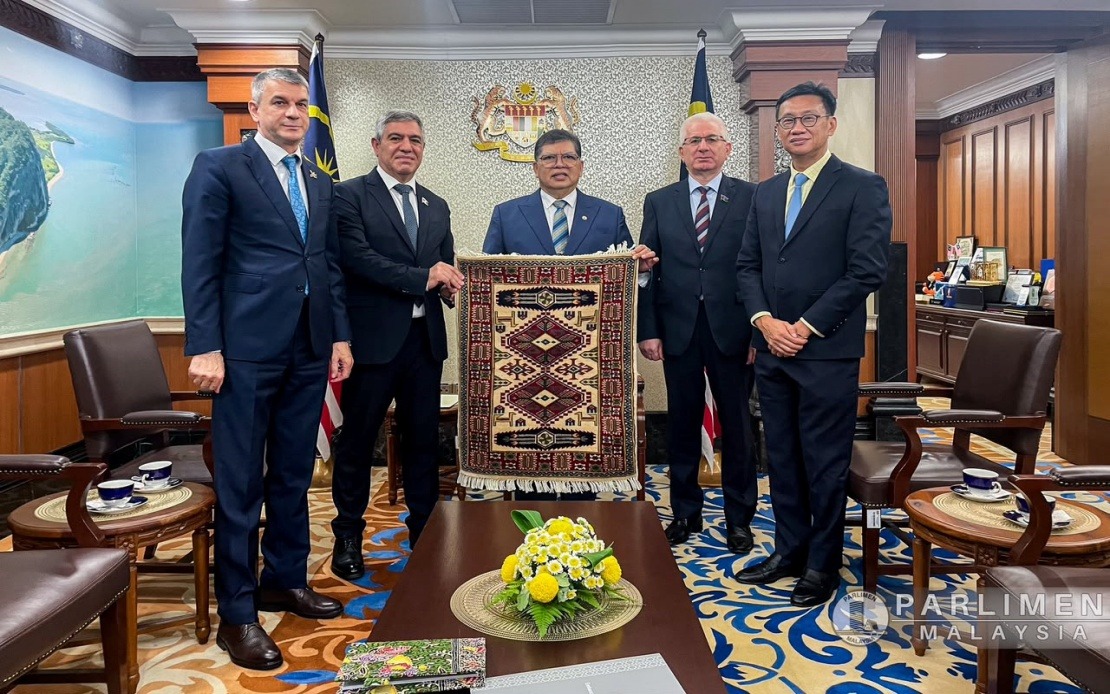
Vugar Bayramov, who heads the Working Group for Azerbaijani-Malaysian Interparliamentary Relations in the Azerbaijani Parliament, led a delegation to Malaysia recently with the primary objective of strengthening institutional ties and fostering economic collaboration between the two nations. Accompanied by fellow MP Bakhtiyar Aliyev, the visit represented a concerted diplomatic push to elevate the relationship beyond formal protocols and create lasting foundations for sustained engagement across multiple sectors.
The visiting delegation conducted a systematic series of high-level meetings with Malaysia's parliamentary leadership. Both Bayramov and Aliyev paid courtesy calls on Dewan Rakyat Speaker Tan Sri Johari Abdul, signalling respect for Malaysia's lower house and its institutional role in shaping bilateral policy. These initial interactions set the tone for deeper discussions on matters of mutual interest and potential areas of cooperation.
Parallel engagements with parliamentary committees underscored the delegation's strategic approach. The delegation met with Wong Chen, who chairs the Malaysian Parliament's Special Select Committee on International Relations and International Trade, an appointment particularly significant given Malaysia's emphasis on expanding its economic footprint in Central Asia and the Middle East. Similarly, discussions with Zahir Hassan, chairman of the West Asia Friendship Group, reflected Azerbaijan's positioning within broader Malaysian diplomatic architecture and its interest in strengthening people-to-people connections beyond government channels.
At the upper house level, the delegation met Dewan Negara President Datuk Awang Bemee Awang Ali Basah, providing an opportunity for comprehensive discussions on parliamentary cooperation mechanisms. Both sides engaged in substantive exchanges regarding how the two legislatures could deepen institutional partnerships, including potential collaboration on legislative matters, capacity building initiatives, and knowledge-sharing platforms that might benefit legislators from both countries.
Beyond the parliamentary sphere, the Azerbaijani delegation recognised that sustainable bilateral relations require robust commercial underpinnings. Accordingly, they engaged extensively with Malaysia's business community, meeting with S.Gnanasambanthan, secretary-general of the Malaysian National Chamber of Commerce and Industry, and representatives from over 20 Malaysian business entities. These interactions reflected an understanding that government-to-government relations flourish when supported by vibrant cross-border trade and investment flows.
The economic discussions centred on multiple dimensions of bilateral commerce. Participants explored mechanisms for expanding existing business-to-business connections, identifying sectors where Azerbaijani and Malaysian enterprises could develop mutually beneficial partnerships. The delegation highlighted specific opportunities for trade expansion and discussed investment vehicles that might channel Malaysian capital into Azerbaijan while enabling Azerbaijani businesses to access Malaysian markets and broader ASEAN networks.
Dewan Rakyat Speaker Johari provided insight into the broader significance of such parliamentary exchanges in contemporary international relations. In a Facebook post, he emphasised that at a time when geopolitical complexities and uncertainties strain diplomatic relationships, these people-centred initiatives offer valuable counterbalances to conventional state-to-state interactions. He articulated a vision of diplomacy grounded in human connections that transcend territorial boundaries and ideological differences, positioning parliamentary exchanges as mechanisms for building mutual understanding and trust.
The timing of this visit carries implications for Malaysia's strategic positioning in its engagement with countries in the Caucasus and broader Central Asia region. As Malaysia seeks to diversify its diplomatic relationships and expand its economic reach beyond traditional partners, connections with Azerbaijan offer opportunities for accessing energy resources, exploring trade corridors, and positioning Malaysian businesses within a geographically strategic nation. Azerbaijan, conversely, views Malaysia as a gateway to ASEAN's economic dynamism and as a partner with experience navigating diverse religious and cultural communities.
The visit also reflects evolving parliamentary diplomacy trends in Southeast Asia, where legislative bodies increasingly conduct independent foreign policy activities rather than deferring entirely to executive branches. Malaysian parliamentary committees and individual MPs engaging directly with foreign delegations demonstrates the maturation of Malaysia's democratic institutions and the confidence with which its legislature pursues international relationships.
For Malaysian readers, this engagement carries practical implications. Enhanced bilateral relations may generate business opportunities for Malaysian companies in sectors ranging from energy and resources to technology and services. Additionally, strengthened ties with Azerbaijan position Malaysia within a broader network of nations and potentially create pathways for Malaysian investment and talent in a region experiencing significant economic development.
The delegation's emphasis on expanding business-to-business connections suggests that future cooperation will likely concentrate on practical commercial outcomes rather than remaining confined to ceremonial diplomatic exchanges. Malaysian entrepreneurs seeking new markets and investment opportunities should monitor developments in Azerbaijan's regulatory environment and trade policies, as the recent parliamentary visit appears designed to facilitate such commercial advancement.
Looking forward, the visit establishes momentum for regular inter-parliamentary exchanges and structured dialogue mechanisms. Both delegations appear committed to moving beyond one-off visits toward institutionalised cooperation frameworks that would enable ongoing legislative collaboration, committee-level interactions, and coordinated positions on international issues of mutual concern. Such developments contribute to a more resilient and multifaceted bilateral relationship capable of weathering geopolitical uncertainties.

