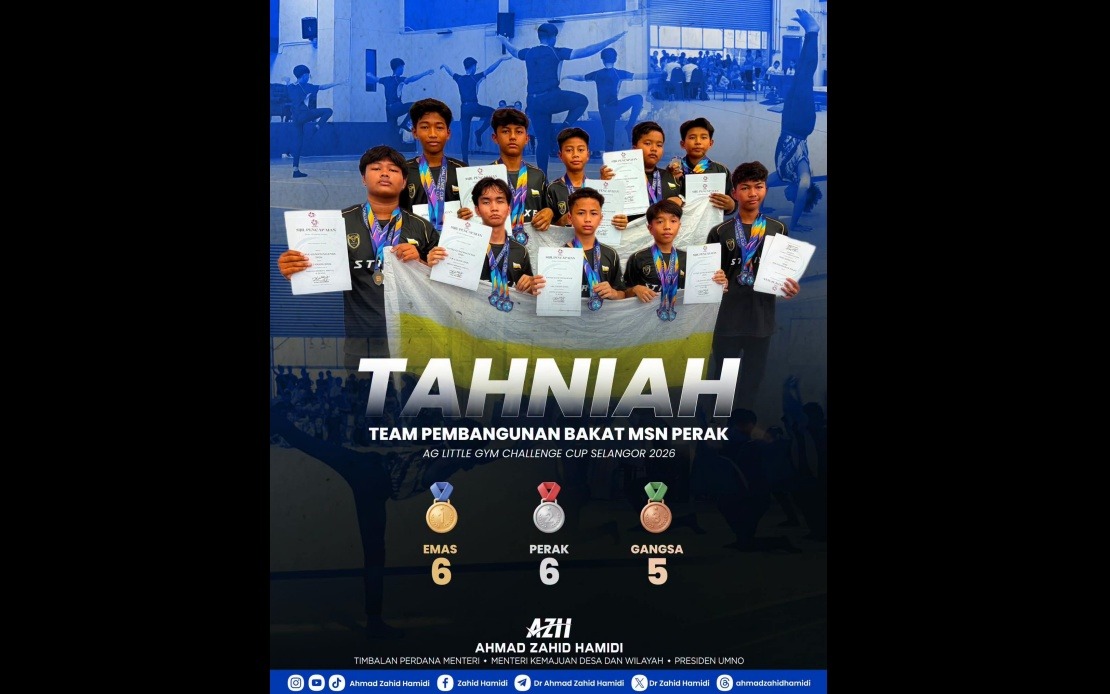
A young gymnastics contingent from Bagan Datuk has scripted a new chapter in the district's sporting history by securing six gold medals at the AG Little Gym Challenge Cup Selangor 2026, an event held in Kajang on August 1. The team's stellar performance, which also included six silver and five bronze medals, reflects the growing strength of grassroots sports development in the Perak constituency and demonstrates the talent pool available to Malaysia's youth sporting community.
The achievement has drawn significant attention at the national level, with Deputy Prime Minister Datuk Seri Dr Ahmad Zahid Hamidi, who also serves as Member of Parliament for Bagan Datuk, publicly celebrating the team's triumph through social media. His endorsement underscores the importance placed by national leadership on nurturing young athletes at the community level, particularly in constituencies outside the Klang Valley where sports facilities and training opportunities are sometimes more limited.
In his Facebook announcement, Ahmad Zahid praised the gymnasts for demonstrating that local talent can compete effectively when provided with adequate resources and coaching. He framed the medals not merely as sporting accolades but as evidence that young people from his constituency possess multifaceted capabilities, excelling both in academic pursuits and athletic endeavours. This narrative aligns with broader national discourse about balanced human development and the value of extracurricular achievement in character building.
The recognition extended beyond the politician to encompass the entire supporting ecosystem. Ahmad Zahid made a point of acknowledging the coaches who designed training programmes, parents who committed time and resources to their children's development, and team management who coordinated logistics for the Kajang competition. This holistic appreciation reflects understanding that individual athletic success emerges from collective institutional effort rather than isolated talent.
The Bagan Datuk Generasi Muda Gymnastics Club, the organisation behind the medal haul, reinforced this philosophy through their own statement celebrating the achievement. Rather than treating the medals as a destination, the club framed them as a waypoint in a longer journey of development. Their public messaging emphasised the discipline and training rigour that underpinned success, communicating to younger athletes that consistent effort and mental resilience form the foundation of competitive achievement.
For Malaysian gymnastics more broadly, the result carries significance beyond Bagan Datuk's district boundaries. The Perak region has historically produced athletes across various disciplines, but systematic recognition of grassroots gymnastics achievements helps establish the sport's profile among parents and young people considering sporting pathways. Success at regional competitions like the Selangor challenge cup can catalyse interest and participation at the feeder level, building the talent pyramid that eventually supplies national teams.
The timing of this achievement also reflects Malaysia's ongoing investment in decentralised sports development. Rather than concentrating elite training in Kuala Lumpur or Petaling Jaya, the proliferation of gymnastics clubs in constituencies like Bagan Datuk suggests expanding accessibility to structured coaching outside traditional urban sporting hubs. This geographic dispersion of opportunity reduces barriers for talented young athletes in smaller towns and rural areas who might otherwise lack pathways to competitive sport.
Gymnastics presents particular value as a developmental sport for Malaysia's youth. The discipline demands technical precision, body awareness, and mental fortitude while being accessible to children of varying body types and athletic backgrounds. Success in gymnastics competitions also builds confidence and self-efficacy that extends into academic and professional contexts, supporting the holistic development messaging that Ahmad Zahid articulated.
The composition of the medal tally—six gold, six silver, and five bronze across presumably multiple age categories and apparatus—suggests that Bagan Datuk's success was distributed rather than concentrated in one or two exceptional performers. This breadth indicates that the Generasi Muda club has built a sustainable programme capable of producing multiple competitive athletes rather than relying on isolated prodigies. Such breadth is essential for long-term sporting development and increases the likelihood that participants will continue in gymnastics or transfer their competitive discipline to other pursuits.
Looking forward, the challenge facing clubs like Generasi Muda involves maintaining momentum and progression. The club's public statement about training harder and returning stronger suggests ambitions beyond the Selangor challenge cup, potentially targeting national championships or international competitions. Sustaining that trajectory requires consistent funding, coaching expertise, and facility access—resources that remain unevenly distributed across Malaysia's districts.
For Malaysian sports policymakers, achievements like Bagan Datuk's gymnasium medal haul provide evidence supporting continued investment in grassroots sports infrastructure and coach development programmes outside major urban centres. Each medal represents not just an individual athlete's success but validation of community-based sporting models that can function effectively beyond Kuala Lumpur's established sporting establishment.
The wider significance of recognising such achievements also lies in countering brain drain and outmigration from smaller towns. When young people experience success and opportunity in their home districts—whether in academic competitions, sports, or cultural pursuits—they develop stronger attachments to those communities. This retention of talent benefits local economic and social development, making investment in grassroots gymnastics in Bagan Datuk an element of broader community sustainability strategy.

