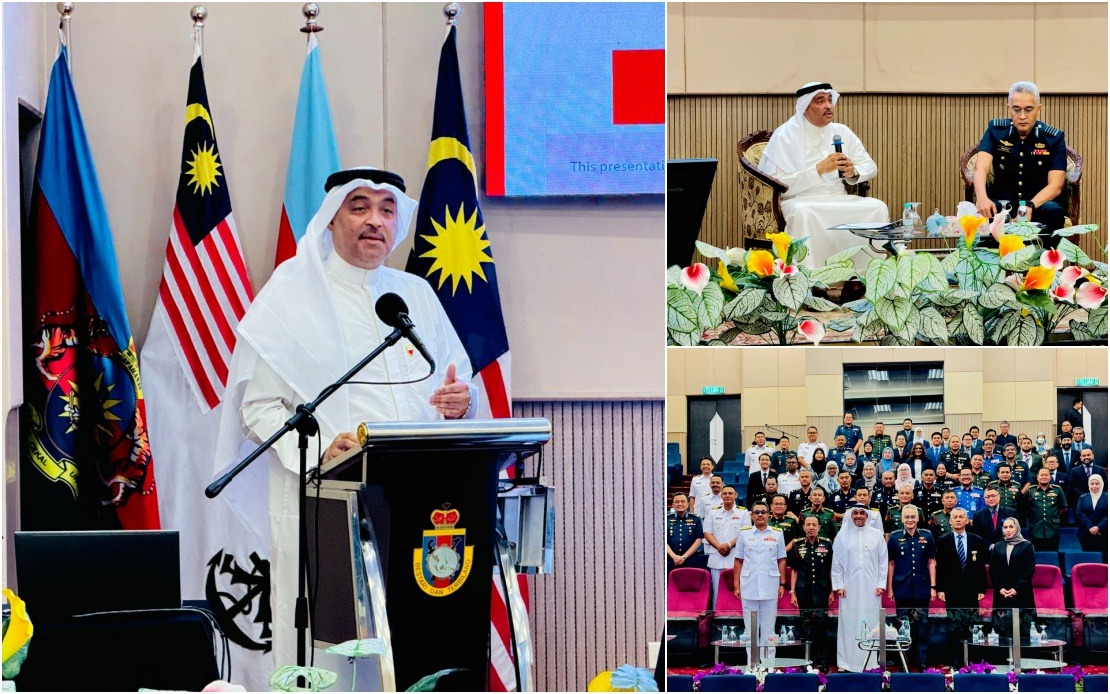
Bahrain's Ambassador to Malaysia, Dr Waleed Khalifa Al Manea, has underscored the strengthening partnership between the two nations, emphasising that bilateral cooperation spans numerous domains benefiting both populations. The deepening relationship reflects a broader alignment of interests and values, with both governments actively working to expand engagement across diplomatic, economic, and security frameworks.
The foundation of this burgeoning partnership rests on the personal relationships between the monarchs and prime ministers of both countries. His Majesty King Hamad bin Isa Al Khalifa, King of Bahrain, and His Majesty Sultan Ibrahim, King of Malaysia, have established a rapport that sets the tone for bilateral affairs. At the operational level, Crown Prince and Prime Minister His Royal Highness Prince Salman bin Hamad Al Khalifa of Bahrain and Malaysia's Prime Minister Datuk Seri Anwar Ibrahim have demonstrated sustained commitment to advancing cooperation across sectors, signalling that the partnership transcends ceremonial gestures and reflects substantive policy coordination.
One particularly striking manifestation of this strengthening relationship is Malaysia's hosting of the 2026 Formula 1 Gulf Air Bahrain Grand Prix. While sporting events might seem peripheral to statecraft, hosting a marquee motorsports championship carries significant diplomatic weight, serving as a visible symbol of warmth between nations and enhancing people-to-people connections through a shared celebration of global sporting culture. The decision reflects confidence in the partnership and provides opportunities for economic collaboration and tourism promotion.
Al Manea delivered his remarks during a high-level lecture at the National Resilience College, part of the Malaysian National Defence Studies Centre, speaking before an audience that included senior Malaysian military and police leadership, government officials, parliamentarians, and academic experts in security and strategy. The prestigious venue and comprehensive attendance underscored the seriousness with which Malaysia regards the relationship and the importance accorded to Bahrain's perspective on regional security matters.
Central to Al Manea's address was Bahrain's comprehensive approach to regional security, which integrates multiple dimensions including sovereign defence, civilian protection, transparent documentation of incidents, and diplomatic problem-solving through coordinated multilateral action. This framework acknowledges that security in the Gulf requires more than military responses; it demands sustained diplomatic engagement and institutional cooperation to address complex, transnational challenges.
The ambassador specifically addressed the destabilising actions emanating from Iran, which has conducted repeated attacks against Gulf Cooperation Council member states. These operations have targeted civilian populations, destroyed critical infrastructure, and disrupted one of the world's most crucial maritime passages for global trade and energy supplies. Such actions create ripple effects far beyond the Gulf region, with consequences reverberating through Southeast Asia and the wider international order that relies on stable, secure shipping lanes.
For Malaysia and ASEAN, the implications of Gulf instability are substantial. Disruptions to maritime routes and energy security directly affect Southeast Asian economies, which depend on reliable access to Middle Eastern oil and gas supplies and require unimpeded passage through critical sea lanes connecting Asia to Europe and Africa. Approximately one-third of the world's maritime trade passes through waters near Southeast Asia, making regional security in the Gulf a matter of direct national interest rather than a distant geopolitical concern.
Al Manea highlighted Bahrain's activist role during its April presidency of the United Nations Security Council, when the kingdom prioritised international efforts to protect maritime navigation, preserve freedom of passage, and defend critical infrastructure from attack. This diplomatic initiative sought to mobilise the international community around shared interests in maintaining the rules-based international order and preventing any single power from weaponising control over vital chokepoints.
Malaysia's co-sponsorship of UN Security Council Resolution 2817 demonstrates Kuala Lumpur's alignment with Bahrain's security concerns and reflects broader Malaysian commitment to upholding international law and maritime freedom. The resolution reaffirmed the sovereignty of affected states, prioritised civilian protection, and called for an end to military operations against Gulf nations and vessels. This co-sponsorship indicates that Malaysia sees its interests as bound up with Gulf stability and values the rules-based system that protects all nations regardless of size.
The timing and substance of the Bahrain ambassador's lecture suggest that both countries are using enhanced diplomatic engagement to address shared concerns about regional instability. Malaysia's willingness to host the F1 Grand Prix and co-sponsor UN resolutions concerning Gulf security demonstrates that the partnership extends beyond traditional bilateral matters into meaningful cooperation on issues affecting global stability and economic prosperity.
For Malaysia, the partnership with Bahrain offers opportunities to strengthen ties with an influential Gulf Cooperation Council member while positioning itself as a serious player in multilateral security discussions. For Bahrain, cultivating relationships with major ASEAN states like Malaysia helps internationalise its security concerns and builds coalitions supporting its vision for regional stability. This mutual interest in collaboration creates space for expanded economic ties, people-to-people exchanges, and coordinated positions on regional and international issues.
The lecture's comprehensive coverage of regional security dynamics suggests that both nations recognise the interconnected nature of modern threats and the importance of sustained dialogue between different regions facing common challenges. As maritime security concerns persist in the Gulf and Southeast Asian states increasingly engage with Middle Eastern affairs, partnerships like those between Bahrain and Malaysia become essential mechanisms for building understanding and coordinating responses to transnational security challenges.

