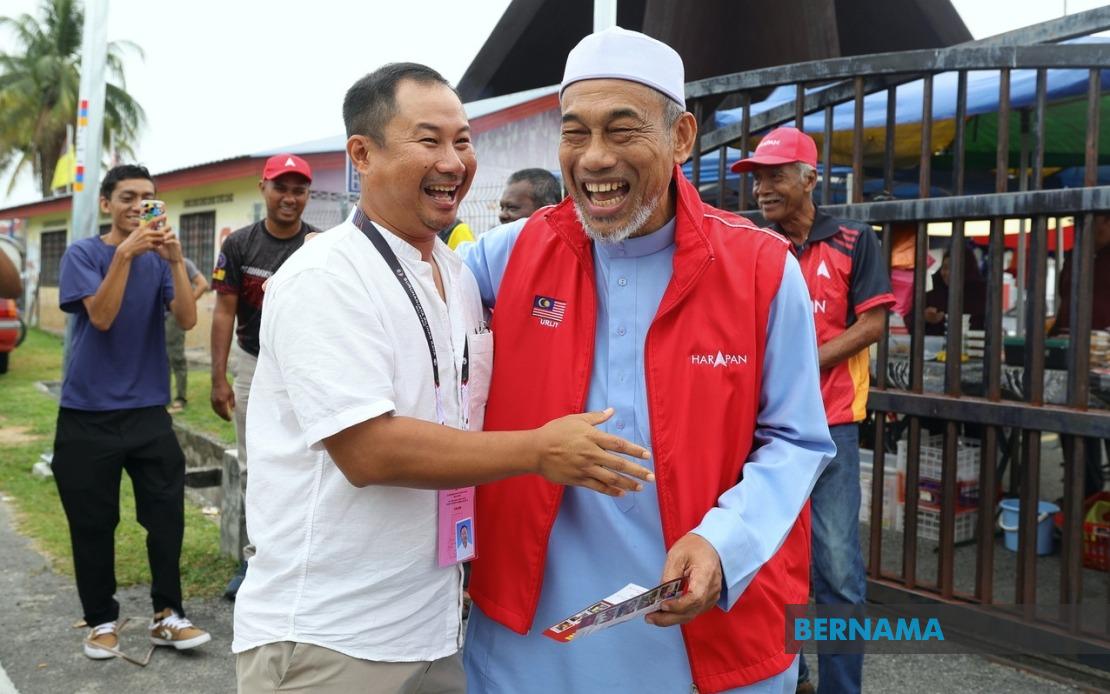
Datuk Bakri Sawir, the Pakatan Harapan candidate for Klawang in the 16th Negeri Sembilan State Election, is putting forward a campaign centred on his established track record and distinctive approach to constituent relations. With two terms as assemblyman already completed, Bakri is seeking voter endorsement for a third consecutive mandate, positioning himself as a representative deeply embedded in the community rather than a distant political figure.
At the heart of Bakri's re-election pitch lies his emphasis on personal accessibility and direct engagement with residents. Throughout his tenure since 2018, he has championed what he describes as a people-centric methodology that prioritises visiting constituents in their homes rather than expecting them to seek assistance at formal service centres. This bottom-up approach has become his trademark, and he argues it distinguishes him from representatives who maintain limited constituency presence between electoral cycles. The comparatively modest electorate size—fewer than 14,000 voters—has allowed him to cultivate what he characterises as genuine personal relationships with many constituents, a factor he believes translates into electoral advantage.
The 67-year-old assemblyman has made his permanent residence within Klawang a central component of his candidacy narrative. By maintaining a physical presence throughout the year rather than appearing only during campaign seasons, he claims to offer constituents unprecedented accessibility to their elected representative. This residential commitment reinforces his argument that he remains attuned to local concerns and can respond swiftly to emerging issues affecting the constituency. For a rural-leaning area like Klawang, such continuous local presence carries particular weight, as voters often feel disconnected from representatives who commute from urban centres.
Bakri's philosophical framework for political engagement reflects a values-based perspective rooted in service orientation. He articulates his political mission as transforming governance into an act of worship and spiritual fulfilment, framing his candidacy around principles of community service rather than personal advancement. While acknowledging that not all voters will support him, he expresses respect for political pluralism and positions electoral contestation as a legitimate mechanism for community betterment. This framing allows him to present himself as non-adversarial and principled, potentially appealing to swing voters concerned about polarisation in Malaysian politics.
On the development agenda, Bakri has outlined several initiatives intended to drive economic growth and infrastructure improvements in Klawang and the broader Jelebu district. Most prominently, he has championed the establishment of a higher education institution—specifically Universiti Malaysia Negeri Sembilan—to strengthen human capital development locally. Although current fiscal constraints have stalled this initiative, Bakri indicates his determination to continue pursuing the proposal if granted a third term. Such an undertaking would represent a significant development coup for a district that currently lacks university-level facilities.
More immediately achievable projects feature prominently in his near-term platform. A Rest and Recreation Area development in Tembun, Hulu Klawang, features prominently among his practical priorities. Bakri argues that improved stopover facilities along major transit routes would enhance tourist traffic and generate economic opportunities for local businesses and entrepreneurs. This reflects recognition that rural constituencies increasingly depend on tourism-driven economic diversification as traditional agricultural sectors face structural challenges.
Complementary to the R&R facility is Bakri's plan to transform Bukit Tajali into a recreational park offering diverse leisure and outdoor adventure activities. These initiatives collectively suggest a strategy of positioning Klawang and Jelebu as emerging tourism destinations within Negeri Sembilan. By developing infrastructure and attractions that cater to both domestic and international visitors, Bakri appears to believe he can create sustainable employment and commercial activity benefiting local residents across multiple sectors.
Another development angle involves capitalising on Jelebu's historical assets, particularly the British Memorial Stone, to expand the district's agrotourism offerings. This approach recognises that heritage sites, when properly developed and marketed, can function as anchors for broader tourism ecosystems. By linking agricultural activities with historical narrative and recreational opportunities, Bakri's strategy attempts to transform the constituency's traditional economic foundation into contemporary tourism attractions.
The electoral contest for Klawang has developed into a three-way race, with Bakri facing competition from Danni Rais, 38, representing Perikatan Nasional, and Muhammad Adib Musa, 25, contesting on behalf of Parti Pribumi Bersatu Malaysia. The presence of a Bersatu candidate adds complexity to opposition vote dynamics, potentially fragmenting the anti-PH vote. The youth of Muhammad Adib Musa contrasts sharply with Bakri's age, introducing a generational dimension to the contest. Meanwhile, Danni Rais's candidacy represents Perikatan Nasional's attempt to reclaim ground in Negeri Sembilan following the coalition's ascendancy at federal level.
The broader Negeri Sembilan electoral context provides important backdrop to the Klawang contest. With 889,490 registered voters eligible to participate in the state election, the stakes extend beyond individual seats to determining overall state legislative control. The dissolution of the State Legislative Assembly on June 5, with polling scheduled for August 1, compressed the campaign timeline considerably. Early voting on July 28 for military personnel and police families adds administrative complexity to the electoral process, requiring candidates to intensify engagement efforts across compressed timeframes.
For Malaysian political observers, Bakri's campaign illustrates a broader tension within electoral politics between incumbency advantage and voter appetite for change. His emphasis on service delivery and constituency presence represents a traditional model of representative politics increasingly challenged by aspirants promising fresh perspectives and generational renewal. Whether voters in Klawang prioritise proven performance and accessibility over alternative visions of development and governance will carry implications extending beyond the constituency itself, offering insights into voter preferences across Malaysia's increasingly competitive political landscape.

