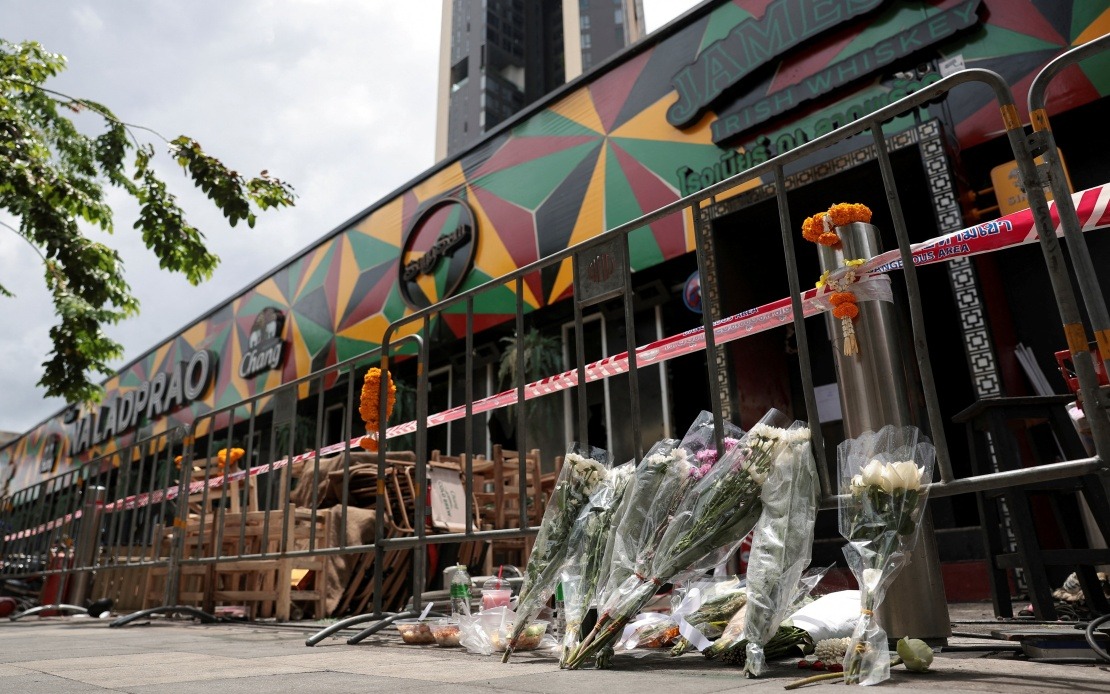
The humanitarian toll from Monday night's catastrophic fire at an entertainment venue in Bangkok has deepened dramatically, with the fatality count climbing to 32 by Wednesday as two more injured victims succumbed to their injuries while receiving hospital treatment. The Erawan Centre, Bangkok's principal emergency medical coordination hub, announced that the additional deaths occurred at Paolo Kaset Hospital and Nopparat Rajathanee Hospital, taking the number of hospitalised victims who have since passed away to five. The tragedy has become one of Thailand's deadliest fire incidents in recent memory, shocking a nation already grappling with public safety concerns across its sprawling capital.
As emergency responders continued their efforts, hospitals reported that 79 individuals sustained injuries from the blaze, with the medical situation evolving rapidly through the week. Among these casualties, 44 had been released from medical care by mid-week, while 30 remained under hospital supervision. Of those still hospitalised, 15 were receiving critical care in intensive care units where their conditions remained precarious, whilst a further 15 occupied general wards recovering from less severe burns and smoke inhalation injuries. The concentration of critical cases underscores the severity of exposure many victims endured as they attempted to escape the rapidly spreading flames.
The Rong Beer Na Lat Phrao venue, situated in Bangkok's Chatuchak district near the Lat Phrao area, became a death trap when fire erupted just before midnight on Monday. Initial reports suggest the blaze spread with alarming speed through the crowded entertainment space, giving patrons and staff minimal time to evacuate safely. The suddenness of the disaster caught many occupants off guard, with numerous individuals unable to locate clear escape routes or encountering insurmountable obstacles as they sought to flee the building's interior.
Investigators examining the disaster have identified several critical factors that likely contributed to the catastrophic outcome. Blocked or inadequate emergency exit routes appear to have severely restricted evacuation capacity, trapping occupants within the burning structure. Additionally, the interior design and furnishings incorporated highly flammable materials that accelerated the fire's propagation throughout the venue, transforming contained sections into infernos within moments. Electrical system failures also remain under investigation as a potential ignition source, with authorities examining whether faulty wiring or overloaded circuits may have initiated the conflagration.
The tragedy prompted immediate governmental action at the highest levels. Thai Prime Minister Anutin Charnvirakul issued directives on Tuesday ordering the Ministry of Interior to mobilise a comprehensive nationwide inspection programme targeting buildings and entertainment establishments throughout the kingdom. This sweeping initiative brings together multiple government bodies including the Bangkok Metropolitan Administration, local administrative organisations, the Department of Public Works and Town & Country Planning, and the Royal Thai Police. The coordinated response reflects recognition that similar hazards may exist in other venues across the country, raising urgent concerns about compliance with fire safety regulations in Thailand's entertainment sector.
For Malaysian observers and regional security specialists, the Bangkok incident carries sobering implications. Thailand's entertainment and hospitality sectors share many structural and operational similarities with establishments throughout Southeast Asia, including Malaysia. Venues in Kuala Lumpur, George Town, and other major centres may face comparable risks if fire safety standards, emergency exit maintenance, and interior material regulations are not rigorously enforced. The incident serves as a stark reminder that rapid economic development in urban centres sometimes outpaces the implementation of robust safety infrastructure.
The investigation into root causes remains ongoing, with authorities likely to conduct forensic analysis of electrical systems, structural elements, and emergency protocols. Once findings are released, they will provide critical lessons for venue operators and regulators across the region. Malaysian authorities, particularly those overseeing the Building Safety and Maintenance Act and fire safety codes, may need to conduct their own assessments of similar establishments to identify vulnerabilities before tragedy strikes domestically.
For the families of the 32 deceased victims, recovery facilities have been coordinated to provide identification assistance and psychological support during an incomprehensible period of grief. The survivors remaining hospitalised face extended recovery periods, with burn injuries and respiratory complications from smoke inhalation requiring weeks or months of specialised medical care. Some may experience permanent physical disabilities or psychological trauma from their escape experience.
The broader implications extend to Thailand's tourism industry and its reputation for safety, which form vital components of the nation's economy. Such incidents inevitably attract international media scrutiny and may influence visitor decisions regarding travel destinations. However, Thai authorities' swift response and the Prime Minister's decisive action demonstrate institutional capacity to implement corrective measures. For Malaysia and other Southeast Asian nations relying heavily on tourism and entertainment sectors, this tragedy underscores the critical importance of maintaining rigorous, consistently enforced safety standards across all hospitality venues, regardless of size or classification. The human cost of complacency in such matters proves far too significant to ignore.

