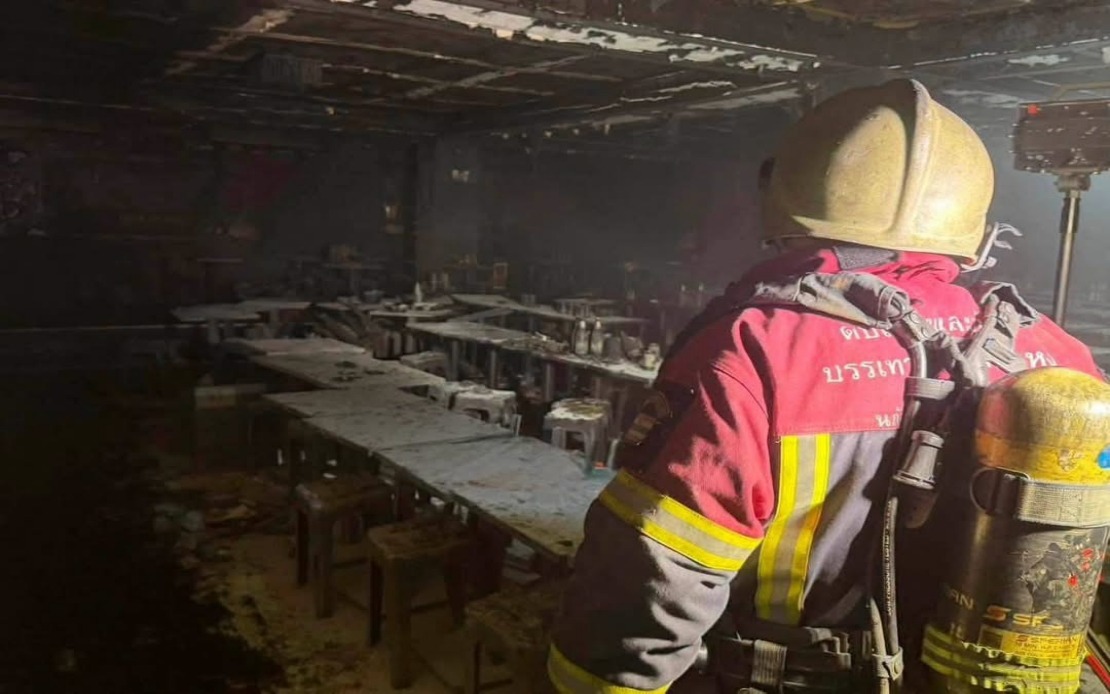
A devastating fire at a bar in Bangkok's Lat Phrao area claimed at least 27 lives in the early hours of Monday morning, marking one of Thailand's deadliest nightlife incidents in recent years. The blaze, which erupted in the Chatuchak district after midnight, claimed nine men and 18 women, while 18 others sustained injuries ranging from critical to minor conditions. The scale of casualties prompted swift mobilization of city authorities and senior government officials to the scene, underscoring the serious implications of the tragedy for Thailand's safety standards in entertainment venues.
Bangkok Governor Chadchart Sittipunt arrived at the location around 2.40 am to oversee initial response efforts. His preliminary assessment revealed a troubling pattern: flames had propagated with alarming speed through the building's ceiling structure, yet many plastic furnishings remained largely intact—a disparity suggesting the fire's path was concentrated in specific structural areas rather than spreading evenly throughout the space. This observation became crucial for investigators attempting to pinpoint the origin point, as it indicated the initial ignition likely occurred above the main occupancy area rather than at ground level where most patrons would have been gathered.
Preliminary medical assessments suggest the majority of victims succumbed to smoke inhalation rather than thermal burns, a finding that raises critical questions about ventilation design and the smoke's rapid accumulation within the enclosed space. Forensic examinations remain ongoing to confirm exact causes of death across all victims. The eight individuals in critical condition presented with severe respiratory and thermal injuries, while seven others sustained moderate trauma consistent with emergency evacuation attempts.
Thailand's Prime Minister Anutin Charnvirakul visited the scene shortly after the governor's arrival and received briefings from officials. During his visit, Anutin spoke with a performer who had been on stage when the disaster unfolded. The musician's account proved illuminating: he reported observing flames originating from an electrical switchboard, followed by explosions and the subsequent rush of panicked patrons fleeing through smoke and intense heat. This eyewitness testimony provided authorities with their most concrete lead regarding the fire's genesis, pointing toward an electrical malfunction as the probable trigger.
The rapid escalation from initial ignition to life-threatening emergency appears to have caught many occupants off-guard, as escape became increasingly difficult within seconds. Investigators discovered that several victims were recovered near an emergency exit on the left side of the building, with evidence suggesting possible obstructions may have hindered evacuation. Governor Chadchart emphasized, however, that definitive conclusions about exit blockages required further forensic analysis and structural examination before any formal determinations could be made.
The Bangkok Metropolitan Administration's Department of Disaster Prevention and Mitigation has assumed investigative oversight, working in coordination with police and forensic specialists to establish comprehensive conclusions about both the fire's origin and the circumstances enabling such high casualties. The BMA has secured the site for detailed examination, preventing unauthorized access while analysis proceeds. Authorities are particularly focused on reconstructing the sequence of events from ignition through the building's complete involvement.
Following standard protocol, the BMA announced intentions to conduct a thorough inspection of the establishment's operational licensing and regulatory compliance status. This examination will specifically assess the adequacy and functionality of emergency exits, the visibility and accessibility of exit signage, and whether evacuation pathways contained any impediments—intentional or otherwise. Such inspections typically lead to recommendations for systemic improvements across similar venues throughout Bangkok.
The incident carries significant implications for Thailand's entertainment sector, which has historically faced criticism regarding safety standard enforcement in nightlife establishments. The Chatuchak district venue's classification and previous inspection history remain under scrutiny as authorities determine whether existing regulations were properly implemented. For Southeast Asian neighbors including Malaysia, the tragedy underscores the importance of rigorous fire safety protocols in high-occupancy venues, particularly regarding electrical system maintenance and regular safety audits.
Bangkok Governor Chadchart urged families of the deceased and injured to monitor official communications through the coordination center established by authorities, as victim identification processes would require medical personnel's involvement alongside formal investigations. The governor's emphasis on official channels reflected concerns about misinformation spreading through social media—a persistent challenge during crisis situations in the region.
The cause of death confirmation process will extend beyond initial assessments, requiring comprehensive forensic examinations that typically take weeks to complete. Authorities acknowledged that while smoke inhalation appeared responsible for most fatalities, the exact circumstances of each death would only be formally established upon completion of full forensic analysis. This methodical approach, though time-consuming, ensures accurate documentation for legal proceedings and insurance claims involving affected families and the establishment's operators.

