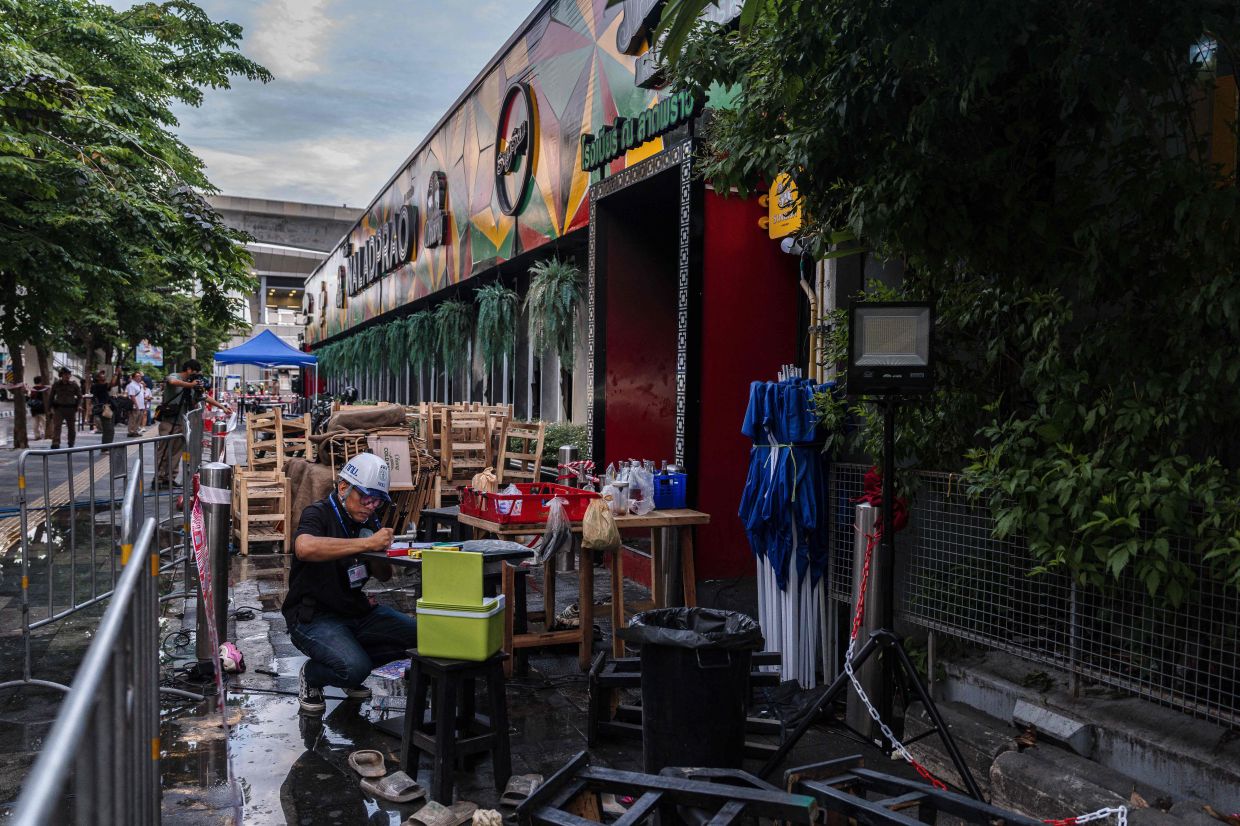
The discovery of 27 bodies at a restaurant and brewery establishment in Bangkok's Lat Phrao district has prompted immediate action from city authorities, who have established a coordination centre to support bereaved families while launching a comprehensive investigation into the disaster. Governor Chadchart Sittipunt visited the charred venue early Monday morning, roughly two hours and forty minutes after the fire was reported, and subsequently ordered the establishment of an assistance hub through the Chatuchak District Office to help relatives navigate the aftermath of what stands as a significant tragedy in the Thai capital.
The scale of the casualties—nine men and 18 women confirmed dead by 3:45am—underscores the severity of the incident. An additional 18 people sustained injuries ranging from minor to serious, with eight individuals requiring intensive care. All injured survivors have been transported to hospitals, though the formal identification of the deceased remains ongoing as forensic teams conduct their procedures. Officials have emphasised that relatives should obtain verified information exclusively through the newly established coordination centre rather than relying on preliminary reports circulating in the community.
The Bangkok Fire and Rescue Department's response, while rapid by conventional standards, highlighted the ferocity with which the blaze consumed the venue. Director Suriyachai Rawiwan disclosed that firefighters arrived approximately five minutes after receiving the emergency alert, yet found the establishment already engulfed in flames with thick smoke hampering rescue operations considerably. The speed of fire propagation suggests fundamental questions about the venue's design and the materials used in its interior, matters that will feature prominently in the ongoing investigation.
Emerging evidence points to toxic smoke as a primary culprit in the fatalities, based on preliminary observations that plastic furnishings sustained relatively limited damage despite the widespread destruction. This discrepancy suggests that decorative interior materials released lethal fumes more readily than the fire itself consumed structural elements, potentially overwhelming occupants before they could reach safety. Governor Chadchart cautioned against drawing premature conclusions, noting that specialists must conduct thorough analysis before confirming the actual cause of death, yet initial findings indicate smoke inhalation as the likely mechanism in most cases.
The venue's emergency exit configuration has become a focal point of scrutiny, with preliminary inspections identifying only two escape routes, one of which inconveniently passed through the kitchen area. More troubling still, evidence suggests that some victims perished near an exit on the building's left side, with indications that physical obstructions may have blocked or obscured their passage. This combination of limited egress options and potential impediments to escape routes raises serious questions about whether the establishment complied with Bangkok's fire safety regulations and building codes.
The coordination of rescue efforts was further complicated by the behaviour of trapped occupants, many of whom reportedly attempted to flee toward toilet facilities at the rear of the premises rather than utilising designated emergency exits. This phenomenon, commonly observed in confined-space emergencies, suggests either confusion about exit locations or inability to locate them amid dense smoke and panic. Whether emergency-exit signage was adequately illuminated and visible will form part of the detailed safety audit now underway across the venue's entire physical layout.
Governor Chadchart has articulated three immediate priorities for the Bangkok Metropolitan Administration: establishing effective support mechanisms for affected families, conducting thorough examinations of the venue's operating permits, and determining whether its fire-escape infrastructure met legal and safety standards. The governor has pledged to accelerate these efforts to both assist those impacted and implement preventive measures that might reduce the likelihood of similar incidents. This commitment reflects the political pressure surrounding high-casualty disasters and the imperative to demonstrate responsive governance.
Beyond the immediate investigation, Bangkok authorities have ordered broader safety inspections of business licences and fire-escape systems across the city, signalling that this tragedy may catalyse wider regulatory review. Such sweeping inspections, while resource-intensive, reflect recognition that the Lat Phrao venue's deficiencies may not be anomalous in a city where enforcement of building codes can be inconsistent. The implications for Bangkok's hospitality and entertainment sector are substantial, potentially triggering compliance costs and operational adjustments for establishments across the industry.
For Malaysian observers and businesses operating in Bangkok or similar Southeast Asian urban environments, this incident carries salutary lessons about fire safety and regulatory vigilance. Thailand's experience demonstrates how rapidly dangerous conditions can develop when enforcement mechanisms prove inadequate and occupancy management becomes lax. The involvement of forensic specialists and formal investigation procedures also illustrates the importance of transparent post-incident analysis, which serves both to assign accountability and to inform future prevention strategies.
The Bangkok Metropolitan Administration has distributed contact information for the assistance centre, with four district office staff members designated to handle inquiries from affected families and the public. This direct communication channel represents an attempt to manage information flow and prevent misinformation from proliferating during the critical early phase of the response. The administration's expression of condolences and commitment to comprehensive support acknowledges both the human dimension of the tragedy and the government's responsibility to address systemic vulnerabilities that contributed to the loss of life.
As forensic teams complete their examinations and investigators determine the precise origins of the fire, the broader implications for fire safety standards across Southeast Asia merit attention. Bangkok's status as a major regional hub for tourism, business, and entertainment means that any significant safety failures ripple through networks of international visitors and expatriate communities. The incident serves as a stark reminder that rapid urbanisation and commercial expansion in Asian cities must be accompanied by rigorous safety oversight and regular enforcement of building codes, particularly in venues where large numbers of people congregate in enclosed spaces.

