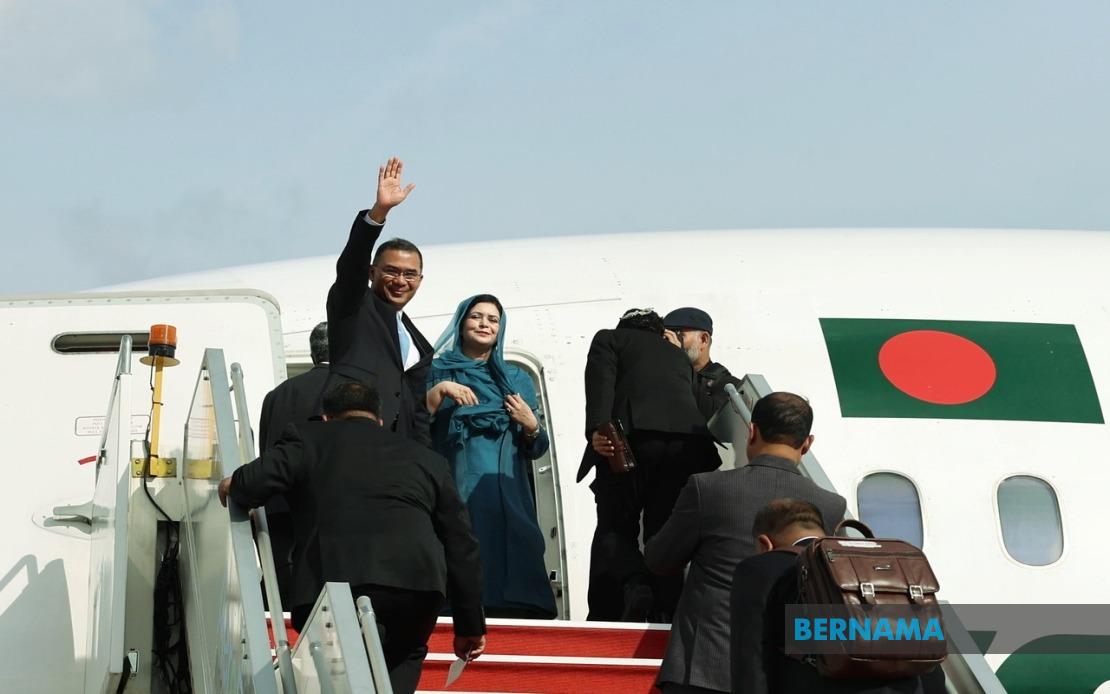
Bangladesh Prime Minister Tarique Rahman departed Malaysia on Saturday evening bound for China, concluding a significant two-day diplomatic engagement that underscored deepening bilateral ties between Kuala Lumpur and Dhaka. The ceremonial departure from Kuala Lumpur International Airport featured a formal guard of honour, reflecting the diplomatic weight accorded to Bangladesh's premier following his assumption of office in February 2026. Minister in the Prime Minister's Department (Religious Affairs) Dr Zulkifli Hasan represented Malaysia in bidding farewell to Tarique, his spouse Dr Zubaida Rahman and their accompanying delegation.
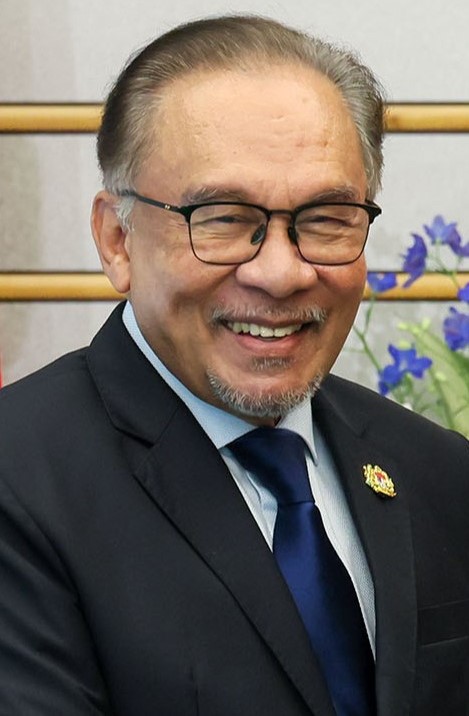
During his visit, Tarique and Prime Minister Datuk Seri Anwar Ibrahim conducted comprehensive bilateral discussions examining regional and international challenges of shared concern. The two leaders prioritised economic expansion, identifying specific sectors for collaborative growth including semiconductors, energy infrastructure, agricultural development and educational partnerships. Their conversation extended beyond commercial matters to encompass broader strategic interests, positioning both nations as stakeholders in regional stability and prosperity.
The visit yielded tangible institutional commitments, with officials formalising a Memorandum of Understanding focused on cultural exchanges between the two countries. Additionally, Bangladesh and Malaysia executed two Exchanges of Notes covering counter-terrorism research collaboration and mechanisms for promoting and facilitating cross-border investment. These instruments reflect a comprehensive approach to bilateral engagement extending beyond traditional trade channels into security and people-to-people dimensions.
Economic cooperation emerged as a central pillar of discussions, with both governments committing to accelerate a free trade agreement through expedited negotiation pathways. The leaders identified the halal industry as a particular area of mutual opportunity, reflecting Bangladesh's emerging capabilities and Malaysia's established expertise in this burgeoning global sector. Enhanced coordination on energy cooperation also featured prominently, acknowledging both nations' interests in regional energy security and sustainable development.
Bangladesh's aspirations for expanded regional engagement received Malaysian support during the visit. Tarique articulated his country's objective of attaining ASEAN Sectoral Dialogue Partner status, a designation that would facilitate deeper participation in the grouping's institutional frameworks. Simultaneously, Bangladesh signalled its intention to accede to the Regional Comprehensive Economic Partnership, a move that would integrate the nation more thoroughly into Asia-Pacific economic structures and align it with major trading powers including China, Japan and South Korea.
The bilateral relationship operates within a context of substantial economic interdependence. In 2025, total bilateral trade reached RM12.18 billion, positioning Bangladesh as Malaysia's second-largest trading partner within South Asia following India, and its 28th-largest globally. Malaysian exports, predominantly comprising petroleum products, totalled RM10.08 billion, while Bangladesh supplied RM2.10 billion in imports, principally textiles, apparel and footwear. This trade architecture reflects Malaysia's role as a supplier of energy resources to Bangladesh's industrial economy whilst leveraging Bangladesh's competitive advantages in labour-intensive manufacturing.
On the international stage, Anwar and Tarique identified substantial convergence on geopolitical matters. Both leaders reiterated support for Palestinian rights and expressed serious concern regarding the humanitarian dimensions of the Gaza conflict. They emphasised the importance of pursuing durable peace frameworks in the Persian Gulf region whilst advocating for diplomatic solutions to broader Middle Eastern tensions. This alignment underscores how Southeast Asian nations increasingly coordinate positions on global conflicts affecting international stability and Muslim-majority populations.
The Rohingya refugee crisis received particular attention during discussions, with both governments recommitting to addressing this longstanding humanitarian challenge through ASEAN mechanisms. Malaysia and Bangladesh agreed to strengthen coordination in dialogue with Myanmar authorities, seeking comprehensive solutions that would enable displaced populations to return safely whilst respecting Myanmar's sovereign concerns. This issue carries particular resonance for both nations given Malaysia's substantial host population of Rohingya refugees and Bangladesh's experience sheltering hundreds of thousands displaced from Myanmar.
Tarique's visit constituted his inaugural bilateral international engagement since assuming office, a symbolic choice that elevated Malaysia's strategic importance within Bangladesh's foreign policy calculus. The selection of Malaysia as a first destination reflects the importance of South Asian connectivity with Southeast Asia and acknowledges Malaysia's standing as a developed Muslim-majority economy. Subsequent travels to China underscore Bangladesh's commitment to balanced engagement across major Asian powers whilst maintaining equidistant positioning in regional great power competition.
For Malaysia, this visit advances regional economic integration whilst reinforcing ASEAN's relevance as a platform for dialogue among Asian democracies navigating complex geopolitical transitions. The agreements signed during the visit establish institutional foundations for expanded cooperation spanning commerce, security and cultural domains. As Bangladesh positions itself for enhanced regional participation through ASEAN and RCEP frameworks, Malaysia's early engagement signals receptiveness to absorbing South Asian economic actors into Southeast Asian structures, potentially reshaping regional trade and investment patterns over coming years.