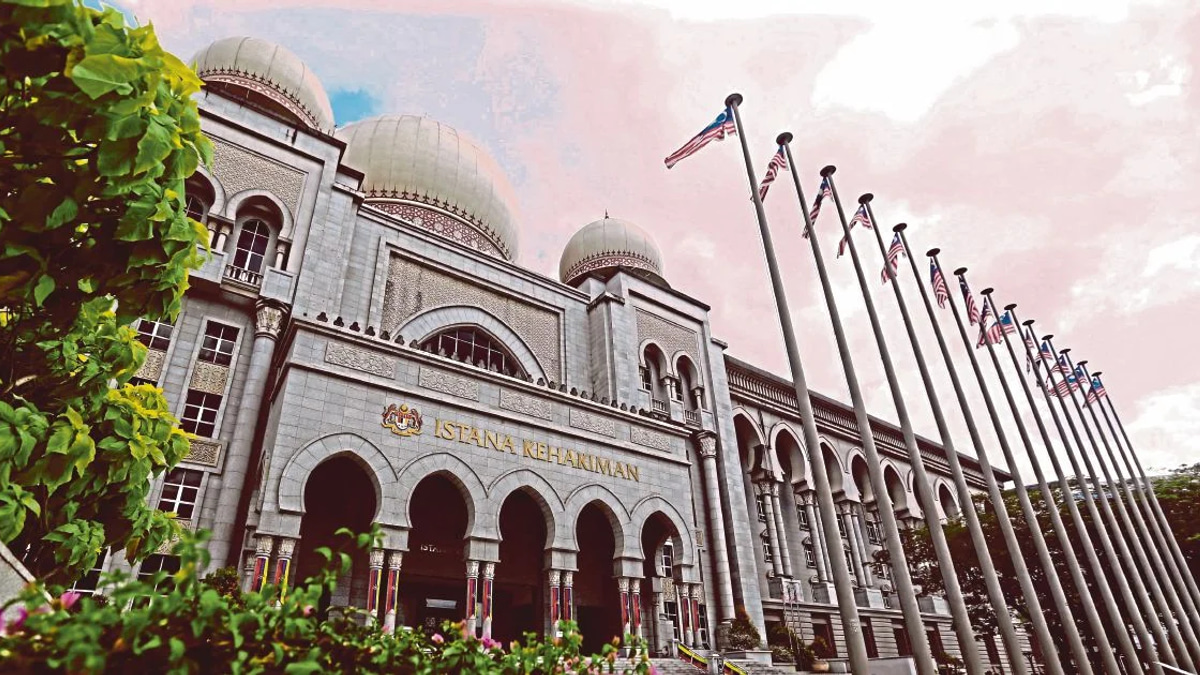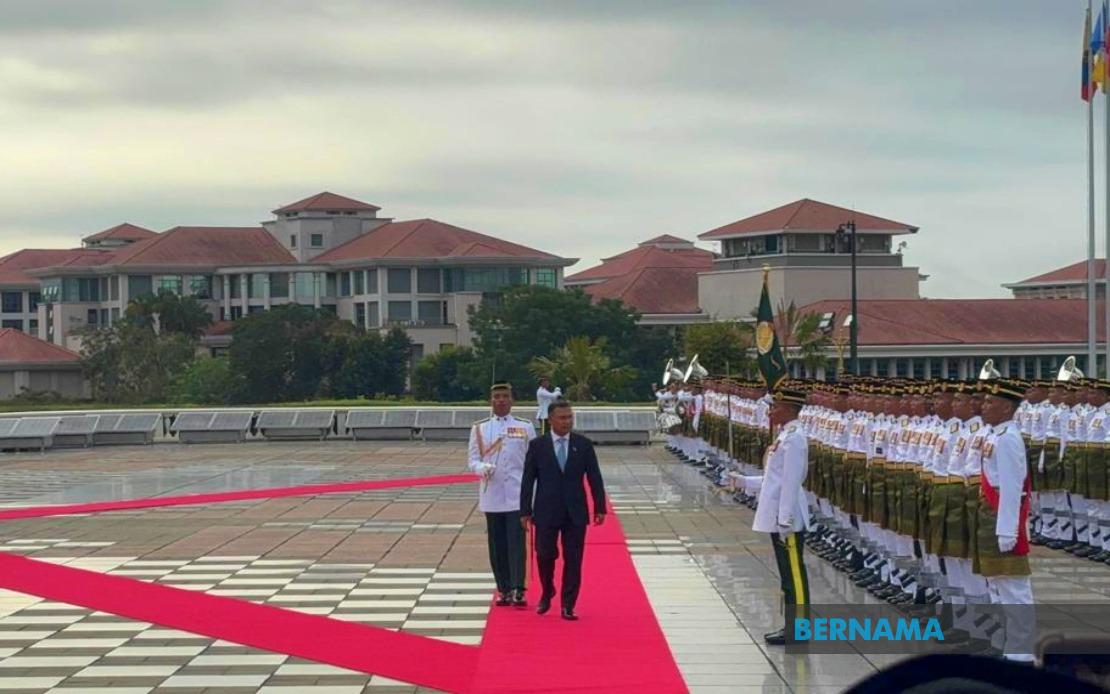
Bangladesh Prime Minister Tarique Rahman arrived in Putrajaya on Saturday morning for a two-day official state visit, where he was greeted with full ceremonial honours at the Perdana Putra Complex. Prime Minister Datuk Seri Anwar Ibrahim personally received the visiting dignitary at 9 am, with the solemn playing of both nations' national anthems marking the formal beginning of the engagement. The elaborate welcome protocol underscored Malaysia's diplomatic commitment to deepening ties with one of South Asia's significant economies.
The official ceremony included inspection of a ceremonial guard of honour comprising three officers and 103 personnel drawn from the First Battalion of the Royal Ranger Regiment, commanded by Major Nur Ahmad Zaim Zahari. The military component of the welcome reflected the strategic importance attached to the bilateral relationship at the highest levels of government. The presence of multiple Cabinet ministers at the reception—including Deputy Prime Minister Datuk Seri Dr Ahmad Zahid Hamidi, Foreign Minister Datuk Seri Mohamad Hasan, Home Minister Datuk Seri Saifuddin Nasution Ismail, and Communications Minister Datuk Fahmi Fadzil—demonstrated the breadth of Malaysia's commitment to comprehensive engagement with Bangladesh across numerous policy domains.
Following the ceremonial welcome, Prime Minister Tarique proceeded to sign the official guest book before engaging in a closed-door bilateral meeting with Anwar. This was followed by an expanded delegation meeting involving senior ministers and officials from both countries, during which the two governments planned to comprehensively review the current state of Malaysia-Bangladesh relations. The agenda encompassed an ambitious range of cooperation areas reflecting the complementary nature of the two economies. Trade and investment figured prominently, alongside emerging sectors such as semiconductors and renewable energy, while traditional areas including agriculture, human resource development, and educational exchanges remained central to discussions.
The economic relationship between Malaysia and Bangladesh has expanded substantially, with 2025 trade figures reflecting deepening commercial integration. Total bilateral trade reached RM12.18 billion, equivalent to USD2.84 billion, positioning Bangladesh as Malaysia's 28th largest trading partner globally. Malaysia's export orientation towards Bangladesh stands particularly robust, with outbound shipments valued at RM10.08 billion (USD2.35 billion), predominantly comprising petroleum products that constitute Malaysia's primary export offering to the South Asian nation. This energy export relationship highlights Malaysia's role as a crucial supplier of hydrocarbon resources to Bangladesh's growing industrial and power generation sectors.
Imports flowing the reverse direction totalled RM2.10 billion (USD0.50 billion), centring on Bangladesh's competitive advantages in labour-intensive sectors. Textiles, apparel, and footwear comprise the bulk of these incoming shipments, reflecting Bangladesh's entrenched position as a global manufacturing hub for these commodities. The composition of bilateral trade illustrates a pragmatic division of labour between the two economies, with Malaysia leveraging its hydrocarbon endowments and petrochemical capabilities while Bangladesh supplies manufactures dependent on its substantial workforce and established supply chains. Within the South Asian region, Bangladesh ranks second only to India in significance for Malaysian commerce, a standing that reflects both the scale of Bangladesh's economy and Malaysia's strategic focus on deepening South Asian engagement.
The bilateral meetings produced tangible outcomes, with both leaders scheduled to witness the formal signing of substantive agreements. A Memorandum of Understanding on Cultural Cooperation will strengthen people-to-people connections and cultural exchanges between the neighbouring nations. Two Exchanges of Notes focusing on counter-terrorism research collaboration and investment promotion and facilitation address contemporary security concerns while signalling mutual commitment to facilitating business transactions. The counter-terrorism research component assumes particular relevance given both nations' situated roles within a strategically sensitive region navigating complex transnational security challenges, while the investment facilitation accord aims to reduce transaction costs and regulatory friction that may impede capital flows.
Following the formal document exchanges, Prime Minister Anwar hosted an official luncheon honouring his Bangladeshi counterpart, providing an informal setting for continued diplomatic engagement. Prime Minister Tarique attended the state visit with his spouse Dr Zubaida Rahman, alongside Bangladesh's own Foreign Minister Dr Khalilur Rahman and accompanying senior officials, reflecting the high-level and comprehensive nature of the delegation. This official composition signalled Bangladesh's serious approach to the bilateral agenda, with representation spanning multiple governmental departments and functional specialities.
The timing and format of the visit reflects evolving regional dynamics within South Asia and beyond. Malaysia has positioned itself as a bridge between Southeast Asia and South Asia, leveraging its own economic dynamism and diplomatic flexibility to facilitate sub-regional integration. Bangladesh, with its population exceeding 170 million and strategic position astride major sea lanes connecting the Indian Ocean to Southeast Asian waters, represents a natural priority for Malaysian diplomatic and commercial outreach. The bilateral relationship encompasses not merely bilateral commerce but also regional stability considerations, with both nations sharing interests in maritime security, counter-terrorism cooperation, and sustainable development within the Indian Ocean region.
Looking forward, the expansion of cooperation in semiconductors and energy sectors offers particular promise for deepening economic integration. Bangladesh possesses substantial natural gas reserves and growing manufacturing capabilities, while Malaysia brings advanced semiconductor expertise and established industrial ecosystems. Collaborative ventures in these sectors could position both nations advantageously within regional value chains increasingly oriented towards technological sophistication and energy transition. The inclusion of agricultural cooperation within the bilateral agenda reflects complementary development needs, with Malaysian agricultural technology and practices potentially supporting Bangladesh's efforts to enhance productivity within its densely populated territory.
The educational and human resource cooperation dimensions deserve particular emphasis, as they address demographic and labour market dynamics within both economies. Malaysia's advanced educational institutions and vocational training programmes attract students from across South Asia, including Bangladesh, while Bangladesh's workforce availability addresses labour market gaps within Malaysia's service and manufacturing sectors. Formalising cooperation through bilateral agreements helps regularise these flows and ensures mutual benefit. Prime Minister Tarique's visit thus represents not merely a ceremonial diplomatic exercise but rather a substantive engagement aimed at weaving the two nations into deeper structural economic and institutional relationships that promise mutual prosperity and regional stability.
%22%2F%3E%3C%2Fpattern%3E%3C%2Fdefs%3E%3Crect%20width%3D%22100%25%22%20height%3D%22100%25%22%20fill%3D%22url(%23ph2z4zlg)%22%2F%3E%3Crect%20width%3D%22100%25%22%20height%3D%22100%25%22%20fill%3D%22url(%23ph2z4zlp)%22%2F%3E%3Ctext%20x%3D%2250%25%22%20y%3D%2250%25%22%20text-anchor%3D%22middle%22%20dominant-baseline%3D%22central%22%20fill%3D%22rgba(255%2C255%2C255%2C0.95)%22%20font-family%3D%22Georgia%2C%20'Times%20New%20Roman'%2C%20serif%22%20font-weight%3D%22700%22%20font-size%3D%22226%22%20letter-spacing%3D%22-0.02em%22%3EPolice%3C%2Ftext%3E%3C%2Fsvg%3E)
%22%2F%3E%3C%2Fpattern%3E%3C%2Fdefs%3E%3Crect%20width%3D%22100%25%22%20height%3D%22100%25%22%20fill%3D%22url(%23ph51habg)%22%2F%3E%3Crect%20width%3D%22100%25%22%20height%3D%22100%25%22%20fill%3D%22url(%23ph51habp)%22%2F%3E%3Ctext%20x%3D%2250%25%22%20y%3D%2250%25%22%20text-anchor%3D%22middle%22%20dominant-baseline%3D%22central%22%20fill%3D%22rgba(255%2C255%2C255%2C0.95)%22%20font-family%3D%22Georgia%2C%20'Times%20New%20Roman'%2C%20serif%22%20font-weight%3D%22700%22%20font-size%3D%22272%22%20letter-spacing%3D%22-0.02em%22%3EQatar%3C%2Ftext%3E%3C%2Fsvg%3E)