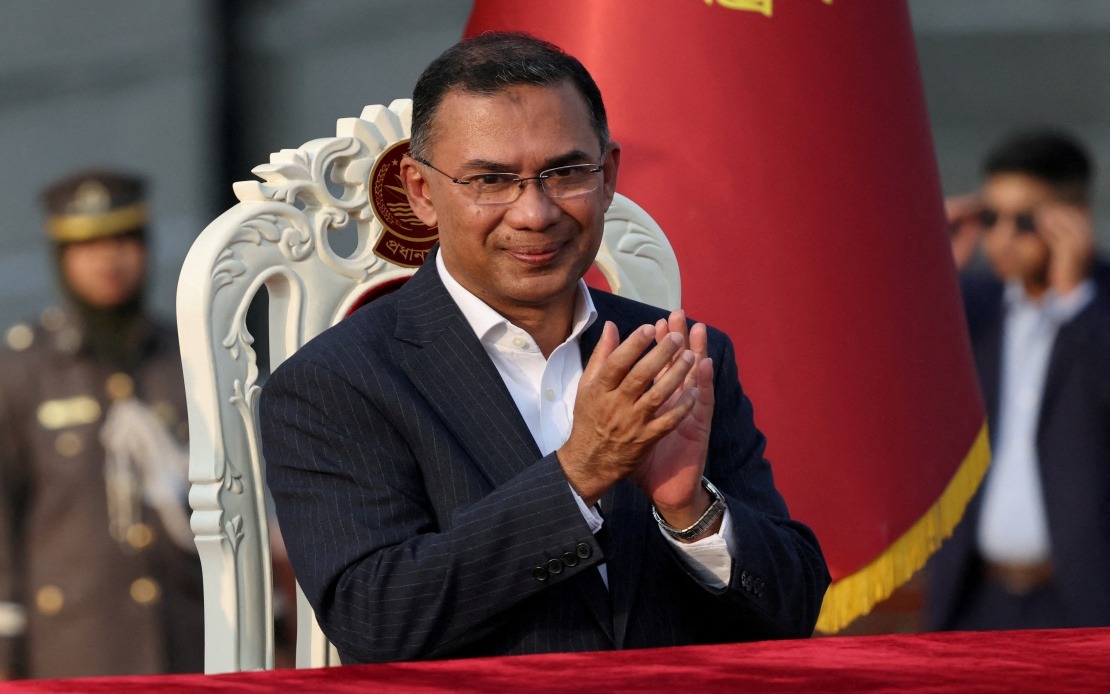
Bangladesh Prime Minister Tarique Rahman is set to arrive in Malaysia on June 22 for an official visit that underscores the deepening partnership between the two South Asian and Southeast Asian neighbours. The visit, extended at the invitation of Prime Minister Datuk Seri Anwar Ibrahim, represents a significant diplomatic milestone as it constitutes Rahman's first bilateral overseas trip since he took office in February 2026, signalling the importance Malaysia holds in Dhaka's foreign policy priorities.
The formal schedule will commence with an official welcoming ceremony at the Perdana Putra Complex, where Rahman will subsequently hold bilateral discussions with Anwar. During these talks, both leaders plan to conduct a comprehensive review of the existing Malaysia–Bangladesh partnership while identifying fresh avenues for cooperation spanning multiple economic and strategic sectors. The agenda encompasses trade and investment expansion, human resource management initiatives, semiconductor industry collaboration, energy partnerships, agricultural development, and educational exchange programmes.
Beyond economic matters, the two governments will explore their shared interests across regional and international dimensions. This broader diplomatic engagement reflects the reality that bilateral relationships in Southeast Asia and South Asia increasingly intersect with global challenges ranging from terrorism to climate change. The conversations between Anwar and Rahman are therefore expected to touch upon strategic concerns affecting both nations and their respective regions.
The visit will be marked by the formal signing of several cooperative instruments designed to institutionalise the bilateral relationship. A memorandum of understanding focusing on cultural cooperation will be exchanged, recognising the people-to-people connections and cultural affinities that bind the two nations. Additionally, two separate exchanges of notes will be concluded: one addressing counter-terrorism research collaboration and another establishing frameworks for investment promotion and facilitation. These agreements are designed to create structured mechanisms for ongoing cooperation.
Anwar will host an official luncheon honouring his Bangladeshi counterpart, providing an additional venue for informal diplomatic engagement. Rahman will travel with his spouse Dr Zubaida Rahman, alongside Foreign Minister Dr Khalilur Rahman and senior government officials, reflecting the high-level nature of the delegation and the importance attached to the mission.
The bilateral economic relationship between Malaysia and Bangladesh has achieved considerable scale. During 2025, the two countries recorded total trade valued at RM12.18 billion, equivalent to approximately US$2.84 billion. This figure demonstrates the substantive commercial ties that have developed between the economies. Malaysia's export performance to Bangladesh proved particularly robust, with shipments reaching RM10.08 billion (US$2.35 billion), with petroleum products dominating the export basket. This reflects Bangladesh's growing energy demands as its economy expands and its industrial base develops.
Bangladesh's exports to Malaysia, while smaller in value at RM2.10 billion (US$500 million), represent important segments of the nation's international trade. Textiles, apparel, and footwear constitute the primary components of these shipments, showcasing Bangladesh's established competitive advantages in labour-intensive manufactured goods. These product categories reflect the complementary nature of the two economies, with Malaysia seeking raw materials and manufactured imports while exporting energy and higher-value products.
With respect to Malaysia's global trading relationships, Bangladesh has emerged as a significant partner. The nation ranks as Malaysia's 28th largest trading partner worldwide, a position that has strengthened considerably over recent years. More notably, within the South Asian region, Bangladesh has secured the position of Malaysia's second most important trading partner overall, second-largest export destination, and second-largest source of imports, surpassed only by India in these metrics. This regional prominence underscores Bangladesh's growing economic weight and Malaysia's strategic interest in the South Asian market.
The timing of this visit carries additional significance given regional developments. Bangladesh has undergone substantial political transitions in recent years, and Rahman's assumption of office in February 2026 marked a new chapter in the country's governance. For Malaysia, engagement with Bangladesh at this juncture represents an opportunity to strengthen ties with a reshaped administration while positioning itself strategically within South Asia. The visit signals both nations' commitment to maintaining robust bilateral partnerships despite geopolitical shifts affecting the broader Asian landscape.
For Malaysian businesses and policymakers, enhanced cooperation with Bangladesh presents tangible opportunities. As Bangladesh's economy continues its trajectory of growth and modernisation, demand for Malaysian energy resources, technology, and services is likely to expand. Conversely, Malaysian companies may find increasing opportunities in Bangladesh's growing consumer market and manufacturing sectors. The formal mechanisms being established through this visit, particularly the investment promotion framework, are designed to facilitate such commercial expansion.
From a Southeast Asian perspective, Malaysia's strengthening of ties with South Asian nations like Bangladesh reflects a broader strategic orientation towards deepening regional interconnectivity. The ASEAN region's economic and strategic interests increasingly intersect with South Asia, particularly as infrastructure projects and trade corridors linking the two regions develop. Rahman's visit to Malaysia may therefore be understood not merely as a bilateral engagement but as part of a larger pattern of regional integration efforts.
The counter-terrorism research cooperation outlined in the planned exchange of notes addresses shared security concerns that both nations face. Bangladesh has grappled with terrorism-related challenges, as has Malaysia, making collaboration on intelligence sharing, research methodologies, and counter-insurgency strategies mutually beneficial. This dimension of the visit acknowledges that contemporary bilateral relationships must address not only economic prosperity but also collective security imperatives.
Looking forward, this inaugural official visit by Rahman to Malaysia may establish foundations for expanded cooperation that extend beyond the immediate agreements being formalised. The visit creates platforms for expanded people-to-people exchange, deeper institutional linkages between government agencies, and increased awareness of shared interests. As both nations navigate an evolving geopolitical environment characterised by economic interdependence and shared regional challenges, such high-level diplomatic engagement becomes essential for sustaining and advancing bilateral partnerships.