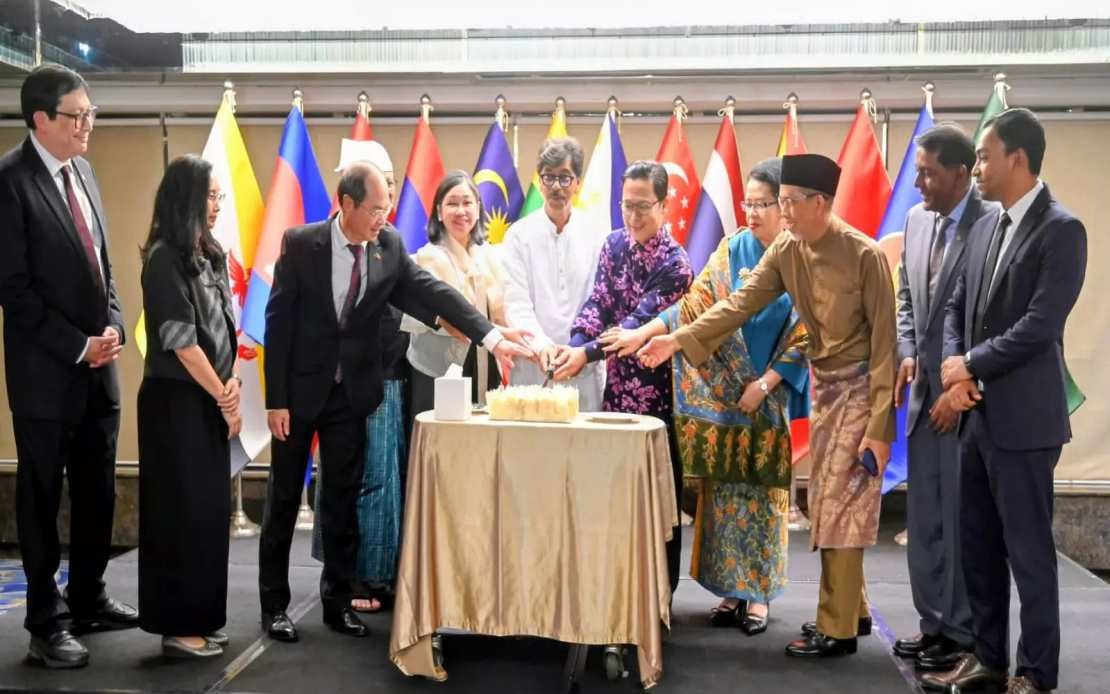
Bangladesh is charting an ambitious course to deepen its relationship with the Association of Southeast Asian Nations, positioning itself as an active regional partner committed to sustained cooperation across multiple economic and cultural domains. The commitment was articulated by Fisheries, Livestock and Agriculture Minister Mohammed Aminur Rashid during a reception marking the 59th ASEAN Day in Dhaka, where he signalled that the government led by Prime Minister Tarique Rahman places extraordinary emphasis on strengthening ties with all eleven ASEAN member states.
The centrepiece of Bangladesh's renewed regional engagement is a formal application to become a Sectoral Dialogue Partner of ASEAN, a status that would institutionalise the nation's participation in regional decision-making architecture and allow it to contribute meaningfully to key policy areas. This strategic move reflects Bangladesh's recognition that deeper institutional ties would elevate bilateral and multilateral engagement beyond ceremonial exchanges to substantive collaboration on issues of mutual strategic importance. By pursuing SDP status, Dhaka seeks to embed itself within ASEAN's operational framework rather than remaining a peripheral observer of regional developments.
The application comes as Bangladesh simultaneously launches concrete sectoral cooperation programmes designed to demonstrate tangible value to the regional bloc. A US$1 million Bangladesh-ASEAN Cooperation Project on Fisheries and Aquaculture, implemented through Rashid's ministry, signals serious commitment to knowledge-sharing and technical collaboration in sectors where Bangladesh possesses considerable expertise. The fisheries and aquaculture initiative carries particular significance for Southeast Asia, as many ASEAN members depend heavily on marine and freshwater resources, and Bangladesh's experience managing one of the world's largest deltaic ecosystems positions it as a valuable knowledge partner.
Beyond fisheries, Bangladesh is cultivating parallel initiatives spanning tourism, information and communications technology, and cultural exchange. These interconnected projects reflect a sophisticated understanding that regional integration functions most effectively when rooted in multiple dimensions of cooperation rather than confined to bilateral trade agreements. Tourism development carries obvious economic implications for Bangladesh and neighbouring ASEAN states, while ICT collaboration speaks directly to digital economy ambitions that have gained momentum across Southeast Asia. The cultural component, meanwhile, acknowledges the deep historical and civilisational connections binding Bangladesh to the broader region.
Prime Minister Tarique Rahman's selection of Malaysia as the destination for his first official foreign visit carries symbolic weight in this context. The choice underscores Bangladesh's prioritisation of ASEAN engagement and specifically signals respect for Malaysia's standing within the regional organisation. Malaysia's dual role as both a major ASEAN player and an active diplomatic presence in Dhaka—through its High Commissioner Mohammad Shuhada Othman serving as Chair of the ASEAN Dhaka Committee—makes it a natural fulcrum for Bangladesh's regional diplomacy. The visit promises to yield concrete outcomes in bilateral relations while positioning Bangladesh as a state serious about ASEAN-centred regional cooperation.
Minister Rashid's address stressed that Bangladesh-ASEAN partnership rests on foundations far deeper than recent diplomatic initiatives. The minister highlighted longstanding historical, cultural, and trust-based ties that predate contemporary regional institutions, suggesting that formalisation through SDP status would simply acknowledge and strengthen relationships that already exist in multiple dimensions. This framing is important for Malaysian and broader Southeast Asian audiences, as it rebuts any perception that Bangladesh's outreach represents a sudden or opportunistic pivot but rather reflects enduring regional consciousness.
The reception itself carried deliberate cultural messaging, with traditional Bangladeshi cuisine featuring prominently on the menu. Dishes prepared with Kalijira rice and Black Bengal Goat—a globally-recognised geographical indication product—demonstrated Bangladesh's agricultural sophistication while inviting ASEAN counterparts to appreciate the nation's culinary and agricultural heritage. This seemingly minor detail actually reflects astute public diplomacy, as shared appreciation for authentic regional food cultures frequently translates into deeper people-to-people connectivity and mutual understanding among diplomatic communities.
For Malaysian observers specifically, Bangladesh's regional engagement strategy warrants close attention given Malaysia's influential position within ASEAN. Should Bangladesh secure SDP status, it would become a formally recognised external stakeholder in regional affairs, potentially shaping deliberations on matters affecting Southeast Asia. Bangladesh's geographic proximity to South Asia and its positioning at the intersection of Asian civilisations would bring a distinctive perspective to ASEAN discussions on transnational challenges including climate adaptation, maritime security, and regional connectivity.
The timing of Bangladesh's ASEAN engagement intensification also reflects evolving geopolitical currents across Asia. As major powers increasingly compete for influence in Southeast Asia, Bangladesh's bid to institutionalise regional partnership demonstrates how middle powers navigate complex external environments by deepening multilateral ties within Asia itself. This approach potentially offers ASEAN member states including Malaysia an enlarged ecosystem of partners with whom to coordinate on regional priorities and manage external pressures.
Minister Rashid's explicit appeal to ASEAN envoys for active support of Bangladesh's SDP bid illustrates the diplomatic groundwork already underway behind formal channels. The attendance of heads of mission from multiple ASEAN states at the ASEAN Day reception suggests receptivity to Bangladesh's overtures, though formal accession to partnership status will require consensus among all ASEAN members. The Philippines, Malaysia, Indonesia, Thailand, Vietnam, Singapore, Brunei, Cambodia, Laos, and Myanmar will collectively determine whether Bangladesh advances to the next tier of regional engagement.
Looking forward, the success of Bangladesh's SDP application will hinge partly on whether the sectoral initiatives currently in development generate measurable benefits for participating ASEAN member states. The fisheries cooperation project, in particular, offers concrete deliverables that could demonstrate Bangladesh's capacity to contribute meaningfully to regional problem-solving. Similarly, the tourism and ICT initiatives must translate from proposal into implementation to build credibility for sustained partnership.

