%22%2F%3E%3C%2Fpattern%3E%3C%2Fdefs%3E%3Crect%20width%3D%22100%25%22%20height%3D%22100%25%22%20fill%3D%22url(%23ph2rbueg)%22%2F%3E%3Crect%20width%3D%22100%25%22%20height%3D%22100%25%22%20fill%3D%22url(%23ph2rbuep)%22%2F%3E%3Ctext%20x%3D%2250%25%22%20y%3D%2250%25%22%20text-anchor%3D%22middle%22%20dominant-baseline%3D%22central%22%20fill%3D%22rgba(255%2C255%2C255%2C0.95)%22%20font-family%3D%22Georgia%2C%20'Times%20New%20Roman'%2C%20serif%22%20font-weight%3D%22700%22%20font-size%3D%22136%22%20letter-spacing%3D%22-0.02em%22%3EBangladesh%3C%2Ftext%3E%3C%2Fsvg%3E)
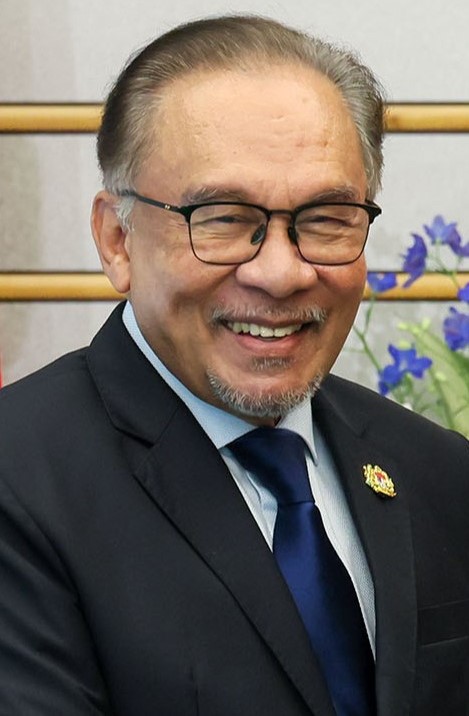
Bangladesh is charting a more assertive course within Southeast Asian regional frameworks, with Prime Minister Tarique Rahman using bilateral talks in Putrajaya on June 22 to articulate his nation's strategic priorities for deepening institutional ties with ASEAN and securing membership in one of the region's most consequential trade arrangements. During a joint press conference with Malaysian Prime Minister Datuk Seri Anwar Ibrahim, Rahman outlined a vision of Bangladesh as a more integrated player in regional affairs, signalling that his government views closer ASEAN engagement not merely as a matter of diplomatic protocol but as essential to the country's economic and strategic positioning in an increasingly competitive Indo-Pacific landscape.
The Bangladesh premier's explicit interest in achieving ASEAN Sectoral Dialogue Partner status represents a graduated approach to regional integration. Rather than immediately pursuing full membership—which would entail meeting stringent geopolitical criteria—Bangladesh is targeting a more flexible arrangement that would grant it structured access to ASEAN decision-making processes and facilitate cooperation in specific sectors aligned with mutual interests. This pragmatic sequencing reflects both the realpolitik of contemporary ASEAN expansion and Bangladesh's calculation that sectoral partnership could serve as a stepping stone to deeper institutional roles over time. For Malaysia, backing Bangladesh's regional integration efforts carries strategic weight, as it positions Kuala Lumpur as a champion of inclusive regionalism while potentially strengthening economic ties with one of South Asia's most dynamic economies.
Bangladesh's aspiration to join the Regional Comprehensive Economic Partnership deserves particular scrutiny given the bloc's transformative implications for trade architecture across Asia-Pacific. The RCEP, which encompasses ten ASEAN nations alongside China, Japan, South Korea, Australia, and New Zealand, represents the world's largest regional trade agreement by GDP and has fundamentally reordered supply chains and investment patterns since its implementation. For Bangladesh, membership would provide unprecedented access to a market representing roughly 30 per cent of global GDP and would integrate the country into production networks spanning multiple continents. The garment and textile sectors, which constitute Bangladesh's exports to Malaysia and globally, would benefit from streamlined tariff frameworks and rules of origin provisions, potentially unlocking hundreds of millions of dollars in additional trade flows.
The bilateral economic relationship between Malaysia and Bangladesh already demonstrates the depth of engagement that could be broadened through wider regional architecture. In 2025, total bilateral trade reached RM12.18 billion, positioning Bangladesh as Malaysia's 28th largest trading partner globally and second-largest partner within South Asia after India. Malaysia's export performance to Bangladesh has been particularly robust, with shipments totalling RM10.08 billion, predominantly petroleum products that reflect Bangladesh's energy import requirements as it accelerates industrial development and power generation capacity. This skew towards Malaysian energy exports underscores a complementarity in economic structures that RCEP membership could enhance by reducing trade friction and investment barriers across value chains.
Imports flowing the opposite direction—RM2.10 billion in 2025—reveal Bangladesh's comparative advantage in labour-intensive manufacturing, particularly textiles, apparel, and footwear. These sectors employ millions of workers across Bangladesh and constitute the nation's largest source of foreign exchange earnings. Malaysian importers have long tapped this production capacity, but preferential tariff access through RCEP would intensify competition with existing suppliers while simultaneously creating opportunities for deeper vertical integration, whereby Malaysian companies establish design, finishing, or logistics operations in Bangladesh to serve regional and global customers more competitively. The implication for Malaysia's manufacturing sector is mixed: while some low-cost producers might face displacement, others could reconfigure their supply chains to capture higher-value activities.
The diplomatic scaffolding supporting enhanced economic engagement was reinforced during the Putrajaya meeting through the exchange of several instruments governing specific domains of cooperation. A Memorandum of Understanding on Cultural Cooperation signals an intent to deepen people-to-people exchanges, potentially through educational scholarships, artistic collaborations, and heritage preservation initiatives. Two Exchanges of Notes in Counter-Terrorism Research and Investment Promotion and Facilitation address security cooperation and commercial facilitation, reflecting shared concerns about transnational security challenges and recognition that investment frameworks matter substantially to private sector confidence. These formal instruments, though sometimes dismissed as ceremonial, operationalise commitments and establish institutional pathways through which civil servants and private actors can coordinate substantive work.
Tarique Rahman's personal invitation to Anwar Ibrahim to visit Bangladesh, extended during the press conference, carries symbolic significance beyond diplomatic courtesy. High-level visits by Malaysian leaders to Dhaka would underscore the relationship's elevation and potentially provide occasions for announcing larger trade or investment initiatives. The gesture also reflects Bangladesh's broader diplomatic strategy of cultivating relationships with significant regional actors, particularly those wielding influence within ASEAN. Malaysia, as chair of ASEAN in 2024 and a respected voice within the bloc, occupies exactly the position from which Bangladesh hopes to draw support for its sectoral partnership application and future regional integration.
The timing of Bangladesh's intensified regional engagement warrants consideration against the backdrop of its recent political transitions and evolving foreign policy orientation. The country has undergone significant constitutional and political changes, with new leadership seeking to recalibrate regional and international relationships. Pursuing closer ties with ASEAN and membership in the RCEP aligns with a diversification strategy aimed at reducing dependency on any single great power while positioning Bangladesh within multiple overlapping regional frameworks. This approach mirrors strategies adopted by other South Asian nations attempting to navigate between competing powers and leverage regional economic arrangements to accelerate development.
For Malaysia specifically, strengthening the bilateral relationship with Bangladesh and supporting its regional integration carries long-term payoffs. As Bangladesh's economy continues expanding and urbanisation drives consumption growth, Malaysian exporters and investors gain access to an increasingly significant market. Simultaneously, Malaysian companies operating across energy, petrochemicals, financial services, and digital sectors can position themselves advantageously within Bangladesh's development trajectory. Supporting Bangladesh's ASEAN engagement indirectly reinforces Malaysia's own regional role as a bridge between South and Southeast Asia, a positioning that has historical resonance and contemporary strategic value in an era when intra-Asian economic integration is reshaping global commerce.
The broader context involves ASEAN's own evolving stance on regional expansion. Dialogue partner categories have proliferated, but achieving dialogue partner status requires consensus from ten member states, each with distinct interests and perspectives. Bangladesh's application will likely succeed given ASEAN's interest in constructive engagement with major South Asian economies, but the timeline and exact modalities remain subject to internal ASEAN diplomacy. Malaysia's explicit endorsement enhances Bangladesh's prospects, particularly given Kuala Lumpur's traditional emphasis on inclusive regionalism and South Asian connectivity. Once Bangladesh achieves sectoral partnership, the pathway to deeper engagement—potentially including participation in ASEAN Regional Forum discussions and other multilateral mechanisms—becomes more concrete.
The conversation about RCEP membership involves separate complexities. While RCEP technically remains open to accession by other eligible countries, the bloc has not yet established a formal expansion mechanism. Bangladesh would need to secure consent from all current members, a process that could take years given the agreement's consensus-based decision-making. However, Bangladesh's demonstrated interest signals to all parties that South Asian economies view regional trade architecture seriously and expect inclusion in frameworks shaping economic flows. This perception, in turn, may accelerate discussions about RCEP architecture and the conditions under which major economies like Bangladesh could join.
Looking forward, the bilateral relationship between Malaysia and Bangladesh appears positioned for expansion across multiple dimensions. The formalised cooperation frameworks announced in Putrajaya provide operational foundations, while the broader context of Bangladesh's regional integration push creates momentum for deeper engagement. For Malaysian policymakers and business leaders, the country's role in supporting Bangladesh's aspirations offers both diplomatic returns and economic opportunity. For Bangladesh, the backing of a respected regional player like Malaysia enhances credibility with ASEAN and provides reassurance as Dhaka pursues partnerships that promise to accelerate its development trajectory and entrench it within the region's institutional fabric.