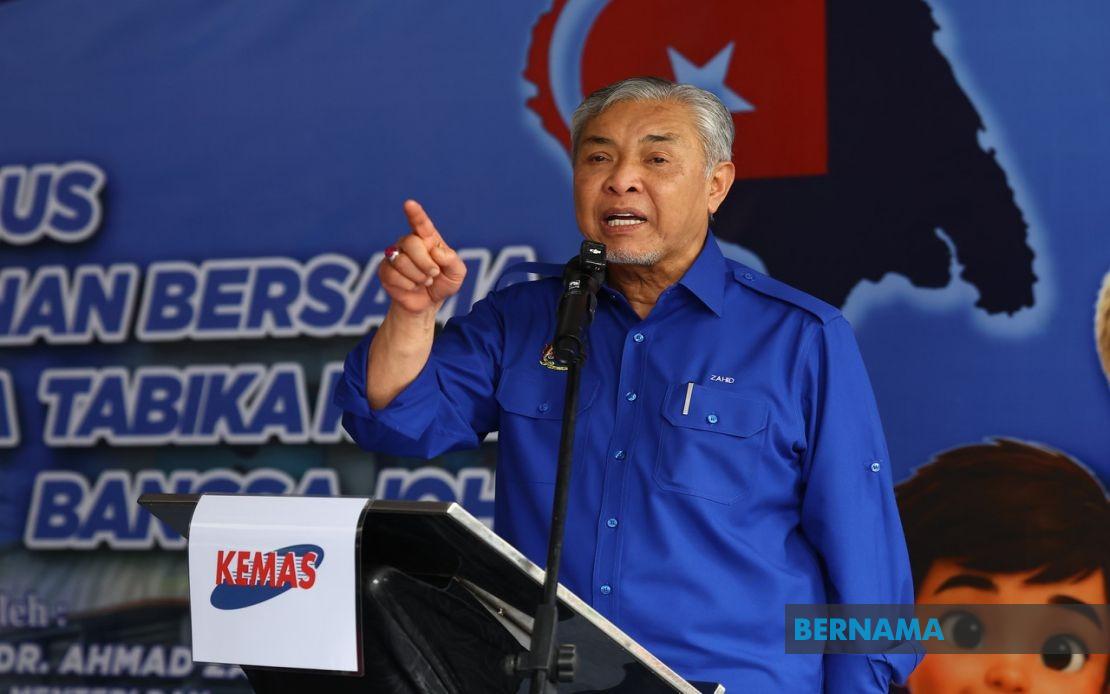
Bangsa Johor KEMAS Kindergarten (TKBJ) has made history as the nation's first community kindergarten to systematically embed English-language teaching and technology-driven learning into its foundational education framework. The initiative, unveiled in Johor Bahru, represents a significant departure from conventional early childhood programmes and signals how state-level governments are taking the lead in modernising Malaysia's educational infrastructure beyond the federal system.
Deputy Prime Minister Datuk Seri Dr Ahmad Zahid Hamidi, who also holds the Rural and Regional Development portfolio, characterised the development as a transformative step that addresses the growing imperative for Malaysian children to enter primary school with competitive language skills and digital confidence. His endorsement underscores the federal government's recognition that early childhood education has become a critical differentiator in preparing young learners for an increasingly globalised economy where English proficiency and technological literacy are non-negotiable assets.
What distinguishes TKBJ from the broader network of KEMAS kindergartens operating across the country is its deliberate fusion of cultural identity, Islamic values, and forward-looking pedagogical methods. Ahmad Zahid emphasised that Quranic instruction remains non-negotiable within the curriculum, a point likely designed to address any concerns about Western educational dominance. However, the facility's infrastructure goes well beyond traditional classroom settings, incorporating computer-based learning platforms and digital tools that fundamentally reshape how young children interact with educational content. This balanced approach—maintaining spiritual and cultural foundations while embracing technological innovation—reflects a maturing understanding among Malaysian policymakers about how to preserve national values whilst building global competitiveness.
The Johor Government's commitment is substantial: RM3.6 million in dedicated funding represents a serious investment in what could become a replicable model across the country. This financing covers five separate premises distributed across four locations, with two facilities in Johor Bahru and two in Pasir Gudang, collectively accommodating seven classrooms. The decision to fund this initiative independently rather than relying solely on federal KEMAS structures demonstrates how state administrations are carving out distinctive educational pathways tailored to regional economic priorities and demographic needs.
Menteri Besar Datuk Onn Hafiz Ghazi positioned TKBJ within the broader Sekolah Rintis Bangsa Johor (SRBJ) ecosystem, an overarching framework initiated by the Regent of Johor that aims to ensure systematic nurturing of children's development from their earliest school years. This ecosystem approach suggests that Johor is moving beyond ad-hoc educational improvements toward a comprehensive, coordinated strategy that addresses early childhood development as a foundational pillar of human capital building. Such systematic thinking is relatively advanced at the state level and could potentially inform national education policy discussions.
The RM3.6 million allocation encompasses three critical dimensions: physical infrastructure upgrades to create conducive learning environments, comprehensive teacher training to ensure educators can effectively deliver English-medium and technology-enhanced instruction, and curriculum enhancement across all participating classrooms. This tri-part investment recognises that successful educational transformation requires simultaneous attention to physical spaces, human capital development, and content quality. Many educational initiatives falter when they prioritise one element over others; the structured allocation here suggests learning from such pitfalls.
The English-medium instruction component addresses a long-standing concern among Malaysian parents and employers that the national education system has not adequately equipped students with practical English communication skills. By introducing this focus at the kindergarten stage, TKBJ learners gain a developmental advantage spanning a critical period for language acquisition. Early exposure to English in structured, play-based learning environments can normalise the language and reduce the intimidation many Malaysian students later experience when transitioning to English-medium secondary instruction.
The integration of digital learning tools at this early stage is equally significant. Rather than treating technology as a supplementary resource, TKBJ embeds it as a core pedagogical tool. This approach acknowledges that today's five-year-olds will work in professions that scarcely exist yet and will require intuitive comfort with digital platforms as basic as reading. Exposure beginning in kindergarten helps develop this naturalised relationship with technology rather than positioning it as an advanced skill acquired later.
The collaborative framework between the Johor Government and the federal Rural and Regional Development Ministry through KEMAS represents a functional example of federal-state partnership in education. Rather than competing for jurisdiction or resources, both entities are working within their respective spheres—the state providing strategic direction and funding, the federal ministry contributing institutional infrastructure and reach—to deliver improved services. This model could serve as a template for other state-federal educational collaborations, particularly in areas like vocational training and skills development.
For Malaysian parents, TKBJ represents an emerging option in the private-public hybrid kindergarten landscape. Unlike purely private institutions, it combines government backing and affordability with curriculum innovation. For educators, it offers a workplace laboratory where contemporary teaching methodologies can be tested and refined. For policymakers, it provides data on whether English-medium, technology-integrated early childhood education produces measurable learning gains and whether the model justifies expansion to other states.
The timing of this initiative reflects broader regional trends. Singapore, Thailand, and Vietnam have all emphasised early childhood education quality as a competitive advantage. Malaysia's TKBJ programme suggests the nation is recalibrating its own priorities toward earlier intervention, recognising that educational disparities begin widening before primary school. Should this model prove successful—with measurable improvements in English proficiency, digital literacy, and overall school readiness among participating children—it could catalyse demand for similar programmes elsewhere.
However, questions remain about sustainability and scalability. The RM3.6 million investment funds seven classrooms across a state of several million residents. Expanding this model nationally would require substantially increased budgets and a trained teacher workforce comfortable delivering dual-language, technology-enhanced instruction. Additionally, ensuring equitable access across urban and rural areas within Johor itself remains a challenge, particularly given that both current locations are relatively developed regions.
Ultimately, TKBJ represents Malaysian educational thinking in transition. It signals that state governments and federal ministries recognise early childhood as a policy frontier where investment yields disproportionate returns, that English and digital literacy are no longer optional extras but foundational competencies, and that cultural-religious education and modernisation need not conflict. As Malaysia competes regionally for talent and investment, such pioneering programmes at the kindergarten level may prove decisive in shaping the nation's future competitiveness.

