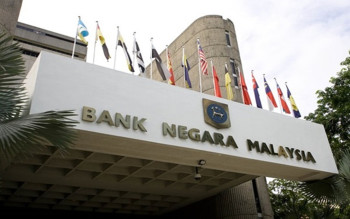
Bank Negara Malaysia had sent five formal warning letters to Tabung Haji's leadership over the Islamic pilgrimage fund's mounting gap between assets and liabilities, Religious Affairs Minister Dr Zulkifli Hasan disclosed during a parliamentary briefing in Kuala Lumpur on August 11. The warnings were addressed to both the TH chairman and the Minister of Religious Affairs, flagging concerns that required immediate remedial action to prevent the institution from breaching financial regulations. At the time these letters were issued, TH's precarious position posed what regulators described as a potential systemic risk to Malaysia's broader financial stability. Despite the seriousness of these alerts, TH's then-leadership chose to disregard them entirely, allowing the situation to deteriorate further unchecked.
The disclosure came as Dr Zulkifli addressed parliament during a special ministerial briefing on the findings of the Royal Commission of Inquiry into TH, alongside an update on restoration efforts. The ignored warnings represented a critical failure in corporate governance and regulatory compliance at an institution managing billions in depositor funds belonging to Malaysian Muslims preparing for the Hajj pilgrimage. This oversight underscored deeper structural problems within TH's management hierarchy during a period when transparency and financial prudence should have been paramount concerns.
Beyond Bank Negara's epistolary alerts, the Auditor-General followed up with its own formal reprimand during the examination of TH's 2017 Financial Statements. The Auditor-General issued an Emphasis of Matter notation—a significant red flag in audit terminology—questioning TH's sudden changes to its impairment policy. Most troubling was the fact that the institution modified this crucial accounting policy twice within the same financial year, moves that conveniently inflated reported profits for 2017. Such alterations raise questions about whether the adjustments served genuine accounting needs or were designed primarily to present a rosier financial picture to stakeholders and regulators.
Only after mounting pressure from regulatory authorities did TH's reconstituted board take decisive action. In 2018, the organisation engaged PricewaterhouseCoopers, the multinational audit and professional services firm, to conduct a comprehensive reassessment of TH's true financial standing and operational performance. This independent examination applied rigorous, internationally recognised accounting standards to cut through the opacity that had characterised previous reporting. The PwC engagement marked a turning point in attempting to establish credible financial documentation at the institution.
The PwC audit's conclusions proved damning. The international firm confirmed that financial manipulation had indeed occurred across TH's balance sheet. Of the RM4.6 billion in total assets that TH had been reporting, only RM556 million—roughly 12 per cent—had actually been valued according to professional valuation standards. This revelation exposed the staggering extent to which TH's asset base had been overstated, representing one of the largest accounting credibility gaps uncovered at a Malaysian financial institution. The discovery sent shockwaves through the regulatory community and raised urgent questions about how such distortions had persisted for so long without detection.
These financial irregularities formed the backdrop for the establishment of the Royal Commission of Inquiry in 2021, a formal investigative mechanism tasked with examining TH's governance failures and operational weaknesses. Following the appointment of RCI members on January 20, 2022, the commission conducted an extensive inquiry spanning TH's troubled 2014-2020 period. This timeframe captured years of mismanagement, poor decision-making, and the regulatory oversights that allowed serious breaches to accumulate. The comprehensive 211-page report, made public on July 29, detailed numerous institutional weaknesses and provided a damning assessment of how TH had strayed from prudent management practices.
The RCI's investigation resulted in 25 specific recommendations aimed at comprehensively reforming TH's governance structures, internal controls, and operational procedures. By July 30—the day after the report's public release—TH had already begun implementing these suggestions, achieving a 75 per cent implementation rate of the commission's recommendations. This relatively swift response suggested that TH's current leadership had grasped the urgency of rehabilitation efforts and was committed to operational transformation. The willingness to act on RCI findings contrasted sharply with the earlier indifference to Bank Negara's warnings, indicating that external scrutiny and public accountability had finally jolted the institution into action.
The formal RCI report was presented to the Yang di-Pertuan Agong on August 30, 2022, conferring royal acknowledgment upon the investigative findings and recommendations. This constitutional gesture reflected the gravity of TH's governance crisis and the nationwide implications of institutional failure at an organisation managing sacred pilgrimage savings for millions of Malaysian Muslims. The involvement of the Palace underscored that financial mismanagement affecting religious obligations and public trust required the highest levels of governmental attention and remedial commitment.
For Malaysian readers, TH's trajectory from ignored regulatory warnings through exposed financial manipulation to RCI investigation and reform carries profound lessons about institutional accountability and regulatory effectiveness. The case demonstrates how even supposedly protected religious institutions can succumb to poor governance and how multiple layers of regulatory oversight—from Bank Negara to the Auditor-General to independent auditors—must align and escalate concerns when first warnings go unheeded. The eventual success of reform efforts will ultimately depend on whether TH's leadership sustains its commitment to implementing the RCI's recommendations and whether new safeguards genuinely prevent recurrence of the practices that undermined public trust.

