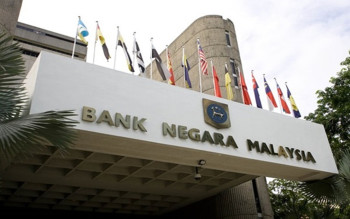
Bank Negara Malaysia has defended its advisory relationship with Tabung Haji, framing the central bank's involvement as an essential component of its statutory financial stability responsibilities rather than direct regulatory intrusion. In a statement responding to inquiries, BNM emphasised that the counsel extended to the pilgrimage fund operator flows directly from powers granted under the Central Bank of Malaysia Act 2009, which tasks the institution with identifying and monitoring risks that could threaten the overall soundness of Malaysia's financial system.
The central bank's mandate encompasses more than just banks and licensed financial institutions operating under its traditional regulatory purview. BNM has explicitly acknowledged that large non-bank financial entities—particularly those with substantial interconnections to the broader financial sector—fall within the scope of the institution's surveillance framework. Tabung Haji, managing billions in assets and serving millions of Malaysian Muslims, clearly qualifies as a systemically important entity whose health carries implications extending far beyond its own operations into the wider financial ecosystem.
To operationalise this mandate, BNM established the Financial Stability Executive Committee under the same 2009 legislation that defines the central bank's core responsibilities. This body serves as the institutional mechanism through which the central bank conducts its ongoing assessment of potential vulnerabilities and emerging threats to financial stability. Through this structure, BNM has formalized its authority to engage with significant non-banking financial institutions on matters affecting systemic resilience, positioning such advice as a precautionary rather than punitive measure.
The distinction between direct regulation and preventive counsel proved significant to BNM's explanation. While Tabung Haji does not fall under the central bank's direct supervisory authority—a reality that has drawn scrutiny given the fund's troubled financial history—BNM maintains that this gap does not eliminate responsibility for systemic oversight. Indeed, the central bank framed its interventions to TH's board and the Minister responsible for the entity as prudent risk management designed to preserve institutional stability and forestall any potential spillover effects that could destabilize the broader financial architecture.
This advisory posture became particularly relevant given the magnitude of problems that had accumulated within Tabung Haji over preceding years. BNM previously issued five formal warning letters to Tabung Haji's chairman and the Minister of Religious Affairs, drawing attention to mounting imbalances between the fund's assets and its liabilities—a structural vulnerability that carried obvious risks. These communications represented escalating expressions of concern from the central bank as conditions deteriorated, suggesting that BNM perceived growing urgency in pressing the fund's leadership to address fundamental weaknesses.
The central bank's concerns were subsequently validated when Malaysia's Auditor-General issued a formal reprimand in the 2017 Financial Statements Report, signalling that independent oversight bodies had identified serious deficiencies in Tabung Haji's financial management. This corroboration from another major accountability institution lent weight to BNM's earlier warnings and demonstrated that the central bank's identification of risks was not idiosyncratic but aligned with assessments made through parallel oversight mechanisms.
The revelation of these issues ultimately prompted the government to establish a Royal Commission of Inquiry into Tabung Haji in 2021, recognizing that the fund's challenges had reached a scale requiring comprehensive investigation beyond routine supervisory engagement. Formal members of the RCI were appointed on January 20, 2022, and the commission subsequently delivered its findings to the Yang di-Pertuan Agong on August 30, 2022, completing what amounted to the most searching examination of the fund's governance, financial practices, and institutional failures undertaken to date.
BNM's statement arrived during the period when the RCI was conducting its work, suggesting that the central bank sought to clarify its own role and authority amid broader scrutiny of how various oversight bodies had responded to Tabung Haji's accumulating problems. The central bank's emphasis on its statutory mandate and its distinction between advisory and regulatory functions represented an attempt to position itself as having acted appropriately within available authority rather than having failed to intervene more forcefully earlier.
For Malaysian policymakers and the broader financial system, BNM's clarification carries important implications regarding the architecture of financial oversight. The case of Tabung Haji illustrates the practical challenges arising when major financial institutions operate outside the regulatory perimeter of conventional banking supervision, yet require some mechanism of systemic oversight. BNM's invocation of its financial stability mandate suggests one approach to closing such gaps—leveraging central bank authority to monitor and advise non-regulated entities based on their systemic importance rather than their institutional classification.
However, this model also reveals inherent limitations. Advisory authority, however formally grounded in statute, lacks the enforcement mechanisms available to direct regulation. When warnings and letters fail to produce desired corrective action, the central bank possesses limited formal tools to compel behavioral change. This structural constraint became evident in the Tabung Haji case, where BNM's repeated warnings preceded but could not prevent the accumulation of liabilities that eventually required government intervention and comprehensive investigation.
The broader implications for Southeast Asia's financial oversight frameworks extend beyond Malaysia. As regional financial systems have grown in sophistication and interconnection, regulators across the region face analogous questions about how to supervise systemically important entities that fall outside traditional regulatory categories. Whether through formal financial stability mandates, macroprudential oversight frameworks, or inter-agency coordination mechanisms, policymakers must develop approaches that capture systemic risks without creating regulatory arbitrage opportunities or gaps in accountability.
Looking forward, the resolution of Tabung Haji's challenges and any reforms implemented in response may reshape how Malaysia structures oversight of large non-bank financial institutions. The experience has underscored that purely advisory mechanisms, even when grounded in statutory authority and exercised by qualified institutions like BNM, may prove insufficient when dealing with deeply troubled entities. The government's decision to establish the Royal Commission itself signalled recognition that the existing framework of central bank guidance and routine audit oversight had not produced satisfactory outcomes, pointing toward potential needs for enhanced authority, more robust enforcement mechanisms, or clearer governance structures within such institutions.

