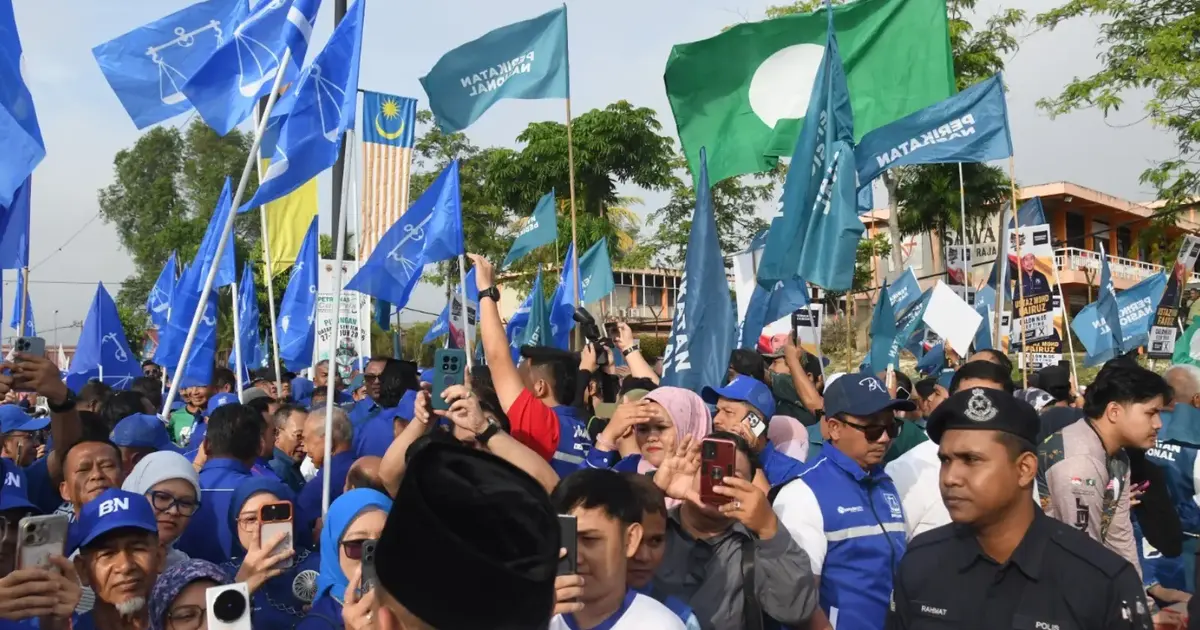
Political analyst Azmi Hassan has cast doubt on PAS's prospects of capturing Selangor, arguing that Barisan Nasional lacks the capacity to substitute for Bersatu's crucial contribution to Perikatan Nasional's performance in the last state election. The assessment highlights the complexity of coalition politics in Malaysia's most economically significant state and the particular dynamics that enabled PN to make substantial electoral progress in recent contests.
Bersatu, which served as a critical component of the PN machinery in Selangor during the previous election cycle, brought both organisational strength and voter appeal that proved instrumental in advancing the coalition's interests. The party's strategic positioning and mobilisation capabilities allowed PN to penetrate areas where it had previously struggled, translating into a more competitive showing against the long-entrenched Pakatan Harapan government. Without Bersatu's specific contribution to that alliance structure, Hassan suggests that reconstructing a similarly effective electoral force presents fundamental challenges.
The analysis points to a substantive gap in PN's organisational framework should it proceed without Bersatu's participation. Barisan Nasional, despite its historical dominance in Malaysian politics and residual grassroots networks, operates from a different institutional base and maintains different strategic priorities across the country. The veteran coalition has focused its recent energies on federal-level stability and selective state-level interventions, rather than mounting the kind of comprehensive, resource-intensive campaign that winning Selangor would require.
Selangor represents Malaysia's political and economic heartland, encompassing urban, semi-urban, and rural constituencies with diverse voter demographics. Capturing the state requires not merely coalition breadth but sophisticated understanding of localised concerns, effective community penetration, and sustained ground presence. Bersatu, particularly during its period within PN, demonstrated capacity for targeted mobilisation in specific constituencies where discontent with the incumbent administration ran deepest. Replicating that performance through BN's conventional machinery may prove insufficient.
The broader context involves ongoing realignments within Malaysia's fractious political ecosystem. PAS, as the dominant component of Perikatan Nasional, harbours ambitions to expand its electoral footprint beyond its traditional bases of strength in the northern states and rural constituencies. Selangor represents the logical prize in that expansionist strategy, given its voter population and economic significance. However, PAS's own organisational presence in urban and suburban Selangor remains comparatively weak relative to PKR and other Pakatan components.
Hassan's assessment reflects widespread recognition among political observers that electoral coalitions cannot be constructed arbitrarily or on purely nominal terms. The effectiveness of any alliance depends on complementary strengths, shared voter bases, and credible joint campaign infrastructure. Bersatu's contribution to PN in Selangor consisted partly of bringing disaffected UMNO and other former BN voters into the PN fold, thereby fragmenting the opposition vote. BN's participation in future contests might not generate equivalent defections, especially if BN seeks to preserve its own electoral interests in other states.
The analysis also encompasses questions about BN's own institutional coherence and commitment. Barisan Nasional, as a coalition encompassing UMNO, MCA, MIC, and various smaller components, has itself experienced significant stress since the 2018 general election. Whether the coalition can coordinate effectively in a major state contest, particularly one requiring sustained resource deployment and unified messaging, remains uncertain. Internal tensions within BN over strategic direction and ministerial allocation could undermine campaign effectiveness.
PAS faces a strategic dilemma as it contemplates Selangor's 2026 state election. Pursuing the state without reliable coalition partners poses risks of diffused effort and failure to breach Pakatan's incumbent advantages. Simultaneously, depending solely on BN creates vulnerabilities to that coalition's divergent interests and potential half-hearted participation. The party must weigh whether investing substantially in Selangor aligns with its core supporters' priorities or whether consolidating strength in existing strongholds represents superior strategy.
The competitive calculus in Selangor itself remains daunting for any challenger coalition. Pakatan Harapan, despite recent difficulties and governance challenges, retains organisational presence, name recognition, and the incumbent's traditional advantages across most constituencies. PAS and any coalition partner must overcome not merely voter inertia but active support for the incumbent administration among economically productive urban and suburban demographics. These constituencies have demonstrated in recent elections their capacity to split their votes strategically to block PN advances.
Hassan's commentary underscores how Malaysian electoral competition depends on precise coalition architecture rather than broad ideological alignment. The success or failure of PAS's Selangor ambitions will ultimately depend on whether the party can construct a coalition offering something substantively different from what existing arrangements provide—a challenge that may prove insurmountable regardless of which partners it pursues.

