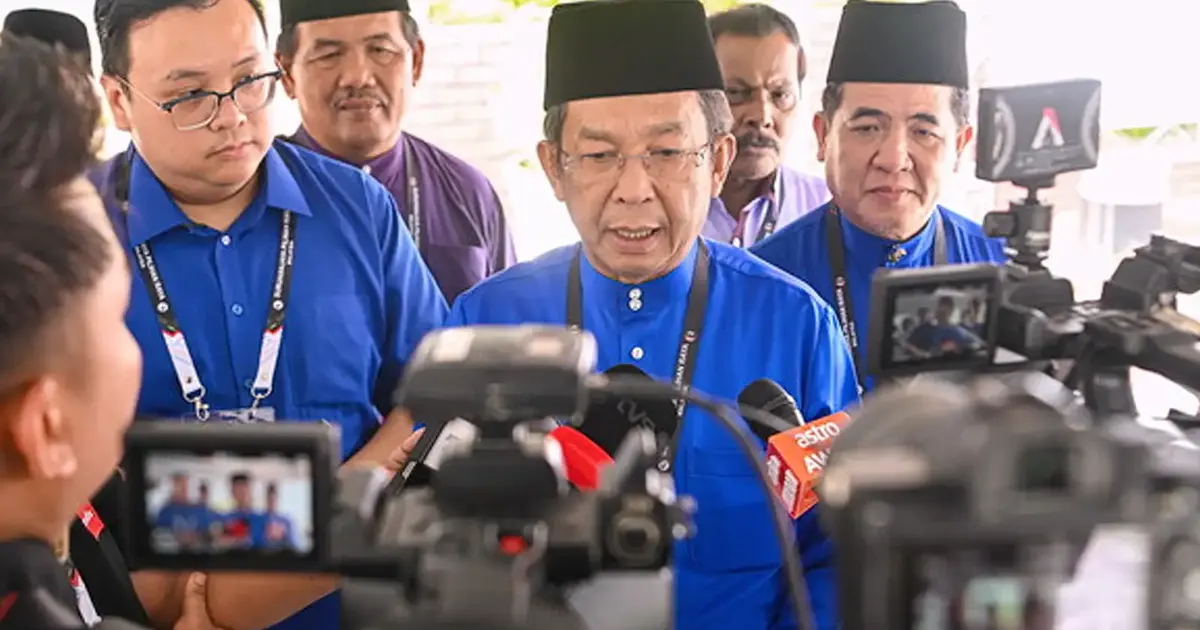
Barisan Nasional has adopted a strategic stance regarding leadership succession in Negeri Sembilan, declaring that it will announce its chosen Mentri Besar candidate only after the coalition secures an electoral victory in the state. This deliberate postponement of the announcement underscores the calculated political positioning often employed by established coalitions ahead of crucial state contests, where maintaining party unity and avoiding potential divisions become paramount considerations.
Jalaluddin Alias, the State Umno chief, articulated this position by emphasising that the coalition maintains a pool of experienced administrators within its ranks who possess the necessary credentials and capability to lead the state government. The statement reflects a broader political reality in Malaysian state elections, where the identity of the chief executive becomes a secondary concern if the controlling coalition has not yet demonstrated its ability to secure a mandate from voters. This approach allows BN to concentrate its campaign messaging on broader policy platforms and collective party performance rather than becoming entangled in succession disputes that could fracture internal cohesion.
The deferment strategy carries particular significance in Negeri Sembilan, a state where political dynamics have witnessed considerable flux in recent years. By withholding the leadership announcement until after polling day, BN seeks to prevent any potential fractionalisation within its component parties—Umno, MCA, MIC, and other coalition members—that might emerge if a single candidate were named prematurely. Such internal tensions, even if manageable, could provide opposition parties with talking points and potentially dampen voter turnout among fence-sitters within BN's traditional support base.
The existence of multiple qualified candidates within BN's leadership echelon reflects the maturity and bench strength of the coalition, though it also hints at unresolved succession questions within the state branch. Jalaluddin Alias's confirmation that several leaders are capable of assuming the position suggests that the final selection will likely depend on post-election negotiations, seat allocations among coalition partners, and considerations regarding demographic representation within the state. In Malaysian politics, such decisions frequently involve complex calculations about balancing regional interests, ethnic community concerns, and factional dynamics within dominant parties.
This electoral approach contrasts sharply with opposition coalitions, which often announce their chief executive candidates well before polling day as a confidence-building measure to demonstrate clarity of vision and leadership continuity to voters. BN's contrasting strategy suggests confidence in its institutional machinery and voter recognition, predicated on the assumption that its brand recognition and established governance record will prove sufficient to carry the state without needing a named figurehead to anchor its campaign narrative.
Negeri Sembilan's political landscape has experienced notable transitions in recent electoral cycles, with power shifting between different coalitions and internal party dynamics playing significant roles in shaping electoral outcomes. The state's relatively balanced political demographics mean that every vote carries weight, and any perception of internal BN discord regarding leadership succession could potentially swing marginal constituencies toward opposition candidates. By maintaining ambiguity about the future Mentri Besar until the results are known, BN minimises the risk of such internal divisions becoming campaign vulnerabilities.
The strategic silence on the Mentri Besar identity also provides the coalition flexibility in post-election negotiations should the electoral outcome be narrower than anticipated or should coalition partners demand adjustments to their perceived share of key positions. Malaysian politics has long operated according to conventions where senior posts are distributed among coalition components based on seat counts and relative performance, and naming the Mentri Besar before knowing the full extent of each party's victory would constrain such negotiations.
For Malaysian voters following Negeri Sembilan politics, Jalaluddin Alias's comments represent a clear signal that BN's campaign focus will concentrate on its track record in administration, policy proposals, and party cohesion rather than on promoting any individual personality. This reflects broader patterns in Malaysian state elections, where institutional politics and coalition dynamics often take precedence over personalised candidate-centric campaigns, though individual constituencies may still witness intense local contests centring on particular representatives.
The implications for Southeast Asian observers lie in understanding how established democratic coalitions in the region manage succession planning while navigating electoral uncertainty. BN's approach demonstrates sophisticated political risk management, prioritising collective victory conditions over premature leadership declarations that could invite factional infighting or provide opposition ammunition. As Negeri Sembilan heads toward its electoral contest, the eventual revelation of BN's chosen Mentri Besar—should the coalition prevail—will inevitably reveal much about which party or faction secured the strongest negotiating position in post-election coalition discussions and which regional or demographic considerations ultimately proved decisive.

