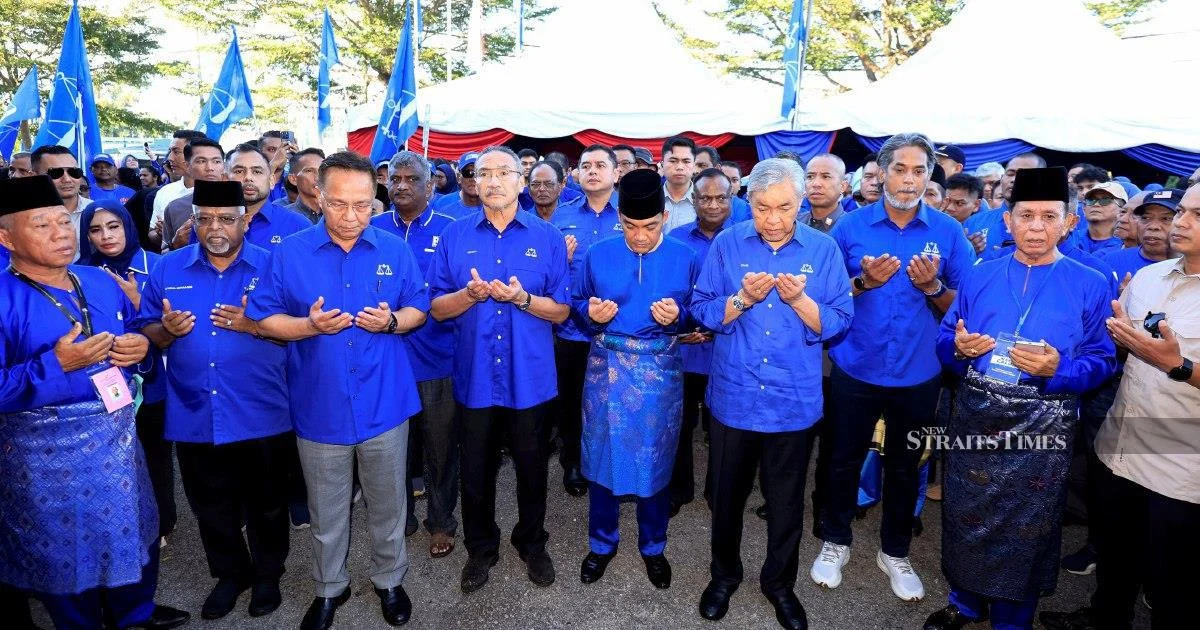
The Barisan Nasional coalition marshaled its senior leadership corps to Simpang Renggam District Council on Tuesday morning, converging behind Datuk Onn Hafiz Ghazi in a carefully choreographed display of organizational unity. The gathering of multiple heavyweight figures underscored the strategic importance that BN is placing on sustaining its political dominance in Johor, Malaysia's second-largest state by population and a critical electoral battleground.
Such high-profile delegations serve multiple purposes within Malaysia's political framework. They function as visible endorsements of individual leaders, bolster grassroots confidence among party members, and send calibrated signals to competing coalitions about the depth of institutional backing available to favored candidates. The presence of numerous senior personalities in a single location amplifies media coverage and creates momentum in the narrative surrounding an election campaign.
Onn Hafiz's position as a focal point for BN coordination reflects his standing within the broader coalition structure. His governance record and electoral viability have made him a central figure in BN's strategy for maintaining legislative dominance in Johor, where the coalition has traditionally commanded substantial parliamentary representation. The assembly at Simpang Renggam represented an investment of political capital from multiple wings of the BN apparatus.
Johor holds outsized significance within Malaysian electoral politics. The state accounts for a substantial bloc of seats in the federal parliament, and its local elections serve as barometers for national political sentiment. Control of the Johor administration and legislative assembly carries implications extending well beyond the state's boundaries, influencing coalition stability at the federal level and affecting policy directions across multiple governance domains.
The timing and location of such gatherings are rarely coincidental. Simpang Renggam, situated in the southern reaches of Johor, represents a constituency with distinct demographic composition and electoral considerations. BN's decision to anchor its show of support at the district council level suggests an engagement strategy that bridges state-level leadership with local governance structures, attempting to knit together organizational capacity across multiple administrative tiers.
Within Malaysia's political environment, these coordinated appearances function as tangible displays of factional alignment and organizational discipline. They communicate to party members that leadership priorities align around supporting particular candidates and strategies, reducing internal uncertainty about coalition direction. This messaging carries particular weight in the fractious landscape of contemporary Malaysian politics, where various factions within larger coalitions often pursue competing interests.
For Onn Hafiz specifically, the assembled leadership represented both validation and political insurance. Validation confirms his standing within the broader BN structure and suggests confidence in his electoral prospects. Insurance, in the form of visible support from multiple power centers, provides a buffer against potential internal challenges and demonstrates that his political fortunes remain intertwined with the coalition's broader success rather than isolated within factional or personal domains.
The gathering also reflects calculations about electoral competition. Johor's political landscape includes active opposition constituencies attempting to erode BN's traditional dominance. By staging coordinated leadership events, BN attempts to project an image of unified organizational strength and stable governance, contrasting this with perceptions of opposing coalitions as fragmented or unstable. These symbolic displays ultimately aim to influence voter calculations about which coalition can most effectively provide stable administration.
Regional dynamics throughout Southeast Asia have increasingly influenced Malaysian electoral politics. Voters demonstrate growing awareness of governance performance across the region, and concerns about economic competitiveness, infrastructure investment, and institutional effectiveness shape electoral decisions. BN's mobilization of senior figures in Johor can be interpreted partly as a response to these elevated expectations, signaling that the coalition intends to deploy its full institutional capacity toward delivering tangible development outcomes.
The appearance of numerous senior leaders also addresses organizational realities within large political coalitions. Maintaining cohesion across multiple constituent parties with divergent interests and memberships requires constant reinforcement through visible symbols of collective purpose. Such gatherings serve as occasions for addressing internal concerns, reaffirming strategic direction, and ensuring that all components of the BN apparatus understand their roles within broader campaign architecture.
Looking forward, the consolidation efforts visible in Simpang Renggam indicate that BN considers the electoral environment in Johor competitive enough to warrant intensive resource deployment. The coalition appears unwilling to assume that traditional electoral advantages will translate automatically into continued dominance without active organizational engagement. This reflects broader acknowledgment within Malaysian political establishments that voter behavior has become less predictable and that electoral outcomes depend increasingly on demonstrating responsive governance and effective campaign organization.
The gathering ultimately illustrates how Malaysian political coalitions operate in practice—through layered networks of reciprocal obligation, strategic signaling, and coordinated mobilization across multiple organizational levels. Onn Hafiz's position as the focal point of this BN gathering reflects calculations about his electoral value and potential future significance within broader coalition politics. Whether such demonstrations of unity translate into electoral success will depend on whether BN can convert organizational display into effective delivery of governance outcomes that resonate with voters across Johor's diverse constituencies.

