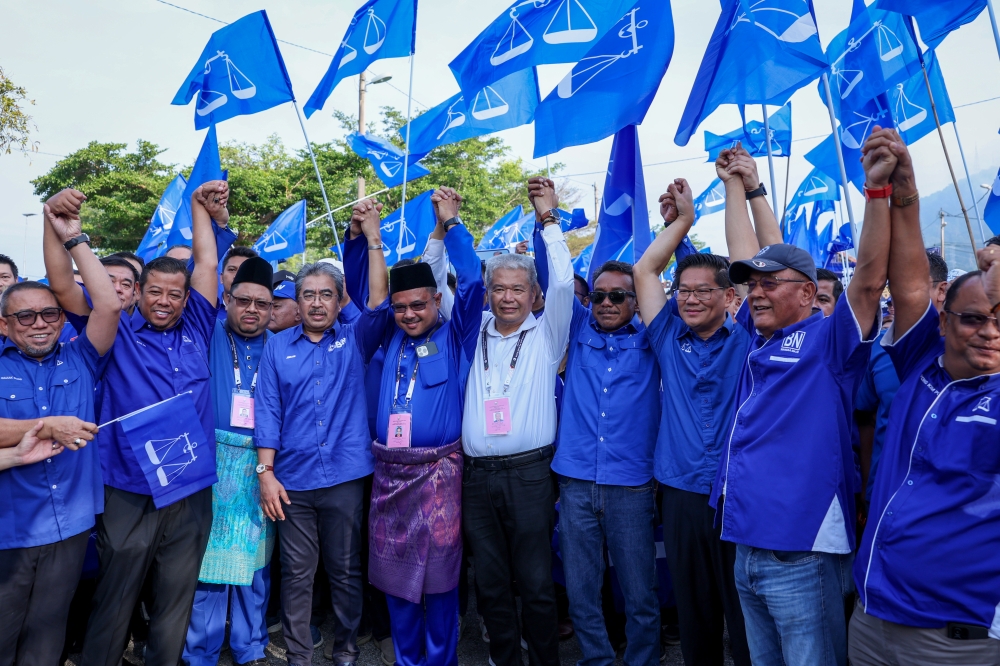
Barisan Nasional has committed itself to conducting the Negeri Sembilan state election campaign with civility and respect, marking a deliberate effort by the coalition to set a tone of responsible political engagement. The undertaking was announced by Umno's vice-president during a public appearance in Tampin, underscoring the governing coalition's determination to distinguish its approach from what party officials perceive as increasingly acrimonious political contests in recent years. This declaration reflects broader concerns within Malaysian political circles about campaign conduct and the need to maintain democratic standards amid intensifying electoral competition.
The pledge assumes heightened significance given Negeri Sembilan's pivotal role within the Malaysian political landscape. As a state traditionally considered a bellwether for national political trends, the conduct and messaging adopted by competing coalitions during this election will likely influence broader perceptions of political culture and institutional health. Barisan Nasional's early emphasis on campaign civility suggests the coalition recognises that voter fatigue with negative rhetoric and personal attacks has become a substantive electoral consideration, not merely a peripheral concern for political commentators.
Umno's emphasis on maintaining decorous campaign standards reflects internal party deliberations about electoral strategy and messaging priorities. The party leadership appears intent on positioning Barisan Nasional as the custodian of institutional stability and measured governance, particularly important given Malaysia's complex ethnic and religious composition where inflammatory rhetoric carries amplified social risks. By framing the campaign in terms of responsible conduct rather than merely policy contrasts, Umno seeks to construct a narrative where substantive disagreement remains compatible with mutual respect and democratic norms.
Negeri Sembilan represents a particularly competitive electoral environment where multiple coalitions and independent candidates contest for influence. The state's political configuration has shifted considerably in recent years, with varying outcomes across different electoral cycles reflecting genuine fluidity in voter preferences and coalition strength. Against this backdrop, Barisan Nasional's articulation of campaign principles may function as both a genuine commitment and a strategic positioning intended to appeal to moderate voters potentially alienated by more combative political approaches.
The regional dimension merits careful consideration for Malaysian and broader Southeast Asian observers. Negeri Sembilan's economic importance, its proximity to Kuala Lumpur, and its role as a commuter destination for federal territories workforce mean that state-level politics carries consequences for one of Malaysia's most economically integrated regions. Campaign conduct that maintains institutional legitimacy and public confidence in electoral processes becomes particularly valuable in such contexts where economic dynamism depends partly on political predictability and social cohesion.
Barisan Nasional's positioning also reflects evolving considerations about generational change within the coalition and its constituent parties. Younger voters increasingly express preferences for campaigns focused on substantive policy proposals rather than personal attacks or adversarial rhetoric. By emphasising civility, the coalition attempts to recalibrate its appeal to this demographic cohort while maintaining support among traditional voter bases for whom party loyalty and institutional continuity remain paramount considerations.
The opposition coalition's response to Barisan Nasional's civility pledge will likely shape the overall campaign tenor. If other coalitions reciprocate with similar commitments, Negeri Sembilan could establish precedent for more substantive electoral discourse across Malaysian politics. Conversely, if opposition parties pursue more aggressive strategies, the contrast may reinforce Barisan Nasional's positioning as the institutional stability candidate, potentially yielding electoral advantages despite the coalition's governance record facing legitimate scrutiny from various constituencies.
Social media dynamics present particular challenges for any campaign civility framework. Digital platforms enable rapid dissemination of provocative content frequently beyond direct control of official campaign machinery. Party leadership declarations about civilised conduct encounter complications when third-party supporters and online activists operate according to different standards. Barisan Nasional's sincerity regarding its civility pledge will become evident through observable campaign conduct and through its willingness to publicly distance itself from uncivil supporters and messaging.
The economic context surrounding this state election deserves consideration. Malaysia's ongoing economic adjustments, inflationary pressures affecting household budgets, and employment concerns form the substantive policy landscape where campaigns should logically concentrate attention. Campaigns conducted with civility and focus on substantive governance questions allow voters to assess competing visions for addressing these tangible concerns. Barisan Nasional's civility pledge, if honoured in practice, positions the coalition to emphasise its development record and administrative competence without distraction from negative characterisations.
Negeri Sembilan's regulatory environment and governance challenges—including infrastructure development, healthcare service provision, and educational advancement—constitute the actual terrain where campaign discourse should concentrate. A civilised campaign allows substantive discussion of competing approaches to these challenges. Barisan Nasional's emphasis on civil conduct suggests recognition that voters increasingly evaluate coalitions based on concrete administrative performance and realistic proposals rather than rhetorical flourishes or personal attacks targeting opposing politicians.
The ramifications extend beyond state-level politics toward national political culture. If Negeri Sembilan's election successfully demonstrates that competitive electoral campaigns can maintain civilised discourse while addressing substantive governance questions, such precedent gains value for Malaysia's broader democratic development. Conversely, if campaign conduct deteriorates despite leadership declarations, the episode reinforces concerns about the gap between stated political principles and observable campaign practices across Malaysian political formations.

