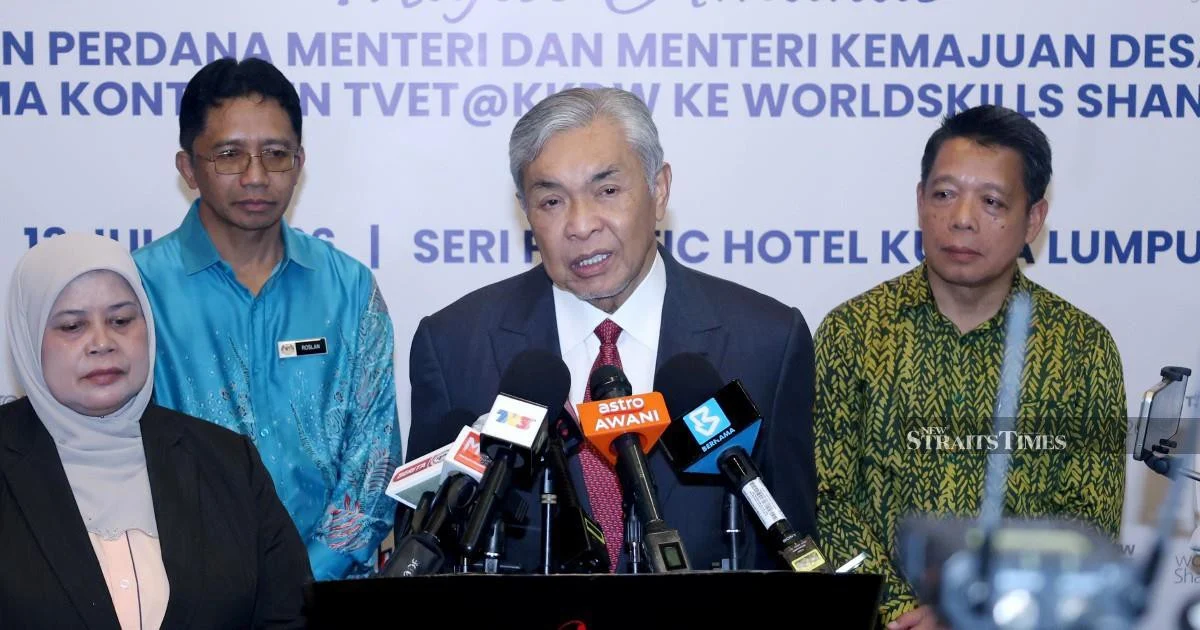
Barisan Nasional has committed to fashioning a candidate selection and campaign strategy that accounts for Negri Sembilan's distinctive political characteristics as the coalition prepares for the state election. The decision reflects recognition that the state's electoral dynamics differ materially from peninsular Malaysia's broader political landscape, requiring a nuanced approach that prioritises local considerations and grassroots support networks.
The coalition's acknowledgement that standardised national strategies prove ineffective across Malaysia's diverse states underscores a growing trend in Malaysian politics towards decentralised decision-making. Negri Sembilan, with its unique demographic composition, economic structure, and historical voting patterns, presents distinct challenges and opportunities that demand bespoke solutions rather than template applications. This localised approach may extend beyond candidate selection to encompass messaging, campaign priorities, and resource allocation tailored to the state's immediate concerns.
Negri Sembilan's political significance within the Malaysian federation has grown considerably, particularly following shifts in voter sentiment during recent electoral cycles. The state's position as a swing territory—neither a guaranteed stronghold nor an opposition bastion—makes it strategically vital for BN. Coalition leadership recognises that reclaiming or consolidating support in such territories requires understanding the specific grievances, aspirations, and demographic shifts that define each constituency.
The emphasis on landscape-specific strategies reflects internal discussions within BN about learning from previous electoral setbacks. States where the coalition performed poorly often had candidates or campaign messaging misaligned with local voter priorities. By inverting this approach and beginning with Negri Sembilan's actual political terrain, BN aims to build candidate slates and messaging frameworks that resonate authentically with constituents rather than impose external narratives.
Candidate selection itself remains contentious within Malaysian political coalitions, where factional interests, party hierarchies, and local power brokers vie for influence. A landscape-tailored formula suggests BN intends to balance these competing pressures whilst ensuring nominees possess genuine rootedness in their constituencies. This may mean prioritising candidates with established community presence, business networks, or professional credibility over those selected primarily through party machinery or patronage.
Negri Sembilan's economic profile—spanning tin and palm oil heritage industries alongside modern manufacturing and service sectors—creates voter groups with divergent policy priorities. A landscape-aware strategy would necessarily address concerns across these constituencies: agricultural communities worried about commodity price volatility, workers in manufacturing facing automation pressures, and urban professionals concerned with infrastructure and education. Generic national policy platforms fail to satisfy these overlapping yet distinct constituencies.
The state's demographic evolution also demands attention. Urban migration patterns have altered population distributions across Negri Sembilan's districts, creating new voter concentrations in metropolitan areas and shifting the balance of electoral influence. Candidates selected through a landscape-sensitive process should reflect these demographic realities, ensuring representation proportional to where voters actually reside and congregate.
Regional politics intersect significantly with state-level contests in Negri Sembilan. The state's proximity to Selangor and Kuala Lumpur means spillover effects from those jurisdictions influence local voter sentiment. BN's strategy would necessarily account for how neighbouring state developments—whether related to governance performance, corruption allegations, or policy successes—affect Negri Sembilan voter perceptions of the coalition. Candidates capable of contextualising national and regional issues within state-specific frameworks become particularly valuable.
BN's commitment to landscape-tailored strategies also reflects competitive pressure from opposition coalitions, which have increasingly invested in granular local organising and issue-specific campaigning. To recapture ground lost during years when BN relied on structural advantages and patronage networks, the coalition must match—and exceed—these ground-level efforts. Candidate selection based on local landscape analysis represents a foundational element of such competition.
Implementing such strategies demands institutional capacity within BN's state machinery. This requires investment in local data analysis, community engagement mapping, and candidate vetting processes that move beyond party leadership preferences. Whether BN possesses or can rapidly develop such capacity across all constituencies remains uncertain, though the stated commitment signals intention to modernise electoral operations.
For Malaysian voters observing this development, the implication is nuanced. A coalition adopting state-specific strategies could theoretically serve constituent interests more effectively by nominating locally-rooted candidates responsive to actual community concerns. Conversely, without genuine institutional reform accompanying this rhetorical commitment, localised formulas risk becoming cover for perpetuating factional power plays under a new justification.
Negri Sembilan's forthcoming election will provide empirical evidence regarding whether BN's landscape-tailored approach translates into superior electoral performance and more responsive governance. The results will inform whether other Malaysian states adopt similar frameworks or whether centralised candidate selection continues dominating coalition decision-making. For a region where electoral competition intensifies with each cycle, the manner in which parties balance national party cohesion against local contextual needs increasingly determines electoral viability.

