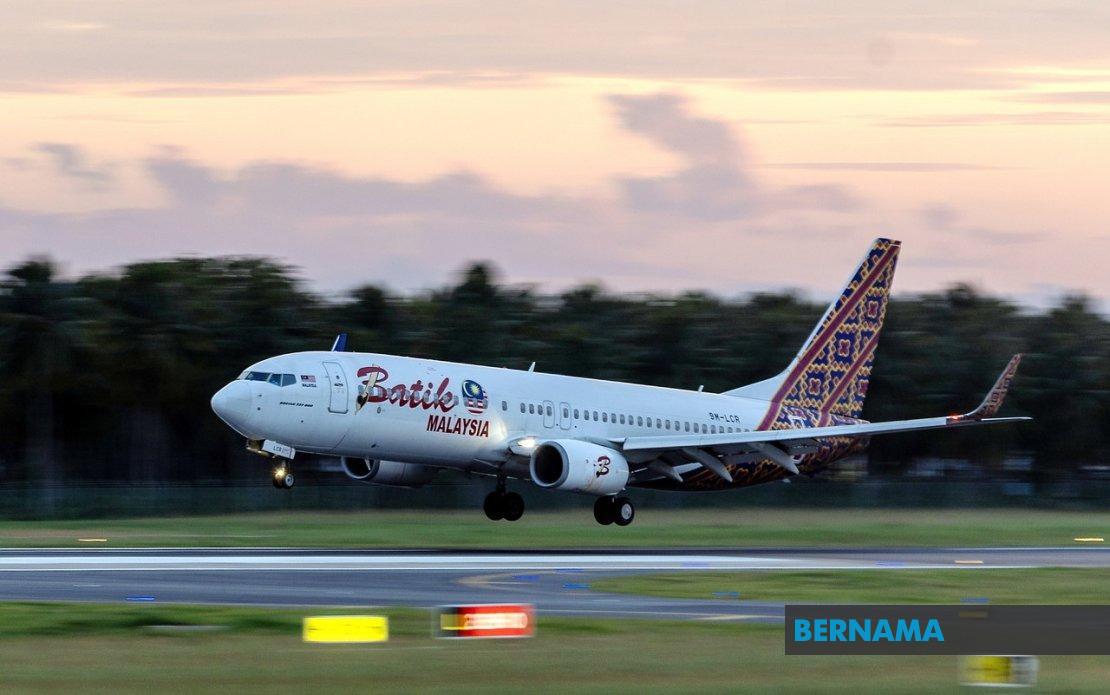
Batik Air is set to substantially upgrade connectivity between Bintulu and Kuala Lumpur starting July 20 by introducing a second daily flight, marking a significant expansion of regional aviation services that reflects both the airline's confidence in the market and government determination to address traveller grievances. The enhancement comes after direct intervention by Tourism, Arts and Culture Minister Datuk Seri Tiong King Sing, who negotiated with the carrier to reverse the impact of earlier service cuts that had triggered widespread frustration among residents and business communities dependent on the route.
The expansion represents a compromise between what the ministry had initially sought and what operational realities permitted. Tiong had originally advocated for adding two extra daily flights, which would have tripled the existing capacity, but after negotiations Batik Air agreed to introduce one additional service as an immediate solution. This phased approach allows the airline to test market response before potentially committing to a three-times-daily schedule if passenger volumes continue their upward trajectory. The ministry's willingness to engage in such dialogue demonstrates how political pressure can translate into tangible improvements in domestic aviation infrastructure, a matter of considerable importance to constituencies in Malaysian Borneo.
Under the new timetable, passengers departing Kuala Lumpur will have flights at 10 am and 2.30 pm, while those leaving Bintulu can depart at 1.10 pm and 5.40 pm daily. This spacing provides reasonable intervals between services and creates departure windows that accommodate both business travellers needing morning connections and afternoon options for flexible scheduling. The timing has been deliberately calibrated to optimise passenger convenience while fitting within crew and aircraft utilisation patterns that airlines require for economic viability.
Bintulu's economic trajectory has generated mounting pressure on aviation capacity. The town's diversified economy spanning manufacturing, resource development, and tourism creates consistent demand from business professionals, students pursuing tertiary education in the peninsula, patients accessing specialist medical facilities in Kuala Lumpur, and leisure travellers. This multifaceted passenger base ensures that demand is not seasonal or cyclical but represents sustained year-round requirements for reliable air transport links to the national capital and gateway to international connections.
The previous flight reductions and accompanying price spikes had sparked considerable community backlash, with various sectors including commerce, education, and healthcare all expressing concerns to their representatives. These complaints reached ministerial level, prompting Tiong to engage directly with Batik Air management. His intervention reflects the political sensitivity surrounding aviation services in East Malaysia, where limited ground transport alternatives make air connectivity essential rather than merely convenient. Poor air service or unaffordable fares effectively isolate communities from opportunities and essential services available in other regions.
Tiong has emphasised that fare stability deserves equal attention alongside frequency increases. He urged Batik Air to maintain competitive pricing aligned with market conditions rather than exploiting capacity constraints through price escalation. This perspective acknowledges an economic reality facing many Malaysian families: high airfares can render the route accessible only to business travellers with corporate expense accounts, effectively pricing out ordinary citizens. When ticket costs become prohibitively expensive, reduced frequency and high prices create a compounding effect that dampens passenger volumes and ultimately undermines airline profitability.
The minister's reasoning suggests that a virtuous cycle emerges when sufficient capacity meets reasonable pricing. More affordable fares attract discretionary travellers and enable people to visit family more frequently, which in turn builds passenger volumes that support the airline's operational costs and justify continued investment in the route. Conversely, restricted capacity forcing high prices creates a vicious cycle where passengers defer travel, volumes decline, and airlines justify further cuts by citing weak demand—a self-fulfilling prophecy that progressively erodes regional connectivity.
Batik Air's willingness to add capacity carries implicit confidence in sustained demand growth. Airlines commit aircraft and crew resources only when they anticipate sufficient passenger loads to cover operational expenses and generate acceptable returns. The decision to allocate capacity to the Bintulu route during what remains a competitive period suggests management believes the region's economic fundamentals and population trends support expanded service. This represents a positive signal about Bintulu's long-term development prospects and its standing within the airline's network strategy.
Government coordination mechanisms clearly matter in negotiating aviation outcomes. Tiong's approach combined public acknowledgment of grievances with direct stakeholder engagement and recognition of operational constraints that airlines face. This collaborative rather than adversarial posture proved more productive than simple demands or regulatory threats. The resulting agreement represents a genuine middle ground where both parties make adjustments: the airline commits to enhanced frequency and pricing discipline, while the government and public accept a phased expansion rather than the maximum requested capacity increase.
The expanded service has implications extending beyond Bintulu itself. Enhanced connectivity to Kuala Lumpur improves access for residents throughout the Miri division and surrounding areas who use Bintulu's airport as their primary air gateway. Regional development benefits from improved transport links, as businesses can more reliably move goods and personnel, institutions can attract talent more effectively, and individuals gain greater freedom to pursue opportunities elsewhere while maintaining family and community ties. For Malaysia's long-term goal of balanced regional development, aviation connectivity represents critical infrastructure comparable in importance to highways and ports.
Monitoring performance during the initial period will prove important. Tiong has already signalled that if passenger demand justifies it, the airline will evaluate adding a third daily flight. This framework creates ongoing dialogue between government and industry rather than a fixed endpoint. Success metrics will likely include load factors on both new flights, passenger feedback regarding timing and pricing, and any unforeseen operational challenges. Strong demand combined with stable operations and reasonable fares would build the case for further expansion, while weaker-than-expected uptake might suggest market saturation or pricing challenges requiring different solutions.

