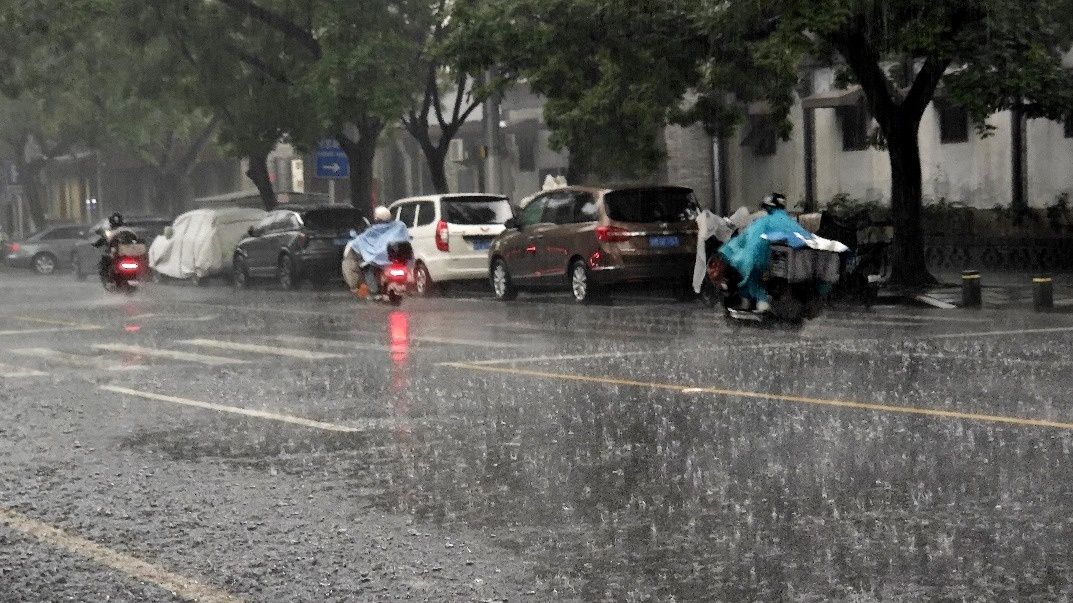
Beijing has activated its second-highest weather alert tier following an orange-level rainstorm warning issued by the city's meteorological observatory on Thursday afternoon, marking the opening salvo of what could be a severe flood season. The warning, announced at 1.30 pm, prompted the Beijing flood control office to simultaneously activate a Level-II flood control emergency response, indicating authorities view the incoming weather system as a significant threat to the sprawling metropolitan area and its 21 million residents.
The meteorological forecast paints a picture of sustained heavy precipitation spanning a 58-hour window starting Friday afternoon. Between 2.00 pm on Friday and 8.00 am Sunday, most of Beijing will experience substantial rainfall, with particular concern focused on eastern and northeastern districts. Huairou, Miyun, Pinggu, Shunyi and Fangshan districts face the prospect of the most intense precipitation, potentially creating hazardous conditions across both urban and rural terrain.
The sheer volume of expected rainfall underscores the severity of the alert. Authorities have warned that hourly precipitation rates in isolated areas could exceed 70 millimetres, an intensity that can overwhelm drainage systems and trigger flash flooding within minutes. Over the full 58-hour period, cumulative rainfall in the hardest-hit zones may accumulate beyond 150 millimetres—equivalent to several weeks' worth of average precipitation compressed into less than three days. For Southeast Asian readers familiar with monsoon patterns, these figures represent the kind of deluge that typically causes significant disruption to urban services.
The geographic and topographic profile of Beijing's vulnerability adds another layer of concern to forecasters' calculations. The city's terrain ranges from flat plains to mountainous regions in the north and west, creating disparate risk profiles. Meteorologists have flagged heightened danger in mountainous and hilly zones, where rapid runoff and potential landslides pose threats to both residents and infrastructure. Simultaneously, low-lying urban and suburban areas face waterlogging risks, where poor drainage or overwhelmed stormwater systems can leave streets impassable and isolate neighbourhoods.
In response to the alert, Beijing authorities have implemented a comprehensive suite of preventive measures designed to minimize human exposure to the hazard. The flood control office has urged residents to curtail outdoor activities during the warning period and to remain vigilant for updates from official weather channels and emergency management agencies. Public transportation has been recommended as the safer alternative to private vehicles navigating potentially flooded streets, a particularly important message as standing water on roads can obscure depth and sweep vehicles away.
The workplace has become a focus of contingency planning, with both public and private sector employers encouraged to adopt flexible scheduling or staggered commuting times. This approach aims to reduce the volume of traffic during peak rainfall periods and alleviate pressure on transport networks. Schools face directives to suspend in-person classes, on-campus training programmes and field excursions based on evolving conditions, a precaution that recognizes the vulnerability of younger students and the logistical complexity of managing large populations during severe weather.
Recreational activities and leisure pursuits have been largely prohibited under the alert guidelines. The public has been explicitly warned against visiting scenic attractions involving mountains or waterways—a significant restriction in a city where such destinations draw both domestic and international tourists. Underground shopping and entertainment facilities, which characterize modern Beijing's commercial landscape, have been flagged as hazardous environments during severe rainfall, as these below-grade spaces are particularly susceptible to rapid inundation. Residents have been advised to avoid areas with known geological vulnerabilities, where heavy rainfall can trigger slope failures or debris flows.
Construction and industrial activity will grind to a halt across much of the city. All outdoor operations, maintenance work and construction projects have been mandated to suspend activities during the warning period, a directive that affects thousands of sites and impacts economic output but prioritizes worker safety. This blanket approach reflects the unpredictability of severe weather and the difficulty in managing safety protocols when conditions are rapidly deteriorating.
China's four-tiered warning system provides important context for understanding this alert's significance. The red alert represents the gravest threat, followed in descending order by orange, yellow, and blue. An orange-level warning is therefore serious but not the maximum alarm state. That the alert is the first of its kind since this year's flood season commenced suggests that while conditions are dangerous, they may not reach the catastrophic threshold that would trigger a red alert. Nevertheless, orange-level warnings historically precede significant disruption to urban life and can cause substantial economic losses through infrastructure damage and activity suspension.
For Malaysia and the broader Southeast Asian region, Beijing's flood alert serves as a reminder of the climate vulnerability that affects major cities across East and Southeast Asia during their respective rainy seasons. The integrated response mechanism—combining meteorological prediction, emergency management coordination, workplace adjustments, and public communication—offers lessons in how large, densely populated centres attempt to manage weather-related crises. As climate patterns continue to shift and extreme precipitation events become more common globally, the protocols now being tested in Beijing may increasingly become routine responses for urban administrators across the region.

