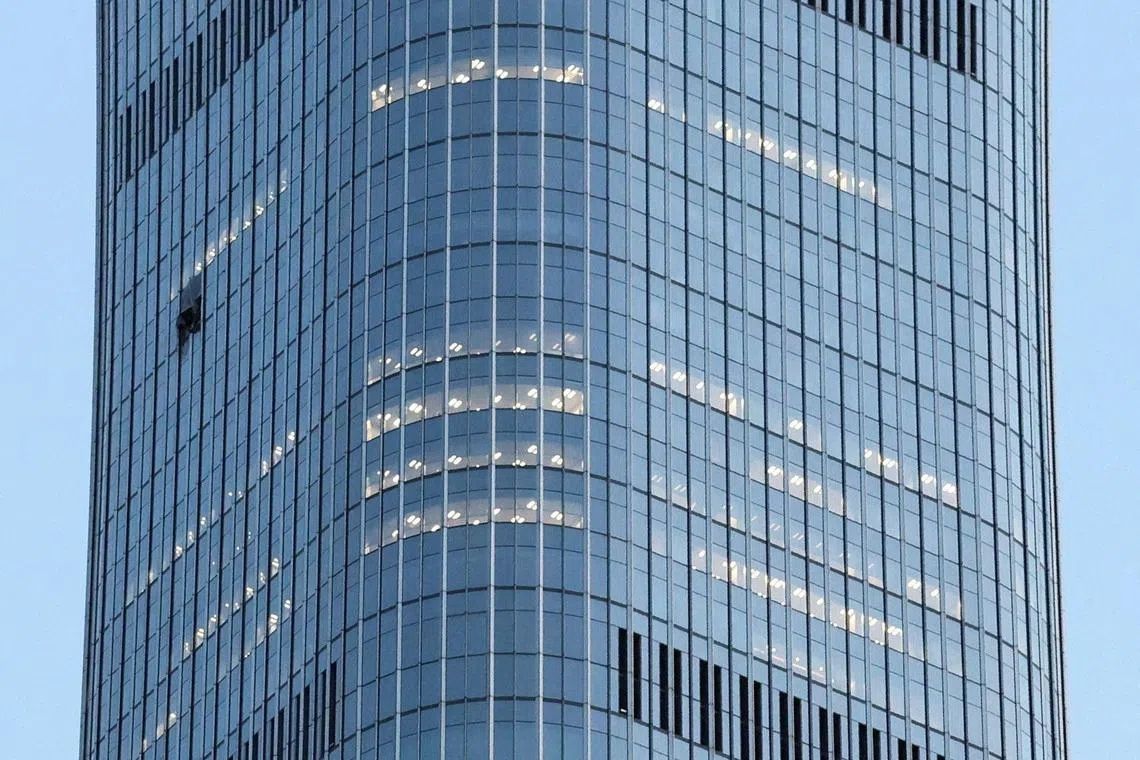
The pilot who died when his aircraft collided with Beijing's tallest building had long battled mental health challenges and left written records of suicidal thoughts, Chinese government officials confirmed this week. The June 26 incident, in which a small propeller-driven plane struck the 528-metre CITIC Tower in the capital's Central Business District, wounded 13 people and sparked considerable concern about aviation safety protocols in one of the world's most heavily monitored airspaces.
The deceased pilot, identified only by the surname Liu, was 66 years old and had been residing alone in the city following a divorce. According to a statement from Beijing's Chaoyang district government, Liu had endured prolonged struggles with insomnia and anxiety disorders. Most significantly, authorities revealed that his personal diary contained repeated references to ending his life, suggesting his final actions may have been premeditated rather than accidental. The government characterised the crash as "an incident endangering public safety caused by personal reasons," effectively attributing responsibility to the individual's psychological state rather than systemic failures.
Liu held credentials as a sport pilot from 2021 and upgraded to a private pilot license in 2024, both relatively recent certifications for someone his age. The regulatory pathway to obtain such licenses in China typically requires rigorous medical examinations and extensive documentation, raising questions about how someone with documented mental health concerns managed to obtain and retain flight privileges. The statement did not address whether mental health evaluations were conducted as part of his certification process or whether any warning signs had been noted by aviation authorities.
On the day of the incident, Liu departed from a general aviation airport in the suburban Pinggu district. Initial flight operations appeared routine: he completed an accompanied flight with an instructor, then proceeded on a solo flight as part of standard pilot certification requirements. However, during this unsupervised journey, Liu deviated significantly from his designated flight corridor and lost radio contact with ground control operators before striking the 1,732-foot tower at 5:55 p.m. The aircraft involved, a two-seat propeller-driven model registered as B-12PP, had been authorised for the flight under China's mandatory advance approval system.
The location of the collision has profound geopolitical implications for China's security apparatus. The CITIC Tower stands approximately seven kilometres from Zhongnanhai, the heavily fortified compound that serves as the official residence and office complex for China's top leadership, including President Xi Jinping. That an unauthorised aircraft could penetrate airspace this proximate to the nation's power centre represented an unprecedented breach in one of the world's most stringent aviation control systems. The incident occurred just days before the Communist Party's 105th anniversary celebrations scheduled for the Great Hall of the People near Tiananmen Square, compounding the embarrassment for authorities responsible for maintaining absolute airspace security during sensitive national occasions.
Witnesses at the scene reported seeing a substantial hole punched through windows on an upper floor of the building, along with aircraft debris scattered at the base and evidence of fire. However, Chinese authorities moved swiftly to control information flow. Police prevented journalists and observers from photographing the building, and state media rapidly scrubbed social media platforms of crash-related content, videos, and photographs. This censorship reflected official anxiety not merely about the incident itself, but about public scrutiny of how such an occurrence could happen in a nation famous for its comprehensive surveillance and control mechanisms.
The regulatory framework governing Chinese aviation explicitly prohibits non-commercial flights over populated urban areas, and general aviation operators must submit detailed flight plans to authorities before 3 p.m. on the preceding day. All flights, regardless of aircraft type or operator status, require advance authorisation from flight-control authorities. These requirements exist precisely to prevent scenarios such as this crash. Yet despite these comprehensive regulations, Liu apparently deviated from his approved route without immediate intervention, navigated restricted airspace surrounding Beijing Capital Airport—one of Asia's busiest aviation hubs—and reached a position directly above one of the city's most sensitive locations.
Questions about the security gaps persist despite official efforts to frame the incident as a tragic personal matter. Internet users on Chinese social media platforms had begun raising concerns about how airspace monitoring systems failed to detect or prevent the deviation before the aircraft reached the tower, but these discussions were systematically removed. One pilot, speaking anonymously due to sensitivity surrounding the case, confirmed that private pilot certification in China requires comprehensive medical evaluation and appropriate documentation, yet provided no insight into what safety measures might have been overlooked.
The incident underscores a tension inherent in aviation regulation: the balance between maintaining robust security perimeters and accommodating legitimate general aviation activities. China has invested enormously in surveillance infrastructure and air traffic control systems specifically designed to prevent unauthorised aircraft from approaching sensitive zones. The fact that a solo general aviation aircraft could traverse multiple restricted corridors and strike a building within sight of the nation's political command centre suggests either extraordinary lapses in monitoring capability or inadequate response protocols. Whether Liu's deviation was an intentional suicide-by-aircraft scenario or resulted from genuine technical or navigational malfunction remains officially unresolved, with authorities offering the mental health narrative as the definitive explanation rather than undertaking transparent investigation of the security failures the event exposed.

