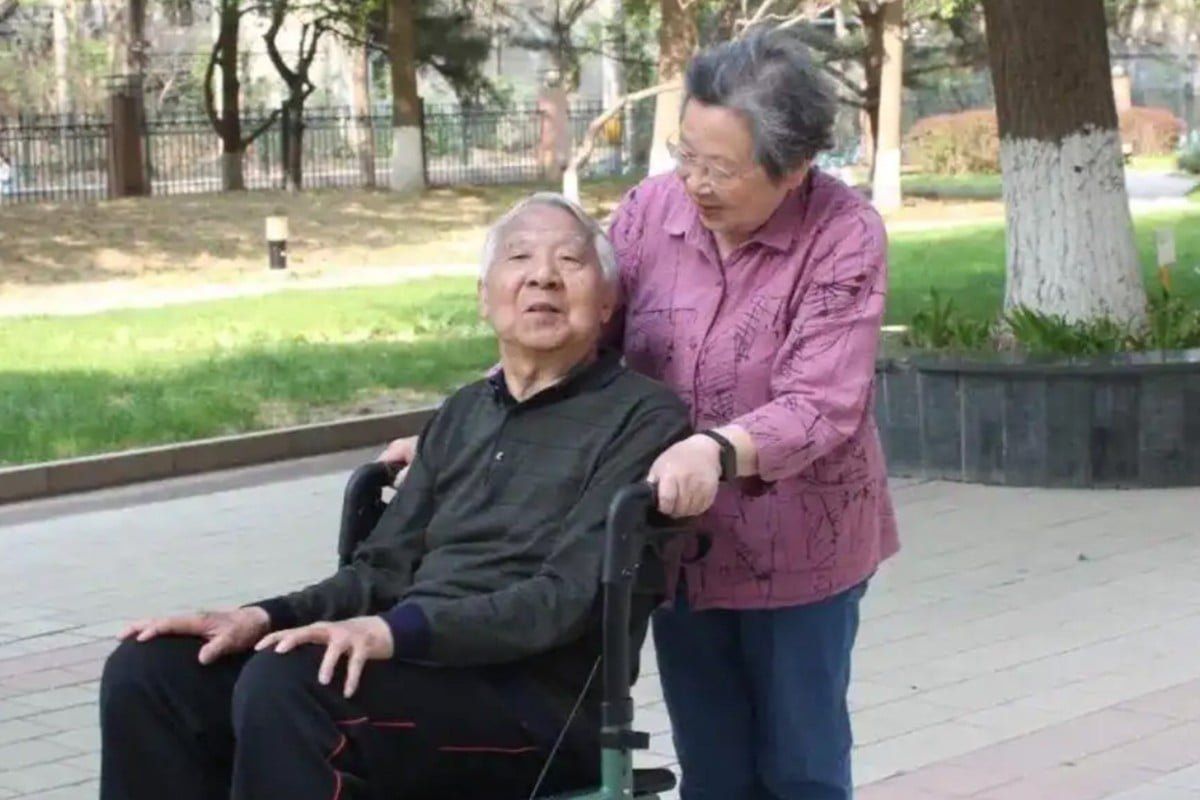
When Wen Bo's husband began losing his memory in 2023, the 90-year-old Beijing resident faced a choice that many in Asia's rapidly aging societies encounter: place him in institutional care or shoulder the burden herself. She chose the latter, but with a philosophy that has since resonated far beyond her household. Rather than allowing Alzheimer's to diminish her husband's sense of self, Wen has constructed a caregiving approach centred on preserving autonomy and human dignity—values that her millions of social media followers now regard as a blueprint for how families should navigate the challenges of cognitive decline.
The couple's six-decade journey together forms the emotional foundation of their current reality. Having met as secondary school classmates, Wen and her husband endured years of long-distance courtship before marrying in 1960. Throughout their lives, they embodied an active lifestyle: swimming, walking, and traveling across China and internationally. Two sons emerged from their union, and by all measures, they had constructed the kind of partnership that many couples aspire toward. Then the diagnosis arrived, transforming not just their daily routines but forcing a fundamental reconsideration of what their remaining years could mean.
Wen's decision to become her husband's primary caregiver, rather than shift responsibility to their adult sons—who maintain their own careers and family obligations—reflects both traditional filial values and modern pragmatism. The couple employ domestic help for cooking and household management, while their children visit regularly. This arrangement acknowledges that full-time care demands a level of physical presence and emotional energy that busy professionals cannot sustainably provide. Yet it also illustrates how caregiving in contemporary China increasingly falls on spouses rather than adult children, a demographic reality with profound implications for healthcare systems and family structures across Asia.
When confronted with the technical and emotional demands of Alzheimer's management, Wen did not resign herself to passive observation. Instead, she embarked on a methodical self-education program, teaching herself through books and online resources about the disease's progression and evidence-based interventions. Each day, she structures cognitive exercises with her husband: arithmetic problems designed to stimulate mental processing, puzzles to maintain spatial reasoning, and painting sessions that combine creativity with physical engagement. These activities are interspersed with gentle physical training, creating a holistic care regimen that addresses both cognitive and bodily wellness.
The results of her approach suggest that deliberate cognitive engagement may slow deterioration. Her husband's condition has progressed more gradually than typical trajectories for Alzheimer's patients, and he retains sufficient independence to operate his electric wheelchair without assistance and occasionally reminds Wen when she needs rest. These small victories—the completion of an arithmetic test with only one mistake, the spontaneous gesture of concern for her wellbeing—become profound affirmations in a disease context where loss typically dominates the narrative.
Wen's public chronicling of this journey on the social media platform RedNote has transformed her personal struggle into a cultural phenomenon. Millions of Chinese netizens have followed her detailed diary entries, drawing both solace and practical wisdom from her accounts. When she posted that her husband had completed a test on August 23, the response was not clinical assessment but collective encouragement. More significantly, her writings have articulated a philosophy of Alzheimer's care that challenges prevailing attitudes: people with dementia are not merely patients to be managed but individuals whose humanity, dignity, and capacity for contribution deserve preservation and celebration.
At the heart of Wen's caregiving philosophy lies a singular conviction: her husband must remember her name, because she is his wife and should be the last person he forgets. This statement, seemingly personal, articulates something profound about the relational nature of identity and the existential stakes of dementia. She dedicates each evening to reinforcing this connection, a ritual that combines practical memory-work with emotional reassurance. She also encourages him to participate in simple household tasks, allowing him to proceed at his own pace without rushing or taking over. These choices embody a recognition that people with Alzheimer's require not just medical intervention but also the psychological scaffolding that comes from feeling needed and capable.
Wen has articulated the theoretical framework underlying her practice with striking clarity: self-respect, a sense of purpose, and the feeling of being valued are not luxuries for dementia patients but essentials for human wellbeing. This perspective directly contradicts institutional approaches that prioritize efficiency and safety management at the expense of autonomy. Her public statements have become a form of advocacy, challenging both family members and healthcare professionals to reconceptualize dementia care as a relationship-centered rather than condition-centered endeavor. She has also acknowledged the limitations of her approach, noting that she would consider hospice care if her husband's condition deteriorated beyond what she could responsibly manage—a realistic boundary that distinguishes compassionate caregiving from unsustainable self-sacrifice.
The resonance of Wen's story extends beyond individual inspiration; it arrives at a pivotal demographic moment for China and the entire East Asian region. China's population aged 60 and above had surpassed 320 million by the end of the previous year, representing more than one-fifth of the total population. This unprecedented aging, driven by decades of low fertility rates and increasing life expectancy, creates acute pressures on family structures and healthcare systems. The rapid growth of cognitive decline cases like Alzheimer's adds urgency to questions about how societies will fund and staff care, which family members will provide hands-on support, and what quality of life is possible for people living with dementia.
For younger Chinese adults navigating these demographic currents, Wen's example offers both inspiration and practical reassurance. Online commentators have noted how her posts counteract the anxiety and helplessness that many feel when contemplating their own aging parents' futures. One observer remarked that Wen's chronicles present "an alternative vision of aging, centred on dignity, autonomy, and companionship," while another noted that her experiences had dispelled fear and provided concrete guidance for future caregiving responsibilities. These responses suggest that Wen has inadvertently created a form of public pedagogy, teaching by example rather than prescription.
The implications of her story extend across Southeast Asia, where similar demographic transitions are accelerating. Malaysia, Thailand, Vietnam, and other regional economies are experiencing aging populations while maintaining cultural expectations that families, particularly women, will provide elder care. Healthcare systems in these countries often lack sufficient geriatric specialist capacity and institutional capacity to meet anticipated demand. Wen's approach—combining professional guidance with family-centered engagement, balancing professional help with personal presence, prioritizing dignity alongside medical management—offers a template that resonates across cultural and national boundaries.
Yet Wen's influence also subtly critiques broader systemic failures. That a 90-year-old woman must educate herself about neurodegenerative disease through self-directed research underscores gaps in public health information and professional accessibility. That her caregiving generates such widespread admiration partly reflects how rare her approach has become in societies increasingly reliant on institutional solutions. Her story gains power precisely because dignified, relational dementia care has become exceptional rather than normative, prompting reflection on what social policies and professional practices might need to change to make Wen's approach more broadly achievable.
Looking forward, Wen's journey illuminates the personal and societal stakes of aging in the 21st century. As people live longer with chronic illnesses that gradually erode cognitive capacity, societies must grapple with fundamental questions about value, contribution, and human dignity. Wen's insistence that her husband remains worthy of respect, capable of learning, and essential to her life stands as a quiet rebuke to utilitarian frameworks that measure human worth by productivity or independence. For the millions following her posts, she represents not a superhuman caregiver but an ordinary person demonstrating what becomes possible when love, persistence, and philosophical clarity converge in response to one of life's most challenging transitions.

