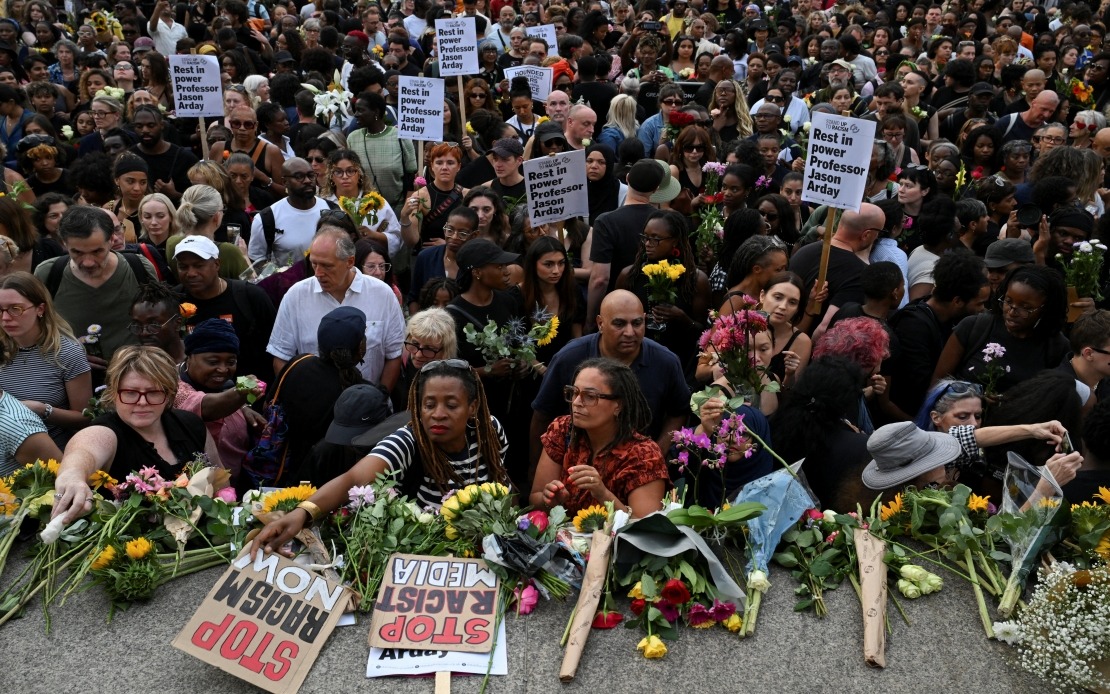
The academic scandal at the intersection of research integrity and racial politics has deepened with the suspension of Nathan Cofnas by Ghent University in Belgium, escalating a controversy that culminated in the sudden death of Cambridge professor Jason Arday. Cofnas, a postdoctoral researcher in the university's philosophy and moral sciences department, had publicly accused Arday of plagiarism—allegations that prompted the professor to resign from his position at Cambridge earlier this month before his death on August 14.
Arday's meteoric rise as Cambridge's youngest Black professor in 2023, when he was appointed to the chair of sociology of education, proved remarkably fragile when scrutiny emerged over his academic credentials and personal narrative. The controversy began in July with plagiarism allegations emerging alongside broader questions about his scholarly record and biographical details. His resignation on August 5 came with a carefully worded statement cautioning that his decision should not be interpreted as accepting "the narratives that have surrounded me," suggesting he disputed the substance of the allegations even as he withdrew from his position. The university announced it would investigate the circumstances of his appointment shortly after, but events moved swiftly—Arday was found dead at his south London home just a week into his departure from Cambridge.
Cofnas, who has publicly aligned himself with "race realism," represents a particular strand of academic thought that has drawn considerable controversy. His trajectory at Cambridge institutions tells a parallel story of professional jeopardy stemming from his public statements. After holding a research fellowship at Emmanuel College, he lost his research associate position in 2024 following publication of a blog post arguing that Black people have lower average intelligence than white people and contending that in a merit-based system there would be "close to zero" Black professors at Harvard University. This ideological positioning context is crucial to understanding both his credibility as a critic and the university's response to his recent suspension.
The suspension itself represents an institutional judgment that extends beyond the original plagiarism allegations. On Thursday, Cofnas stated via social media that he was under investigation by Ghent University for what he characterised as discriminating against Arday, adding in a subsequent post that he had been suspended and anticipated dismissal. The university confirmed the suspension but declined to elaborate on specific charges or evidence, stating only that it was taking his "recent public statements" with utmost seriousness and reserving further action pending formal processes.
Ghent University's leadership articulated a delicate balancing act in their formal response. Rector Petra De Sutter and vice-rector Herwig Reynaert acknowledged in a joint statement that the institution values academic freedom and open debate, even on controversial topics. However, they were explicit that this freedom carries boundaries: "That freedom is not unlimited. It goes hand in hand with responsibility and may be restricted in order to protect the rights of others." This formulation suggests the university sees Cofnas's conduct as crossing from legitimate scholarly criticism into territory that violates the rights or dignity of other academics, particularly given the ultimate tragic outcome.
The death of Arday has fundamentally reframed the entire dispute, shifting focus from questions of academic conduct to broader implications for academic culture and vulnerable scholars. At 41, Arday represented a significant achievement in diversifying Cambridge's historically homogeneous professoriate. Born to Ghanaian immigrant parents and raised in a working-class south London household, his life narrative encompassed struggles with autism and learning difficulties—he was nonverbal until age eleven and did not become literate until eighteen. These biographical details were integral to his public profile and, allegedly, to some elements of scrutiny that emerged during the plagiarism controversy.
For Southeast Asian and Malaysian readers, this episode illuminates tensions within global academia regarding diversity initiatives, research integrity, and the vulnerability of scholars from underrepresented backgrounds. The case demonstrates how legitimate questions about academic standards can become weaponised against scholars advancing diversity agendas, while simultaneously raising genuine concerns about the verification of credentials in the appointment of high-profile academics. The region's own universities, increasingly engaged in global rankings competition and efforts to recruit international scholars, face similar pressures to balance rigorous vetting with commitment to broader representation.
The timing and manner of Arday's death have introduced an element of genuine tragedy that complicates easy moral resolution. Police reported his passing as unexpected but not suspicious, suggesting natural causes, yet the sudden nature of his death occurring just days after his public disgrace has inevitably invited reflection on the pressures faced by scholars navigating such controversies. His colleagues and institutions will likely confront difficult questions about the institutional environment that enabled such rapid deterioration of his position.
Ghent University's measured but firm response reflects contemporary institutional anxiety about balancing academic freedom with accountability. The university explicitly noted that Arday's death "should prompt reflection," acknowledging that the broader academic culture and how institutions handle controversy warrants examination. The decision to suspend Cofnas while withholding full details of the case suggests the university is operating cautiously, aware that premature public positioning could expose it to criticism from either academic freedom advocates or equality and diversity supporters.
The suspension also reflects evolving understanding within European academia about the responsibility accompanying critical speech, particularly when directed toward scholars from marginalised backgrounds. Cofnas's public intellectual project—combining plagiarism allegations with broader statements about racial intelligence and meritocracy—appears to have crossed an institutional threshold regarding acceptable scholarly conduct. The university's invocation of protecting "the rights of others" suggests that the cumulative effect of his public statements, in the context of Arday's vulnerabilities and subsequent death, convinced institutional leadership that action was necessary.
Looking forward, this case will likely influence how universities globally approach accusations of plagiarism or misconduct involving prominent scholars from underrepresented groups. It raises uncomfortable questions about whether and how such allegations should be pursued publicly, at what institutional level they should be adjudicated, and what protections should exist for accused scholars whose careers and livelihoods face immediate jeopardy. The Malaysian academic community, with its own initiatives around diversity and inclusion, should monitor how this case develops as a cautionary instance of how academic controversy can intersect with tragedy in ways that reshape institutional practice.

