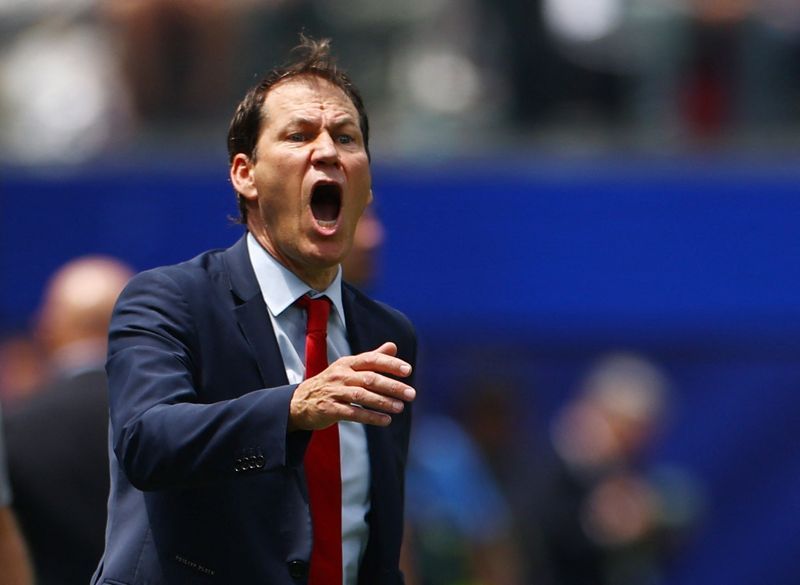
Rudi Garcia's tenure as Belgium coach has come into sharp question following a controversial substitution decision that may have cost his team dearly in their World Cup quarter-final encounter with Spain on Friday. The Frenchman removed first-choice goalkeeper Thibaut Courtois from the match at the 71-minute mark, an action that drew withering criticism from Belgian football observers and supporters alike. Courtois's replacement, Senne Lammens, immediately faced pressure, spilling a weak shot from Pau Cubarsi that allowed Mikel Merino to capitalize and secure Spain's 2-1 victory. The substitution has now become the focal point of discussion around Garcia's judgment and tactical acumen, overshadowing what was otherwise a respectable World Cup campaign by the Belgian national side.
The decision to bench Courtois, widely regarded as one of the world's finest goalkeepers, proved especially contentious because the player himself believed he could continue despite experiencing some discomfort in his leg. Garcia, however, invoked his stated principle that only fully fit athletes should take the field, overruling Courtois's assessment of his own condition. This rigidity in approach, while philosophically consistent, generated substantial pushback from Belgian media and analysis. Commentator Peter Vandenbempt articulated the frustration of many observers, questioning how Garcia could remove arguably the planet's best goalkeeper during a World Cup knockout match simply because he was unable to execute long-range distribution with complete confidence. The logic of such reasoning seemed to escape informed observers who understood that Courtois's presence and experience alone carried enormous value in a tightly contested affair.
Garcia defended his position with characteristic firmness, explaining that his entire squad had operated under a clear directive since the tournament's outset: only players achieving 100 percent physical fitness would participate. He emphasized that Belgium's tactical approach specifically relied on Courtois's ability to launch accurate long balls to attacking players Charles De Ketelaere and Romelu Lukaku, yet he remained unwilling to risk exacerbating any underlying injury. The coach framed his substitution as a prudent safeguard rather than a loss of confidence, arguing that protecting Courtois's long-term health and availability superseded short-term tactical considerations. While his reasoning possessed internal logic, it failed to persuade a skeptical audience who believed an injured Courtois was preferable to an untested backup in such circumstances.
The timing of this controversy could hardly be worse for Garcia's employment prospects. His contract as Belgium manager expires at month's end, and federation officials will conduct a comprehensive review of his tenure before determining whether he merits a continuation. Such assessments inevitably encompass tactical decisions, squad management, and interpersonal dynamics, meaning Garcia's handling of the Courtois situation will feature prominently in deliberations. The 62-year-old French tactician arrived in early 2025 with a specific mandate to revitalize a program that had languished under his predecessor, Domenico Tedesco, whose regime was widely characterized as toxic and characterized by organizational dysfunction. Garcia's appointment was meant to signal a fresh beginning and renewed ambition after a deeply unsatisfying period.
Despite the current controversy, Garcia can point to genuine achievements during his initial months in charge. He successfully maintained Belgium's standing within the elite tier of the Nations League, a preliminary objective that the federation had established as mandatory. Beyond that organizational requirement, he steered the team through World Cup qualification without significant setbacks, and subsequently navigated the tournament itself sufficiently to reach the quarter-final round. His official record across twenty international matches stands at twelve victories, six draws, and merely two defeats, a statistical foundation suggesting competent management on most occasions. These accomplishments represent measurable progress and demonstrate that his appointment has not been entirely without merit.
The World Cup campaign itself, however, revealed substantial inconsistency in Belgium's performances and presented moments where fortune rather than excellence determined advancement. The team opened their tournament with draws against both Egypt and Iran, unimpressive results that scarcely inspired confidence, before securing only a narrow victory over New Zealand to qualify from the group stage. Their elimination of Senegal in the knockout rounds involved dramatic late-stage contributions from replacements he introduced while trailing 2-0, yet analysts remain divided regarding whether his tactical interventions or Senegal's defensive deficiencies drove that comeback. The frailty of Belgium's path through the early rounds suggested a side merely stumbling forward rather than demonstrating the coherent development and improving performances that would justify Garcia's retention.
Moreover, questions extend well beyond the singular Courtois incident, encompassing Garcia's broader tactical framework, his approach to player substitutions, and his overall management philosophy. Observers have questioned whether his defensive-minded setup adequately unleashed Belgium's attacking talent and whether his in-game adjustments consistently reflected the match situation. His reputation for rigid adherence to preestablished principles, while occasionally producing stability, may have prevented the tactical flexibility necessary against sophisticated opponents. The quarter-final loss to Spain, a team Garcia himself previously managed, introduced an additional layer of scrutiny, particularly given that his departure from the Spanish national setup had been controversial and his replacement by a successor who initially struggled before ultimately finding success.
Yet Garcia's record contains genuine highlights that cannot be entirely dismissed during the assessment process. Belgium's 4-1 demolition of World Cup co-hosts the United States represented an unambiguous statement of quality and cohesion, showcasing attacking prowess and organizational discipline. Additionally, his willingness to introduce younger talent like Nathan Ngoy and Nicolas Raskin provided these emerging players with valuable experience at sport's highest level, investments in future squad development that benefit Belgian football regardless of Garcia's immediate future. The federation must weigh such positive contributions against the disappointing quarter-final exit and questions about tactical judgment.
The Belgian football federation now faces a consequential decision regarding the direction of their national program. As officials prepare for contract negotiations before month's end, they must determine whether Garcia possesses the strategic vision and leadership qualities necessary to build toward the 2028 European Championship, Belgian football's next major objective. The Courtois substitution, rather than representing an isolated lapse in judgment, has crystallized broader concerns about whether Garcia represents genuine progress or merely represents a different form of instability following the Tedesco era. Belgium's recent history demonstrates a pattern of managerial transitions that have frequently disappointed, and federation leadership must carefully assess whether this particular coach genuinely offers the stability and trajectory-changing qualities required to restore their program to championship contention.

