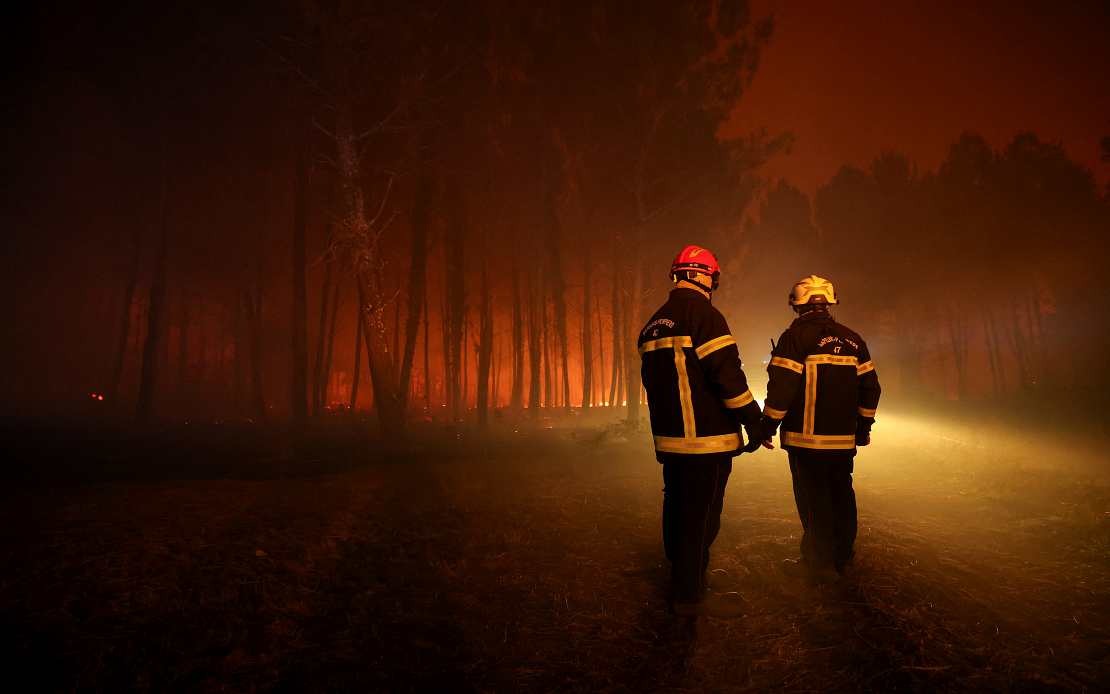
Eastern Belgium is battling an unprecedented natural disaster as a massive wildfire continues to devastate the High Fens nature reserve, marking the country's largest fire on record. By Saturday evening, the blaze had consumed approximately 2,700 hectares of terrain, nearly double the area that had burned just hours earlier, according to reports from the Liege governor's office. The rapid expansion underscores the ferocity of conditions in the region and the challenge facing emergency responders working to contain a fire that has already forced around 600 people from their homes.
The inferno erupted on Friday afternoon near the German border, igniting one of the most significant environmental emergencies Belgium has faced in recent memory. Historical data from the European Forest Fire Information System reveals the scale of this catastrophe: the previous record wildfire in Belgium occurred in 2011, when approximately 1,400 hectares burned. The current disaster has nearly doubled that figure, demonstrating the escalating severity of wildfire risk in Western Europe even in regions not typically associated with such disasters. This shift raises critical questions about climate adaptation and fire preparedness in northern European nations accustomed to temperate conditions.
Emergency services mobilized rapidly, with firefighting operations continuing through Saturday despite extraordinary challenges. The terrain of the High Fens nature reserve, characterized by rugged topography and dense vegetation, severely hampers conventional firefighting methods. Ground crews struggling to access and combat the blaze have encountered obstacles that aerial approaches alone cannot overcome. Local authorities have acknowledged these limitations, noting that the landscape itself has become an obstacle to suppressing the flames.
Wind patterns have played a destructive role in accelerating the fire's progression across the landscape. Shifting winds have not only spread smoke across surrounding communities, creating hazardous conditions, but have also fundamentally altered the fire's trajectory and intensity. These meteorological factors lie beyond the control of emergency responders, yet they remain critical determinants of whether the situation will improve or deteriorate further. Tourists in the vicinity were advised to evacuate, and a children's summer camp was among the facilities that had to be cleared as a precautionary measure.
The underlying cause of this catastrophic event lies in the severe heat wave that has gripped Belgium throughout the week. Temperatures climbed to an oppressive 37 degrees Celsius in some localities on Friday, creating bone-dry conditions that transformed the landscape into a tinderbox. These elevated temperatures, combined with low humidity and parched vegetation starved of moisture, created an ideal environment for rapid fire propagation. Such extreme heat events, once considered unusual anomalies in Belgium's climate, are becoming increasingly frequent patterns that demand restructured disaster planning and resource allocation.
Recognizing the severity of the situation, Belgium invoked the European Union Civil Protection Mechanism, a extraordinary step that signals the fire's magnitude and the need for cross-border assistance. This activation proved crucial in mobilizing resources rapidly. The European Commissioner for Preparedness and Crisis Management coordinated the deployment of specialized firefighting aircraft from multiple nations. Czech, Swedish, and Dutch aviation assets arrived on Saturday, bringing advanced aerial suppression capabilities that ground operations alone could not provide.
The international response extended beyond aircraft deployments. Firefighters from across Belgium's own regions converged on the scene, reinforced by personnel from neighboring Germany and Luxembourg who crossed borders to assist their colleagues. The Belgian military mobilized additional personnel to support the firefighting campaign, while local farmers contributed equipment and logistical support. This multifaceted response demonstrates both the gravity of the emergency and the solidarity emerging among European nations confronting shared climate-related challenges.
For Malaysian and Southeast Asian observers, Belgium's crisis carries important implications regarding climate adaptation in regions with temperate climates. The incident demonstrates that wildfires are no longer confined to traditionally arid zones; shifting climate patterns are pushing fire risk into areas that previously enjoyed relative protection. Southeast Asia, already experiencing intensifying heat stress and changing precipitation patterns, should monitor such developments closely. The region's own vulnerability to compound climate impacts—including droughts, floods, and wildfires—requires proactive policy frameworks and international cooperation mechanisms similar to those Belgium activated.
The broader European context reveals systemic vulnerabilities in disaster preparedness across the continent. Belgium, possessing advanced infrastructure and institutional capacity, nonetheless found itself overwhelmed by a crisis that exceeded historical precedent. This scenario suggests that even developed nations with substantial resources face genuine limits when confronting climate-exacerbated disasters. For developing economies in Southeast Asia with more constrained budgets and infrastructure, the lesson is sobering: climate change is generating new categories of risk that demand immediate investment in early warning systems, firefighting capacity, and cross-border emergency protocols.
As the fire continued its destructive march through the weekend, questions emerged regarding root causes and prevention strategies. Climate scientists point to anthropogenic warming as the primary driver accelerating the frequency and intensity of heat waves that precipitate such disasters. Belgium's experience suggests that adaptive responses—including improved fire detection technology, strategic fuel management in vulnerable ecosystems, and enhanced international coordination mechanisms—must become standard practice rather than extraordinary measures deployed only during crises. The cost of inaction, as Saturday's evacuations and burned landscape starkly illustrate, far exceeds the investment required for proactive mitigation.

