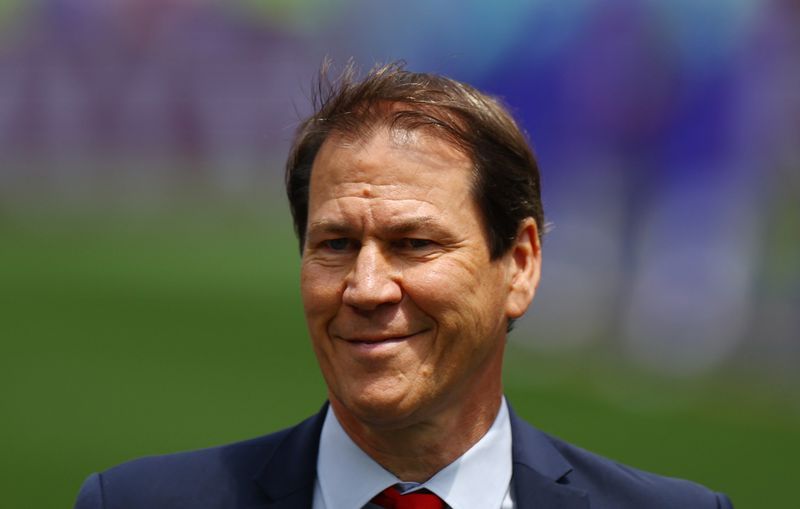
Belgium's football association and coach Rudi Garcia have agreed to part ways at the conclusion of July, drawing to a close an 18-month tenure that produced mixed results and considerable controversy. The 62-year-old Frenchman's departure represents another shift in the global coaching landscape following the recent World Cup tournament, where numerous national team managers have either stepped down or been replaced in the competition's aftermath.
Garcia's appointment had come at a pivotal moment for Belgian football. The federation faced considerable pressure both on the sporting front and within budgetary constraints when bringing him into the role. During his time in charge, the coach worked to rebuild team cohesion and establish a clearer direction for the squad during a transition period. Federation sports director Vincent Mannaert acknowledged Garcia's contributions to restoring stability within the Belgian Red Devils programme, emphasizing how the coach's experience proved instrumental in navigating a challenging restructuring phase.
However, the journey to the World Cup quarter-finals proved notably turbulent, marked by tactical inconsistencies and moments that tested supporters' patience. Belgium's opening matches generated substantial concern when the team produced uninspiring draws against Egypt and Iran before finally dominating against New Zealand with a emphatic 5-1 scoreline. The early performances drew scathing assessments from Belgian media commentators, prompting Garcia to convene a formal meeting with journalists to defend his strategic approach and provide context for his decision-making.
The knockout stage revealed both fortune and vulnerability in equal measure. Against Senegal, Belgium engineered a dramatic turnaround from two goals behind, benefiting from a goalkeeping error that facilitated their comeback. Controversy intensified when a disputed VAR decision awarded a penalty in extra time, ultimately securing a 3-2 victory. This narrow escape exposed weaknesses that many analysts felt a stronger team would have punished more severely. The subsequent impressive 4-1 victory over hosts United States provided temporary vindication of Garcia's methods, earning him praise for his team selection and tactical adjustments.
The quarter-final confrontation with Spain, eventual tournament champions, proved the decisive moment in Garcia's tenure. The Iberian side's superior control and execution exposed the limitations of Belgium's squad composition and tactical setup. A particularly contentious decision saw Garcia remove goalkeeper Thibaut Courtois, a choice that appeared vindicated when Spain scored but nonetheless sparked intense debate about the coach's judgment under pressure. Following elimination, widespread speculation emerged that Garcia's position had become untenable.
Both parties moved swiftly to announce their separation in a manner that preserved mutual dignity. While the official statement from the federation and Garcia emphasized a mutual agreement not to renew the contract expiring July 31, observers note that such announcements typically reflect negotiated exits rather than genuine mutual enthusiasm. Mannaert's statement praised Garcia's role in establishing team cohesion and delivering a respectable World Cup campaign, language that acknowledged accomplishments whilst signalling the need for fresh direction.
Garcia's own statement reflected professional grace, thanking the playing squad and wishing the nation well in its ongoing generational rebuilding. His acknowledgment of the transition process he initiated suggests an understanding that Belgian football remains in flux, with younger talent gradually replacing an aging core that once challenged for major honours. The coach's departure removes a figure who, whatever his tactical shortcomings, had stabilized an environment that required urgent attention.
The Belgian federation now faces the task of identifying Garcia's successor, with sports director Mannaert overseeing the selection process. The timing presents both challenges and opportunities, as Belgium must immediately prepare for UEFA Nations League fixtures against Italy in Rome and France at home in late September. These matches offer the incoming coach minimal preparation time whilst presenting a significant test against continental heavyweights.
Garcia's exit reflects a broader pattern emerging from the recent World Cup cycle. Over a dozen national team coaches have departed their positions during or immediately following the tournament, including leaders from Croatia, the Czech Republic, France, Germany, Ghana, Haiti, Jordan, Mexico, the Netherlands, Portugal, Scotland, Senegal, Tunisia, and Uruguay. This wholesale turnover suggests that the modern World Cup creates such intense pressure and scrutiny that sustained tenures have become increasingly rare in elite football.
For Malaysian football observers and regional analysts, the Belgian situation underscores how even experienced European coaches face precarious employment prospects at international level. The intensity of media criticism, supporter expectations, and federation board dynamics creates an environment where even credible performances can be rendered insufficient. Garcia's experience demonstrates that stabilizing a transitional squad, whilst valuable, may not satisfy immediate demands for sustained success at tournament football's highest level, a reality that resonates across football cultures worldwide.

