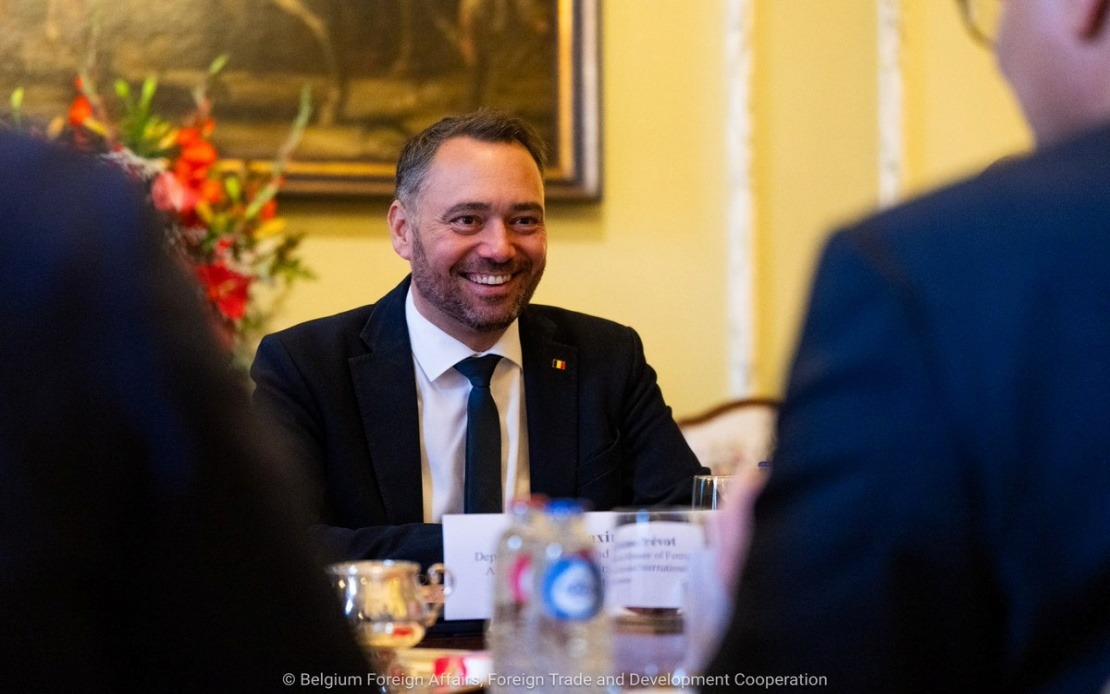
Belgium's Deputy Prime Minister and Minister for Foreign Affairs, European and Development Cooperation Maxime Prévot is set to arrive in Malaysia for a two-day working visit beginning July 3, signalling deepening bilateral engagement between the two nations on critical economic and energy transition fronts. The visit, confirmed by Malaysia's Foreign Ministry, underscores growing European interest in Southeast Asia's renewable energy potential and rare earth resources as the continent pursues its decarbonisation objectives.
This inaugural visit by Prévot since assuming office in February 2025 carries particular significance for Malaysia's energy landscape. He will meet with Deputy Prime Minister Datuk Seri Fadillah Yusof, who concurrently holds the portfolio for Energy Transition and Water Transformation, positioning the discussions squarely within Malaysia's broader renewable energy ambitions. The timing aligns with Malaysia's commitment under its Paris Agreement obligations and its increasingly aggressive renewable energy targets, making European technical expertise and investment partnerships valuable strategic assets for the nation's green transition.
The agenda spans three primary areas of bilateral cooperation. Renewable energy dominates discussions, reflecting Malaysia's need to diversify away from hydrocarbon dependence and meet climate commitments. Rare earth elements—critical for battery production, renewable energy infrastructure, and electronics manufacturing—represent another frontier where Malaysia seeks to strengthen partnerships with advanced economies possessing refining and processing capabilities. The inclusion of halal industry cooperation reveals Belgium's recognition of Malaysia's position as a global halal hub and the commercial opportunities this sector presents to European businesses and manufacturers.
Beyond bilateral matters, the visit extends into the multilateral dimension. Prévot will address the 39th Asia-Pacific Roundtable, organised by the Institute of Strategic and International Studies Malaysia, providing a platform for the Belgian official to articulate European Union perspectives on regional security, economic cooperation, and development priorities. This engagement reflects the EU's strategic pivot toward the Indo-Pacific region and its determination to maintain influence in an increasingly multipolar Asian landscape where infrastructure, investment, and technological cooperation have become instruments of geopolitical competition.
The economic relationship between Malaysia and Belgium, whilst less prominent in public discourse than ties with larger European nations, demonstrates substantive commercial depth. Bilateral trade reached RM9.74 billion in 2025, with Malaysia exporting RM6.85 billion in goods and importing RM2.89 billion, indicating a healthy trade surplus that suggests competitive Malaysian manufacturing and resource exports. This foundation provides fertile ground for expansion, particularly in value-added sectors where Belgian expertise in industrial processes, renewable technologies, and specialised manufacturing can complement Malaysian capabilities.
Investment flows underscore Belgian corporate confidence in Malaysia's investment climate. As of 2025, 67 projects with Belgian participation had secured approval, representing RM5.1 billion in committed investments and the creation of 4,605 employment opportunities across various sectors. These figures, whilst modest compared to investments from larger European economies, reflect significant Belgian business engagement and demonstrate that despite Belgium's smaller population and economy, its companies have identified Malaysia as a worthwhile destination for capital deployment and operational expansion.
The diplomatic calendar also includes an audience with the Sultan of Perak, Sultan Nazrin Muizzuddin Shah, elevating the visit's ceremonial and symbolic dimensions. Such engagements signal respect for Malaysia's constitutional monarchy and the significant role state rulers play in Malaysian governance and society. For Prévot, such courtesies represent important protocol observances that strengthen diplomatic relationships beyond government-to-government interactions, fostering people-to-people and institutional connections that underpin long-term bilateral engagement.
From a Malaysian perspective, this visit carries implications for the nation's broader renewable energy strategy. European technological leadership in wind, solar, and battery storage systems positions Belgian and broader EU partnerships as sources of innovation transfer and knowledge sharing. Additionally, European investment in Malaysia's clean energy transition could accelerate project implementation timelines and improve the competitiveness of Malaysian renewable energy exports, particularly given the EU's strict carbon border adjustment mechanisms that increasingly influence global supply chains.
The rare earth elements dimension merits particular scrutiny. Malaysia possesses significant rare earth resources, yet historically has struggled to develop comprehensive downstream processing capabilities, instead exporting raw or lightly processed materials. Belgian expertise in mineral refining and advanced manufacturing could facilitate Malaysian efforts to capture greater value along the rare earth supply chain, reducing dependency on Chinese processing monopolies and positioning Malaysia as a more vertically integrated producer capable of supplying high-value materials to European manufacturers of renewable energy equipment and electric vehicles.
The halal industry inclusion reflects Malaysia's conscious strategy to leverage its religious and cultural credentials as competitive advantages in global commerce. Belgium, as a major logistics and distribution hub for European markets, represents a strategic partner for Malaysian halal product manufacturers seeking European market access. This cooperation could encompass certification standards alignment, logistical infrastructure development, and market promotion activities that facilitate Malaysian halal exports reaching Europe's growing Muslim consumer populations and mainstream retailers increasingly stocking certified halal products.
Looking forward, this visit potentially catalyses deeper Malaysia-EU engagement beyond bilateral channels. As European nations compete with China and the United States for influence in Southeast Asia, Malaysia's strategic location, economic dynamism, and resource wealth make it a priority partner. Belgium's visit, whilst modest in scale, represents part of a broader EU strategy to strengthen institutional relationships with ASEAN members through frequent high-level visits, sectoral cooperation frameworks, and people-to-people exchanges that build lasting partnerships resistant to short-term geopolitical fluctuations.
The convergence of energy transition imperatives, investment opportunities, and diplomatic engagement during Prévot's visit reflects evolving global economic realities. Nations increasingly recognise that renewable energy cooperation, rare earth supply chain diversification, and sectoral trade expansion are interconnected challenges requiring sustained diplomatic attention and strategic partnership. For Malaysia, the visit underscores growing international recognition of its role in the global clean energy transition and the value of its resources and manufacturing capabilities to developed economies pursuing decarbonisation.

