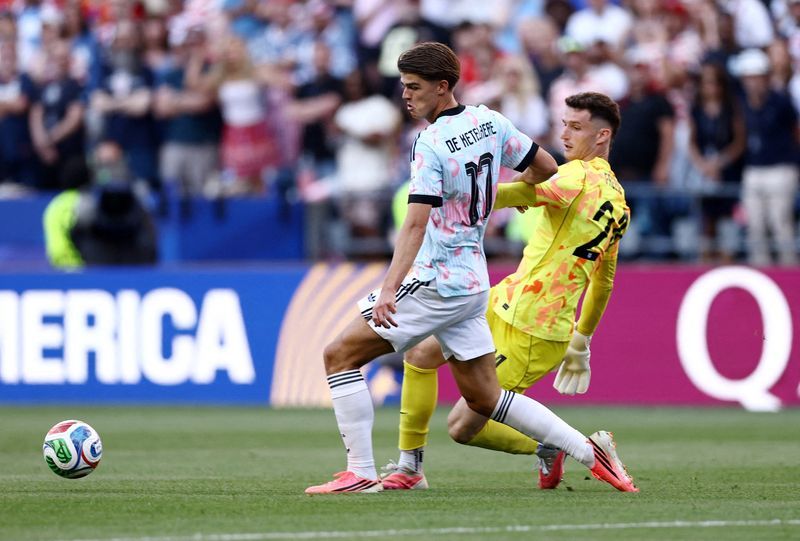
Belgium have discovered a winning formula at the World Cup by casting aside their established star system, with coach Rudi Garcia's audacious team selection delivering a commanding 4-1 demolition of the United States on Monday in Atlanta. The resounding victory in the round of 16 signals that Garcia has finally cracked the tactical puzzle that eluded Belgium throughout a chaotic group stage, one where the team seemed perpetually on the verge of embarrassment before ultimately advancing with difficulty.
The path to this moment was far from smooth. Belgium had scraped through their opening matches with two draws, drawing criticism and widespread doubt about their credentials as tournament favourites. Their manager faced mounting pressure as the team stumbled through games that should have been comfortable against lesser opponents. Only a commanding 5-1 demolition of New Zealand salvaged their group campaign and ensured progression, though many observers remained unconvinced about their ability to compete against elite teams in the knockout rounds.
Their narrow escape against Senegal in the round of 16 exposed fundamental weaknesses. Belgium were on the brink of elimination after falling two goals behind with just five minutes remaining in regular time. What should have been a comfortable qualification turned into a desperate scramble, with the team only advancing courtesy of a late penalty awarded in extra time after their opponents' defensive lapse. This unconvincing victory masked troubling tactical vulnerabilities that suggested the team's traditional approach was no longer effective against modern defensive setups.
Garcia made his most striking decision by completely overhauling the team's composition against the Americans. Kevin De Bruyne, long considered the beating heart of the Belgian national team and perhaps the world's most complete midfielder, found himself not even on the bench in Seattle. His omission alongside fellow superstar Romelu Lukaku and the mercurial Jeremy Doku represented a seismic shift in philosophy. Rather than relying on star power and individual brilliance, Garcia opted for a more cohesive, functionally-organised midfield structure.
The replacements proved inspired. Nicolas Raskin, Amadou Onana, and Dodi Lukebakio entered the starting lineup, fundamentally altering Belgium's tempo and pressing intensity. Charles De Ketelaere moved into a central forward position and responded immediately with two first-half goals that set the tone for an otherwise one-sided contest. The new midfield configuration, with captain Youri Tielemans operating higher up the pitch, created sustained pressure that the American defence simply could not manage. Belgium repeatedly won second balls and regained possession with striking efficiency, using their newfound energy to dictate play.
Garcia's tactical blueprint emphasised width and attacking space, deliberately stretching the American defence until it became brittle and immobile. The hosts never recovered from this systematic battering and gradually faded into a state of listlessness, overawed by Belgium's cohesive movement and crisp passing combinations. The performance represented a complete reversal from their group-stage struggles, suggesting that Garcia had finally identified the tactical configuration that could unlock his squad's potential.
When Onana departed with a knee injury midway through the first half, many feared the tactical experiment might unravel. Instead, Hans Vanaken seamlessly took over his responsibilities in front of the three-defender line without disrupting Belgium's rhythm. The 33-year-old, who has endured periods of international exile, contributed meaningfully to the victory and even scored, earning praise from his manager for delivering a World Cup goal at an age when many players have already faded from international reckoning. Vanaken's resilience exemplified the squad depth that Garcia discovered through his bold selection choices.
Garcia's pre-match comments revealed calculated decision-making rather than desperation. He admitted uncertainty about his exact lineup until hours before kickoff, yet possessed absolute clarity about the tactical framework he wanted to implement. His approach prioritised functional cohesion and pressing intensity over individual talent accumulation. When goals arrived early, there was simply no tactical rationale for introducing De Bruyne into an already dominant performance. The manager's willingness to stick with his system and bench his marquee player demonstrated confidence in his overall strategy and faith in the replacement personnel.
The Belgium coach had endured substantial criticism domestically as the team faltered through the opening phase. His decision-making faced intense scrutiny in Belgian media and among supporters who questioned whether he possessed the tactical acumen to manage such an expensively-assembled squad. The devastating loss to Senegal, despite superior individual quality, only intensified these doubts. Yet Garcia persisted with his analysis of what the team needed, ultimately vindicating his judgment through a display that far exceeded anything Belgium produced during the group stage.
This transformative victory reframes Belgium's tournament narrative entirely. Rather than wounded survivors limping through the knockout rounds, they now present themselves as serious contenders capable of matching and overwhelming established elite teams. The strategic decision to downgrade De Bruyne, Lukaku, and Doku from their customary starring roles may seem counterintuitive on its surface. However, the performance against the USA demonstrated that football sometimes rewards coherence and collective discipline over an accumulation of individual talents.
Belgium's upcoming quarter-final against Spain in Los Angeles will test whether Garcia's tactical innovation represents a sustainable blueprint or merely reflected the failings of an American team unprepared for high-intensity European football. Spain, with their own tradition of possession-based football and technical excellence, presents a significantly more formidable challenge than the listless hosts. Nevertheless, Belgium can approach that fixture with genuine confidence, knowing they have discovered a functional playing style that genuinely rewards their current personnel.
The broader implications of Garcia's approach extend beyond Belgian football. His willingness to jettison conventional hierarchies and established star power challenges the prevailing orthodoxy that accumulating the planet's best individual players automatically produces winning teams. In an era where personality and commercial appeal increasingly dominate team selection decisions, Belgium's manager demonstrated that the less glamorous virtues of tactical discipline, positional awareness, and collective pressing intensity can overcome deficiencies in individual flair. Should Belgium progress further, this unexpected tactical awakening may reshape conversations about team construction at the international level.

